Jaishankar meets Rubio: India flags Russia sanctions, US waves friendship
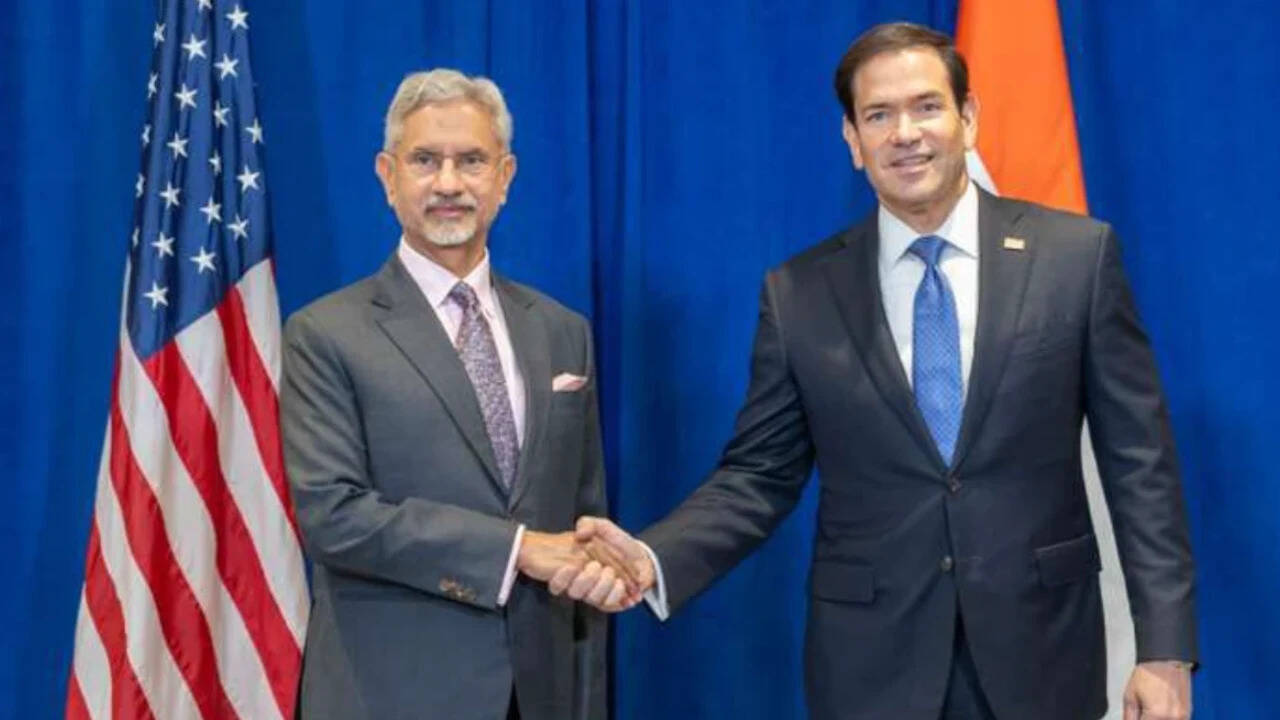
External Affairs Minister of India, S Jaishankar, met with US Secretary of State Marco Rubio on the sidelines of the UN General Assembly in New York. The primary focus of their discussion was Washington’s recently enacted legislation imposing sanctions on Russia, which stirred concerns among Indian officials. While the two sides maintained a cordial relationship during their meeting, their social media posts after the encounter revealed a deeper divide.
Jaishankar’s account of the meeting highlighted the sanctions legislation as the first issue on the table, alongside discussions about the Gulf and Ukraine. In contrast, Rubio’s post on X simply stated their meeting, emphasizing the strengthening of the US-India strategic partnership and coordination on regional priorities.
The tension between the two nations escalated as India warned Washington that using the new sanctions authority against India could impact bilateral relations. The Sanctioning Russia and Iran Act (SRIA), signed by President Donald Trump, allows him to impose tariffs of up to 100% on major buyers of Russian oil and gas. India, which relies on affordable energy for its 1.4 billion people, has pledged to protect its economic interests in the face of potential sanctions.
This widening rift presented an optics challenge for the United States. Critics have noted a double standard in Washington’s pressure on India, as the US continues to import Russian uranium and uses Russian-origin enrichment services while threatening punitive measures against other countries for similar actions. Additionally, the US has been relying on Russian potash for its agricultural sector, despite efforts to build domestic capacity.
Former US official and South Asia analyst Evan Feigenbaum highlighted the inconsistency in Washington’s approach, particularly after Trump announced plans to explore a deal to buy potash from Belarus, a close Russian ally. Critics argue that this demonstrates a lack of commitment to imposing sanctions uniformly.
The situation further complicated by the recent surge in US diesel prices, crossing $6.50 a gallon nationally, adding costs to various sectors, including agriculture. This price increase has put pressure on the Trump administration to restrict diesel exports, as it seeks to address falling public approval ratings.
Indian officials have consistently stressed that energy decisions will be based on national interests and economic considerations, defying abrasive rhetoric from some US lawmakers. Senator Richard Blumenthal, a key architect of the sanctions legislation, urged India and China to “clean up your act” and seek alternative oil and gas sources during congressional debates.
The meeting between Jaishankar and Rubio highlighted an increasingly complicated US-India partnership, where language of strategic cooperation is challenged by contentious economic considerations. While Washington courts Beijing, the relationship with India remains strained, emphasizing the delicate balance between partnership and economic interests.
Written by urgent.news from Times of India's reporting — not their text. Machine-written — may contain errors; check the original before relying on it.