How Weimar Germany’s Proportional Democracy Put Hitler in Power
“We warn our opponents not to drive us to the uttermost,” he bellowed. “Hunger is preferable to disgrace, and deprivation is to be preferred to dishonor.” And, as it turned out, the harsh terms of the treaty caused massive resentment,
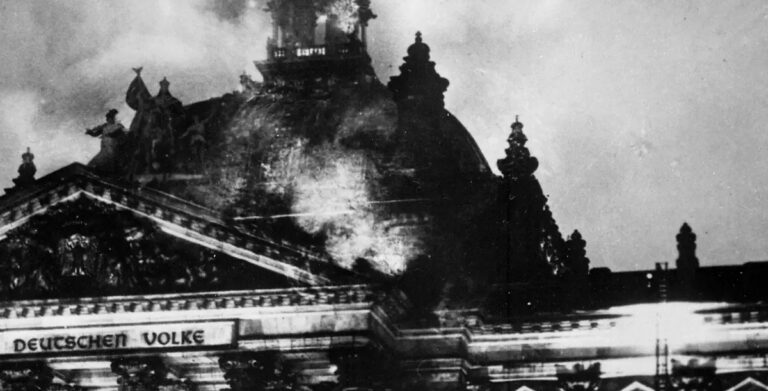
The harsh terms of the Treaty of Versailles sowed deep-seated resentment among Germans, which would later fuel the rise of the National Socialist German Workers' Party, better known as the Nazi Party. A proportional electoral system meant that no single party could govern alone; thus, a coalition of parties was often required.
In Weimar Germany, a multitude of political parties existed, each representing a diverse range of ideologies. This included the liberal Social Democratic Party (SDP), the Catholic Centre Party, the Communist Party (KPD), and the Nazi Party, which started as a fringe group appealing to middle-class workers disillusioned by the post-war Treaty and economic instability.
Adolf Hitler, having served in the German Army, turned to the right-wing party after feeling marginalized. His charismatic oratory skills helped him ascend in ranks. Hitler began espousing a radical, nationalist, and anti-Semitic ideology, asserting the superiority of the "Aryan" race.
The economic turmoil of the 1920s and 1930s only served to bolster Hitler's position. As Germany struggled to recover from the global economic depression, his vision for a racially "pure" society resonated with many Germans. His party's strength grew, with Ludendorff, a prominent World War I general, joining in 1923.
In 1923, Hitler and Ludendorff attempted a coup in Munich, believing they could spark a nationwide revolution and overthrow the Weimar government. They proclaimed Ludendorff as dictator and marched on Berlin, but the army remained neutral, leading to the Nazis' defeat and Hitler's arrest for treason.
Despite a five-year prison sentence, Hitler served only eight months, using his time to write "Mein Kampf," in which he elaborated on his totalitarian vision. His release and subsequent appeal to the German populace paved the way for the Nazi Party's eventual ascension to power, culminating in Hitler's appointment as Chancellor in 1933.
Written by urgent.news from Literary Hub's reporting — not their text. Machine-written — may contain errors; check the original before relying on it.