How the Nancy Grace Roman Space Telescope will turn the sky into a dataset
Richard de Grijs looks at how the Roman Space Telescope will change astronomy forever The post How the Nancy Grace Roman Space Telescope will turn the sky into a dataset appeared first on Physics World .
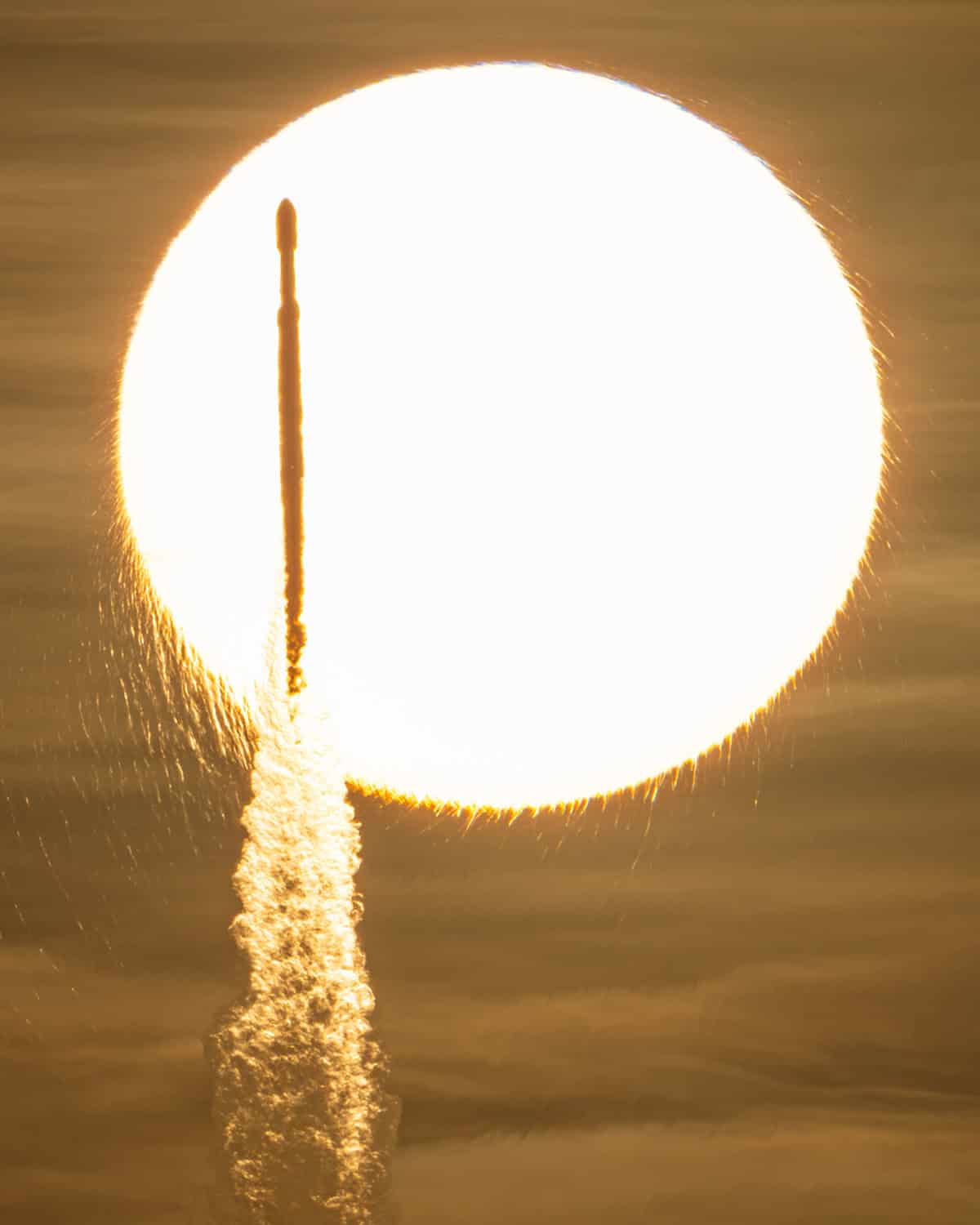
On 30 August 2026, a SpaceX Falcon Heavy rocket launched from the Kennedy Space Center in Florida, carrying NASA's Nancy Grace Roman Space Telescope. The telescope is named after the agency's first chief astronomer, and its mission is to survey billions of stars and galaxies. With a field of view far larger than Hubble's, Roman will help scientists study dark energy, exoplanets and the evolution of the universe.
The launch was preceded by familiar rocket theater, including a brilliant column of flame, the booster and main-engine cut-offs, and the eventual separation of the fairing. Thirty-one minutes after liftoff, Roman detached from the rocket and began its journey to L2, a point 1.5 million kilometers from Earth. Once there, the gravitational balance will allow Roman to maintain its orbit with minimal fuel consumption.
Once Roman arrives, its first images, expected in early 2027, will mark a significant acceleration in the way astronomy is conducted. Rather than focusing on carefully selected objects, astronomers will increasingly map entire populations, monitoring a changing sky and searching vast datasets for discoveries that would be impossible to find by eye.
The telescope's sharp images, as sharp as those from the Hubble Space Telescope, will be combined with its Wide Field Instrument (WFI), which can cover at least 100 times as much sky in a single pointing.
Roman's revolutionary approach will allow astronomers to study cosmic ecosystems and their constituent objects in unprecedented detail. For much of modern professional astronomy, observations began with a proposal to study a specific object of scientific interest. However, as the model shifts towards systematic, reusable sky maps, Roman's coronagraph will test active optics that suppress starlight more effectively than existing space-based coronagraphs.
This will enable Roman to image giant planets orbiting nearby stars, paving the way for future missions to photograph smaller, Earth-like worlds.
Written by urgent.news from Physics World's reporting — not their text. Machine-written — may contain errors; check the original before relying on it.


