Hormuz shuttles keep oil flowing, but at a high cost
A NEW shuttling system is reshaping the Middle East oil market, as producers seek to keep exports flowing despite the escalating regional conflict.
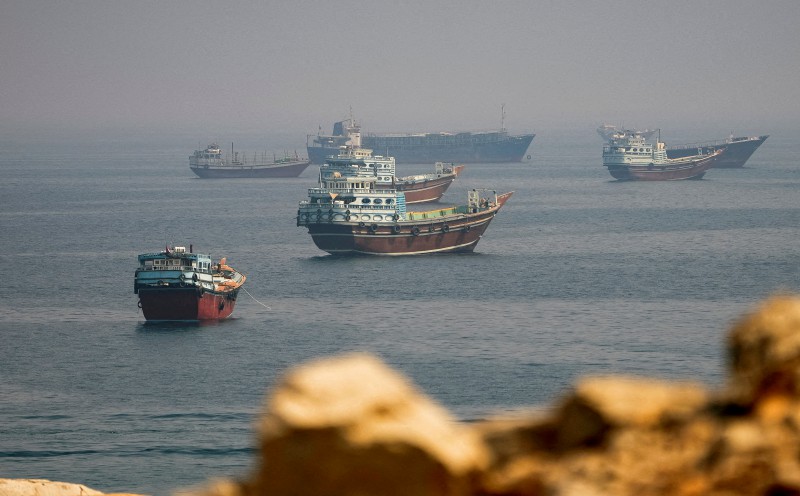
A new ship-to-ship (STS) system is transforming the Middle East oil market as producers strive to maintain exports amid the escalating regional conflict. This complex, costly process now appears poised to become the global energy market's new norm. Off Oman's coast, rows of tankers anchor near the Strait of Hormuz, connected by ropes and hoses as they transfer crude between vessels, forming a floating bridge between the region's oilfields and global markets.
Ship-to-ship transfers have become critical for Gulf producers as they navigate disruptions caused by the seven-month-old Iran war. Once a tanker is loaded, it detaches and sails to its destination, typically an Asian refinery, while the mother vessel returns to the Gulf, reloads, and repeats the process. The system minimizes the distance each ship must travel, lowering the risk of navigating the strait, even as more tankers cross the narrow passage under U.S. naval protection, with navigation systems switched off.
As of this month, exports through Hormuz have reached around 6.5 million barrels per day (bpd), the highest since a spike following the June ceasefire. This operation showcases the energy industry's remarkable adaptability in the face of supply shocks; however, it also highlights the high costs and complexity of moving oil from the Middle East's most important exporting region.
Before the U.S.-Israeli conflict with Iran escalated in February, the Strait of Hormuz handled roughly a fifth of global oil consumption. The Iran blockade halted traffic, compelling producers to divert flows and slash output. Shipowners initially resisted sending vessels through the conflict zone, demanding high premiums for those willing to take risks.
Abu Dhabi National Oil Company (Adnoc) devised the STS workaround in response to a shortage of available tankers. Instead of using vessels for lengthy round-trip voyages to Asian buyers, Adnoc began employing them as shuttle tankers, transferring crude from Gulf terminals to safer waters in the Gulf of Oman. From there, cargoes could be transported to larger ships for the final leg.
This strategy optimized limited and expensive tanker fleets and enabled continued vital exports. UAE oil exports are now projected to reach 3.6 million bpd this month, surpassing last year's average of 3.4 million bpd. Initially conceived as an emergency response, the STS system has evolved into a burgeoning industry. Saudi Aramco now increasingly relies on STS operations due to disruptions to Red Sea export routes reducing the effectiveness of the kingdom's alternative outlet.
Recent events, including Yemen's Iran-backed Houthi forces tightening their grip on the Bab el-Mandeb Strait and Iran-backed fighters striking Saudi Arabia's East-West pipeline in Yanbu, have driven Brent crude prices above US$108 a barrel. With current crude prices around US$105, freight now constitutes over a quarter of the cost, compared to two to three percent before the war.
Each additional transfer demands more ships, time, and money, exacerbating the costs faced by global oil markets. Keshav Lokhiya, CEO of HiLo Analytics, notes, "We are witnessing one of the biggest wealth transfers from oil producers to tanker owners." Fundamentally, the global energy market is adapting to heightened geopolitical risk rather than being paralyzed by it.
However, the Middle East's oil trade is becoming increasingly inefficient, dependent on a patchwork of military escorts, temporary transfer hubs, and alternative routes never designed to handle such volumes. As the conflict persists and more routes face threats, the global energy system becomes more expensive and fragile.
Written by urgent.news from New Straits Times's reporting — not their text. Machine-written — may contain errors; check the original before relying on it.
This story
This is one outlet's version. Read the fullest account.
- Hormuz shuttles keep oil flowing, but at a high cost economictimes.indiatimes.com