First US-Iran talks in months raise hopes for progress despite no concessions
By Parisa Hafezi, Humeyra Pamuk and Jana Choukeir UNITED NATIONS/DUBAI, Sept 23 (Reuters) - The first shuttle talks between the United States and Iran for months raised hopes on Wednesday that the adversaries could make progress towards ending the Middle East war, although neither side spelled out any change in its position. Iranian Foreign Minister Abbas Araqchi and US envoys Steve Witkoff and…
On September 23, 2026, the United States and Iran held their first talks in months, sparking optimism about potential progress toward ending the ongoing conflict in the Middle East. However, neither side disclosed any changes in their positions during the mediated discussions held at the United Nations General Assembly in New York. The talks took place on the sidelines of the assembly, following the collapse of an interim ceasefire agreement in July.
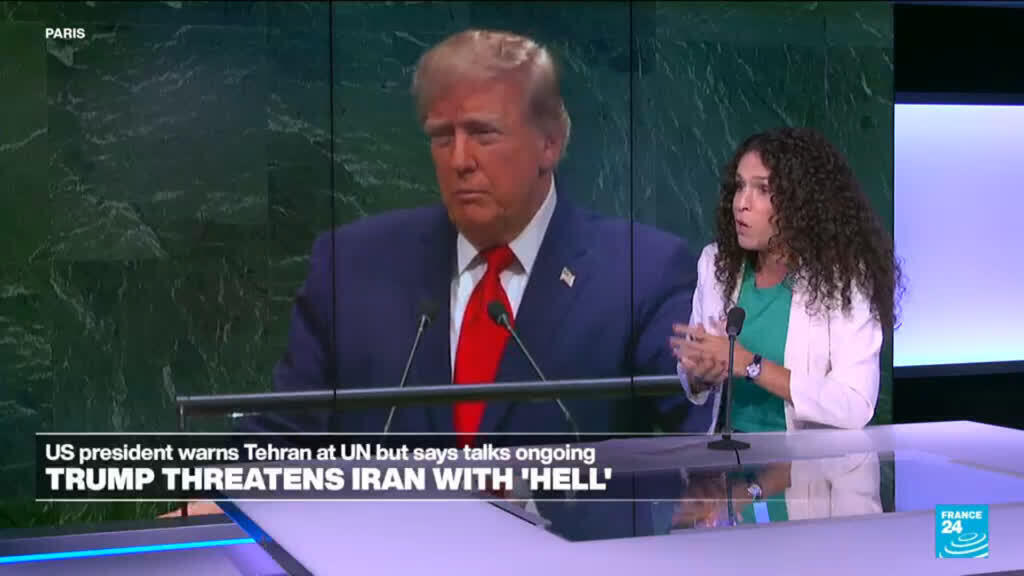
Iranian Foreign Minister Abbas Araqchi and US envoys Steve Witkoff and Jared Kushner engaged in the negotiations through Qatari mediators. US President Donald Trump expressed optimism about the potential for a deal, stating that he was hearing positive feedback from various sources. President Trump had previously indicated that he would decide whether to make a deal with Iran or annihilate it.
Iranian President Masoud Pezeshkian was scheduled to address the UN General Assembly on the same day. Iran's Foreign Ministry spokesperson, Esmail Baghaei, revealed that Tehran had communicated its conditions to the US through a Qatari mediator, emphasizing the need for an end to the war on all fronts and an immediate halt to US acts of aggression.
Some Iranian state media had initially reported a face-to-face meeting between Araqchi and Witkoff, but Iranian officials clarified to Reuters that the meeting was mediated. Araqchi met with Qatari Prime Minister Sheikh Mohammed bin Abdulrahman Al Thani, one of the main mediators involved in previous talks.
The diplomatic efforts came after months of renewed fighting, with both sides exchanging fire intermittently. However, President Trump has avoided resuming full-scale US strikes, citing concerns over dwindling munitions stocks. The diplomatic contact in New York was met with criticism from Iranian media affiliated with hardliners, who accused Araqchi of meeting with Witkoff and Kushner, seeing it as a gift to President Trump.
Iranian sources reported that the Supreme National Security Council, which includes figures selected by Supreme Leader Ayatollah Mojtaba Khamenei, had ordered the delegation not to meet the Americans face-to-face. Some Iranian journalists also expressed outrage over the trip to New York, viewing it as an insult to the memory of the late Supreme Leader, Ali Khamenei.
Despite the diplomatic opening, oil prices remained near two-week lows, hovering around $100 a barrel. The ongoing war, which began in February alongside Israel as Operation Epic Fury, had already resulted in thousands of casualties, disrupted global energy supplies, and spread to Lebanon and Yemen. The conflict has strained regional stability, particularly in Lebanon and Yemen.
President Trump reiterated his belief that the war could end around the time of the November US midterm elections, though he has not provided a clear explanation for his stance. The interim agreement signed in June, which aimed to lift financial sanctions and unfreeze Iranian assets in exchange for talks on limiting Iran's nuclear program, ultimately unraveled due to disagreements on shipping rules in the Strait of Hormuz, a crucial conduit for a fifth of global oil and liquefied natural gas.
Iran sought to exert control over the strait and collect fees from passing ships, a stance rejected by the United States. In the latest reported incident, a cargo ship was hit by projectiles in the strait, resulting in two crew members losing their lives. Despite the near-daily attacks, maritime traffic through the strait has shown signs of recovery, with oil producers paying fees to shipping companies to navigate the perilous waters.
The strain on global oil supplies is evident, with exports from the United Arab Emirates returning to pre-war levels and Saudi Arabia selling 60 million barrels of Gulf oil to be delivered beyond the strait off the coast of Oman. However, a significant portion of Gulf oil remains unavailable in global markets, causing shortages in refined products like diesel and contributing to inflation, elevated interest rates, and economic challenges for President Trump's Republican party ahead of the upcoming elections.
Written by urgent.news from Investing.com's reporting — not their text. Machine-written — may contain errors; check the original before relying on it.
This story
This is one outlet's version. Read the fullest account.