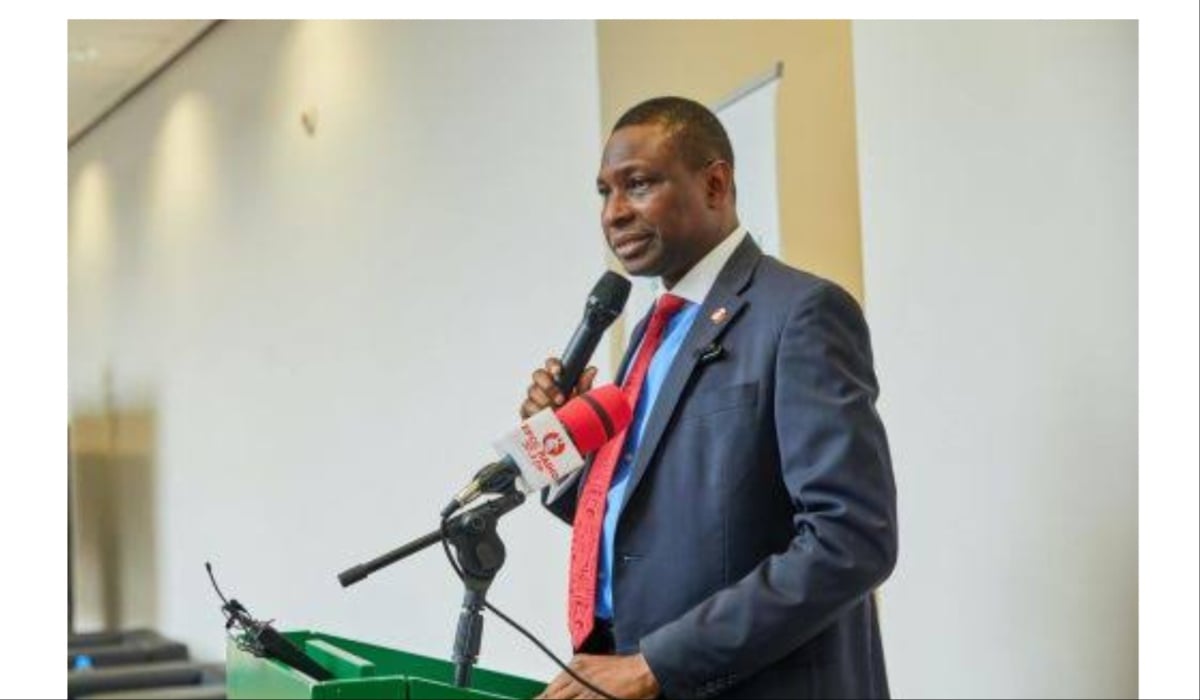
EOCO, Baffour Awuah clash: Article 117 does not give MPs blanket protection from arrest – Samson Ayenini
Legal practitioner Samson Lardy Anyenini has questioned what he describes as the broad use of parliamentary privilege under Article 117 of Ghana’s 1992 Constitution to prevent the arrest or service of legal processes on Members of Parliament.

Legal expert Samson Lardy Anyenini has raised concerns about the extensive application of parliamentary privilege under Article 117 of Ghana's 1992 Constitution, which has been used to prevent the arrest or service of legal proceedings on Members of Parliament (MPs). During an interview on Joy FM's Top Story on September 23, Anyenini clarified that Article 117 does not offer universal protection to MPs, but only applies when a legislator is "on his way to, attending at or returning from" parliamentary proceedings. This specific qualification is embedded within the constitutional provision.
The issue arose from a clash between Manhyia South MP and lawyer Nana Agyei Baffour Awuah, and security personnel from the Economic and Organized Crime Office (EOCO) at the Accra High Court. Anyenini criticized what he perceived as abuse of this parliamentary protection, arguing that being an MP should not automatically shield individuals from law enforcement action, particularly when Parliament is not in session or if there is no evidence of the legislator's involvement in parliamentary business.
He emphasized that if an MP claims to be attending a parliamentary committee meeting or other official business, that claim should be verifiable.
Anyenini pointed out that Speaker Alban Bagbin had previously clarified in 2026 that security agencies do not need his permission before arresting or inviting an MP for questioning, but should notify his office with the details of the circumstances and allegations involved. He recommended that law enforcement agencies should copy the Speaker in their correspondence, similar to the approach taken by the Office of the Special Prosecutor.
On the matter of arrest warrants, Anyenini noted that a warrant could be obtained when necessary, but cautioned against suggesting that one is always required, as the law allows for arrests with or without a warrant in certain circumstances.
As conflicting accounts of the incident emerged, EOCO claimed that it had invited Awuah twice in February 2026 to assist with an ongoing investigation and sought to secure his attendance after the invitations were ignored. The Office stated that the attempted arrest was halted when the situation became unsafe for public safety. Awuah, however, stated that he was approached following his appearance at the High Court, questioning why he was being taken to EOCO.
He demanded identification and an arrest warrant, which he alleged were not presented, leading him to leave out of fear for his safety. EOCO maintained that parliamentary membership alone does not exempt an individual from legal proceedings, but must respect constitutional parliamentary privileges, with Article 118(2) stating that a certificate from the Speaker confirming attendance in parliamentary proceedings is conclusive evidence.
Anyenini's comments underscore the necessity for clearer guidelines on the application of Article 117 protections. He reiterated that his position has always been that MPs should be held accountable only when they are truly engaged in parliamentary proceedings, rather than using the privilege as a blanket excuse for evading legal obligations.
Written by urgent.news from MyJoyOnline Ghana's reporting — not their text. Machine-written — may contain errors; check the original before relying on it.
This story
This is one outlet's version. Read the fullest account.
- Manhyia South MP disputes EOCO account over alleged attempted arrest adomonline.com
- Pursuing Manhyia South MP through Parliament would have made arrest process more decorous – Interior Ministry spokesperson myjoyonline.com
- John Darko condemns attempt by EOCO to arrest Manhyia South MP starrfm.com.gh