EFF presses Ramaphosa on government insourcing
The EFF has accused President Cyril Ramaphosa of failing to act on his stated support for insourcing, while National Treasury and the public service department have raised concerns about the cost of making it compulsory.
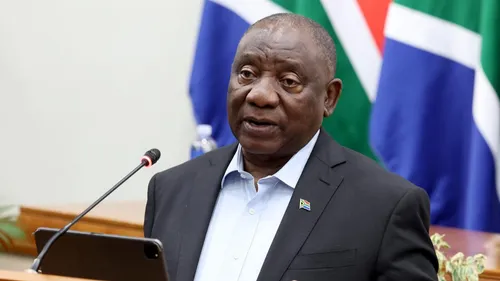
The EFF has criticized President Cyril Ramaphosa for allegedly misleading the public about his support for the Insourcing Bill. In March, Ramaphosa stated during a parliamentary Q&A that insourcing workers would safeguard jobs and bolster state capacity. The proposed legislation seeks to obligate government bodies, departments, and municipalities to employ workers directly for essential services, rather than relying on private contractors.
During parliamentary sessions, Ramaphosa acknowledged that excessive outsourcing and middlemen squander public funds and promote corruption. However, despite ongoing consultations with the Presidency, National Treasury, and the Department of Public Service and Administration (DPSA), the bill has remained stagnant due to significant fiscal disagreements.
The National Treasury and DPSA contend that mandatory insourcing is financially impractical and costly for the current fiscal situation. On the other hand, Cosatu previously backed the bill, advocating for direct employment of workers in routine government services. In response to the EFF's allegations, the Presidency's spokesperson, Vincent Magwenya, declined to comment by the time of this report.
The EFF's Treasurer-General and MP, Omphile Maotwe, introduced the Insourcing Bill to the National Assembly on July 31, 2025, following initial discussions since late 2022 and draft submissions leading to its formal introduction in 2025. The bill gains urgency as South Africa grapples with pressing economic challenges, including a 33.6% unemployment rate and a heavy reliance on private consultants and contractors despite a sizable public sector.
The state is plagued by systemic tendpreneurship and procurement-related corruption. Willie Mathebula, the acting chief procurement officer at the National Treasury, revealed that South Africa loses billions of rands annually to procurement fraud, with over 50% of the state's annual procurement budget reportedly lost to intentional system abuse, primarily due to inflated cleaning and security contracts.
The Zondo Commission of Inquiry into state capture disclosed that roughly half of the state's R800 billion annual procurement budget was subjected to deliberate regulatory infractions and system manipulation. The Auditor-General's report also highlighted that R406bn was lost to corruption and irregular expenditure between 2018 and 2024, with the Special Investigating Unit identifying R7.8bn in irregular, unlawful, or fraudulent contracts tied to Covid-19 procurement.
Additional investigations into the Temporary Employer/Employee Relief Scheme (TERS) uncovered mismanagement or theft of millions of rands, including payments to deceased individuals, prison inmates, and ghost workers with invalid ID numbers. Investigations also exposed coordinate syndicates siphoning off over R2bn at Tembisa Hospital between 2018 and 2023, with direct corrupt payments to current and former hospital officials totaling R122.2m.
The EFF contends that redirecting these funds could aid in establishing a robust public healthcare system. The party emphasized that the Insourcing Bill will ensure workers are paid promptly and directly, addressing incidents of unpaid salaries at Chris Hani District Municipality (Eastern Cape), Tembisa Hospital, and Ekurhuleni.
Governance expert and political analyst Professor Andre Duvenhage argued that government should focus on empowering and equipping existing state structures instead of outsourcing or insourcing capacity. He noted that while insourcing is preferable, the current state structures lack the necessary capacity. Sandile Swana, another governance expert, contended that the primary issue with South African government services is not whether they are outsourced or handled internally, but rather that the procurement system has been compromised by politically connected criminal networks.
Written by urgent.news from IOL's reporting — not their text. Machine-written — may contain errors; check the original before relying on it.