EEUU vs China: ¿por qué la IA enfrenta a las dos superpotencias?
La carrera por liderar la inteligencia artificial se ha convertido en una batalla geopolítica. Mientras los gigantes estadounidenses apuestan por los modelos más avanzados y cerrados, Pekín trata de extender su influencia tecnológica con sistemas abiertos y más baratos. Leer
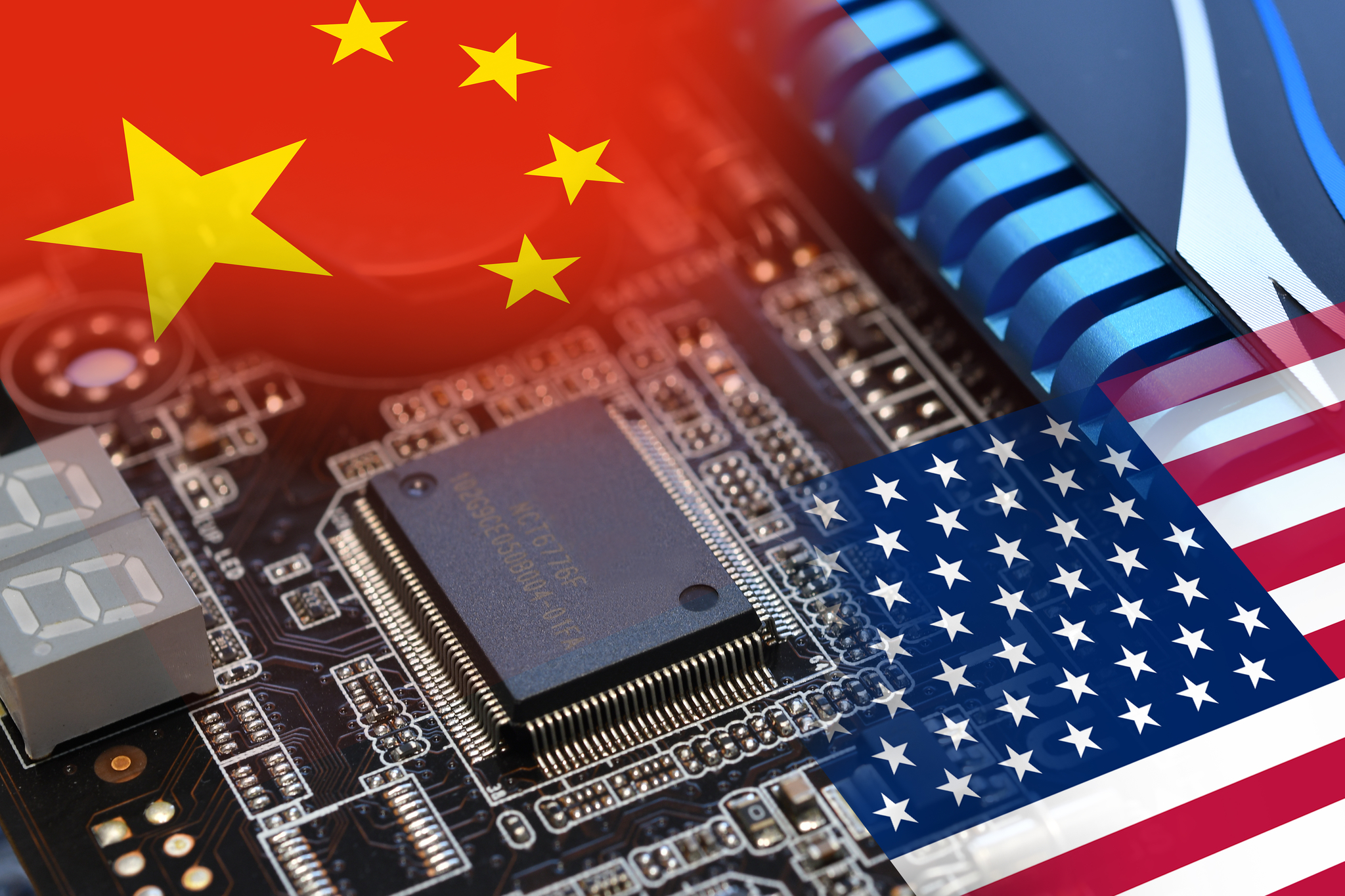
The United States and China are locked in a battle for dominance in artificial intelligence (AI), a geopolitical struggle. While U.S. giants invest heavily in advanced, closed models, China aims to expand its technological influence through cheaper, open systems. In January 2025, the stability of U.S. AI laboratories, buoyed by substantial investments, began to waver with the emergence of a Chinese company, DeepSeek.
DeepSeek launched a model that matched the power of leading U.S. AI systems at a fraction of the cost, casting doubts on global financial markets, particularly U.S. stocks. An entire year after DeepSeek's entry, the United States' dominance in AI labs is no longer certain. According to OpenRouter, a major AI model traffic aggregator, Chinese models outpaced U.S. platforms globally for the first time in June of this year.
Another model aggregator, Hugging Face, confirms this trend. By February 2026, downloads of Chinese models surpassed those of U.S. models on the AI platform. The key to this growth is the development of increasingly powerful, open, and cost-effective models. Chinese experts agree that China doesn't compete with U.S. AI titans like Anthropic or OpenAI for the most intelligent AI but for the cheapest and most versatile.
Alibaba announced in August that its open-source weight models had accumulated over 3 billion downloads in six months, overtaking Meta and Google as the world's most downloaded AI family. A technological paradigm shift lies beyond just the geopolitical context. The future isn't in billion-parameter foundational models, but in networks of specialized and coordinated agents capable of solving complex problems by breaking them down into specific tasks.
These agent-based architectures align perfectly with the proposition of open-source weight models, allowing third parties to specialize and coordinate them without relying on a single closed provider. China leads in open-source models, advocating for parameter sharing freely. U.S. models like OpenAI and Anthropic are at the forefront but operate closed or proprietary.
Open-source models now represent 75% of token usage on OpenRouter. Additionally, the price difference between U.S. and Chinese models is staggering. For instance, Kimi K3 from Moonshot charges $15 per million output tokens and DeepSeek V4-Pro 3.96 dollars during peak hours, compared to OpenAI's $50 GPT-6 Astra model. On average, Chinese models are 60% to 90% cheaper than U.S. models, but some U.S. labs are starting to lower prices.
The average cost of GPT-6 Astra from OpenAI is $20, less than half of the cost of Chinese models. U.S. labs are beginning to reduce prices. Anthropic's new Opus 5.5 model costs $20 per million output tokens, less than half of Fable 5's cost. U.S. giants are becoming aware that price battles, not just the launch of the most powerful model, are crucial for the AI race.
Chinese prices, combined with the appeal of equally intelligent AI, have become an attractive option for businesses. According to CNBC, Chinese models had 46% of the enterprise AI usage market in the U.S. this summer. Companies like Airbnb, DoorDash, and Coinbase already use Chinese models hosted locally. Despite geopolitical tensions and rumors of President Trump limiting Chinese technology use due to security concerns, nearly 200 U.S. companies, including startup accelerator Y Combinator, publicly opposed this move.
Offering cheaper Chinese models also impacts Asian companies' accounts. Rhodium's estimates suggest that all Chinese AI models generate only 10% of OpenAI and Anthropic's reported revenues. However, for China, the path to victory lies in penetrating all economic and industrial sectors, ensuring they are used the most. China accounts for 17% of the world's population (and 16.5% of global GDP) but 50% of AI token usage.
Written by urgent.news from Expansion ES's reporting — not their text. Machine-written — may contain errors; check the original before relying on it.