China’s storage makers aim to climb value chain with advanced packaging bets
Chinese storage makers, long known for packaging chips into modules, have been moving up the value chain into wafer-level operations, with the latest firm to make the jump investing 4.5 billion yuan (US$672 million) in an advanced packaging project. The sum, which Shanghai-listed Biwin Storage Technology will pour into the third phase of its advanced packaging and testing project in Dongguan, in…
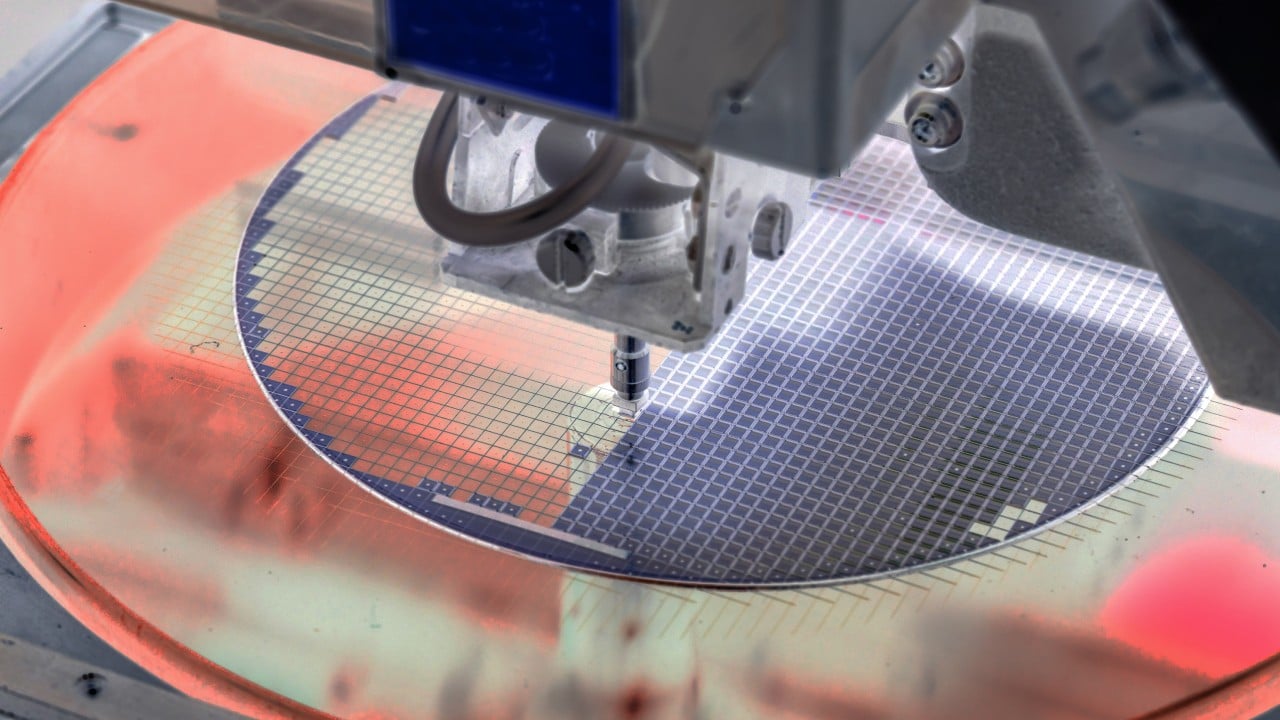
Chinese storage manufacturers are scaling up their operations by entering the advanced packaging arena, with at least one company committing substantial investment. Shanghai-listed Biwin Storage Technology recently announced a 4.5 billion yuan ($672 million) allocation towards phase three of its advanced packaging and testing facility in Dongguan, Guangdong province. This commitment surpasses the combined 3.09 billion yuan already invested during the project's initial two phases.
The advanced packaging endeavor has yet to generate significant revenue, as the company is currently focused on customer sampling, process verification and small-batch production. However, Biwin anticipates that the facility's monthly capacity will more than triple to 10,000 wafers by the end of 2027, as indicated in a stock filing on Tuesday and prior investor meetings.
This strategic move reflects the company's transition into more sophisticated wafer-level technologies, building upon its existing memory and system-in-package (SiP) packaging capabilities in Huizhou, Guangdong. Biwin is also developing novel technologies, such as "fan-out" for stacked memory and a separate package encompassing 10 chiplets, both designed to optimize computing and memory integration.
Other Chinese storage suppliers are also pursuing growth in advanced packaging. Shenzhen-based Shenzhen Techwinsemi Technology has established in-house wafer die testing and packaged chip evaluation, while concurrently outsourcing the majority of chip packaging processes. Meanwhile, Shenzhen Longsys Electronics announced in June that its Suzhou facility in eastern China has expanded to produce over 1 million miniature solid-state drives monthly using SiP technology, which consolidates controller, flash memory, power management, and other components into a single package, thereby decreasing device size and space requirements.
Analysts view these investments as indicative of a broader trend among Chinese memory module suppliers to shift from a model centered on chip procurement, assembly, and sales through downstream channels. Sinolink Securities, in a report published in August, highlighted that despite historically occupying a weaker position between wafer producers and device manufacturers, module makers are increasingly recognized for their strengths in "product definition, supply-chain management, and customer development capabilities."
They also emphasized that advanced packaging is evolving from a mere manufacturing step to a critical factor influencing product performance, integration, reliability, capacity, bandwidth, power consumption, and size. The sector's global revenue is projected to surge to $79.4 billion by 2030 from $46.1 billion in 2024, according to Yole Group estimates cited by Semi, a semi-related industry association. AI and high-performance computing applications are key drivers of this expansion.
Written by urgent.news from SCMP Tech's reporting — not their text. Machine-written — may contain errors; check the original before relying on it.
This story
This is one outlet's version. Read the fullest account.