China launches its first commercial radio-tracking satellites in electronic warfare leap
China has just taken a quiet but critical step in space-based electronic warfare. A Lijian-1 Y18 rocket lifted off from the Jiuquan Satellite Launch Centre in northern China at noon on Sunday, carrying nine satellites. Among them were three Diting-01 satellites, which successfully entered their planned orbit. The trio is named after Diting, a beast from Chinese mythology that crouches beneath the…
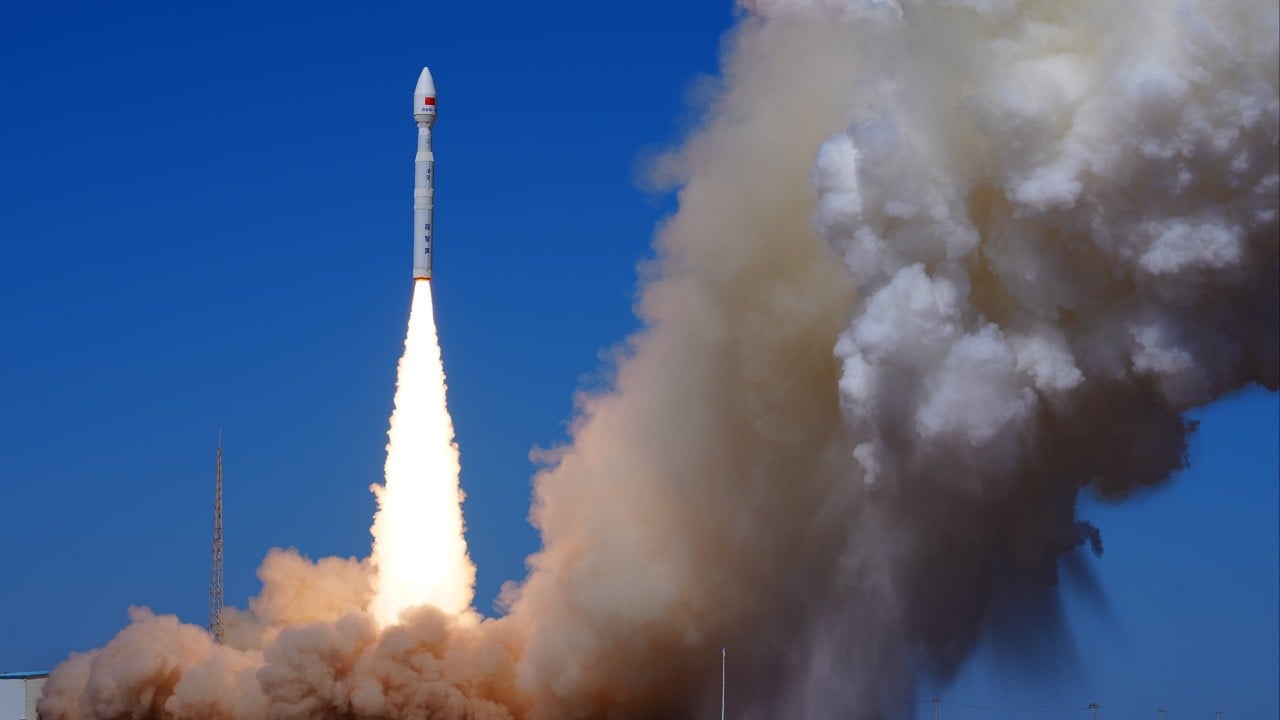
China has launched its inaugural commercial radio-tracking satellites, marking a significant advancement in space-based electronic warfare. On Sunday, a Lijian-1 Y18 rocket lifted off from the Jiuquan Satellite Launch Centre in northern China, carrying nine satellites into orbit. Among these, three Diting-01 satellites successfully reached their designated orbit.
Named after a mythical beast from Chinese mythology, the Diting satellites are designed to "listen" to radio signals emanating from the Earth's surface, providing detailed information about their origins. These satellites can detect various critical elements, such as warship radars, military communication networks, and electronic jammers, offering precise location data for these signals.
This capability could prove invaluable in conflict scenarios, allowing for the tracking of enemy warships, the identification of hidden air-defence radars, and the comprehensive mapping of an opposing force's electronic order of battle. Developed by Chang Guang Satellite Technology and operated by StarRF, these satellites represent the first batch of China's commercial signals intelligence constellation.
The company asserts that this constellation will offer broad coverage, rapid and accurate location of radio emission sources, and provide remote-sensing data and data analysis services at the electromagnetic spectrum level. StarRF, founded in 2023, boasts a founding team hailing from Tsinghua University's Department of Electronic Engineering and previously affiliated with prominent companies like Nokia, Qualcomm, and China Electronics Technology Group.
The company aims to establish a 60-satellite low-Earth-orbit electromagnetic spectrum monitoring constellation, capable of independently monitoring signals emitted by diverse radio devices across extensive areas. The launch of these satellites positions China alongside a select group of Western nations with commercial space-based radio monitoring capabilities.
Notably, American company HawkEye 360 launched its three-satellite formation in 2018, serving US defence and intelligence agencies for maritime surveillance and signals intelligence. France's Unseenlabs specializes in single-satellite geolocation, focusing initially on maritime signals before expanding to cover sea, land, and space.
Luxembourg's Kleos Space, until its operations ceased in 2023, utilized satellite clusters for radio transmission detection and localization, primarily for maritime intelligence and tracking illicit activities. The extent and accuracy of the Diting constellation's monitoring remain uncertain, with limited information available from Chang Guang Satellite and StarRF, the latter of which has yet to respond to interview requests.
Written by urgent.news from Reuters Business via SCMP's reporting — not their text. Machine-written — may contain errors; check the original before relying on it.
This story
This is one outlet's version. Read the fullest account.