China is leveraging its diaspora to boost the economy, unlike India
A country’s diaspora can be a symbol of its pride and power. A nation’s diaspora can help it build international value through success stories, promote its soft power through culture and contribute to its economic progress through remittances, investments and transfers of expertise. India and China have among the world’s largest diasporas. They also offer two very different models of how…
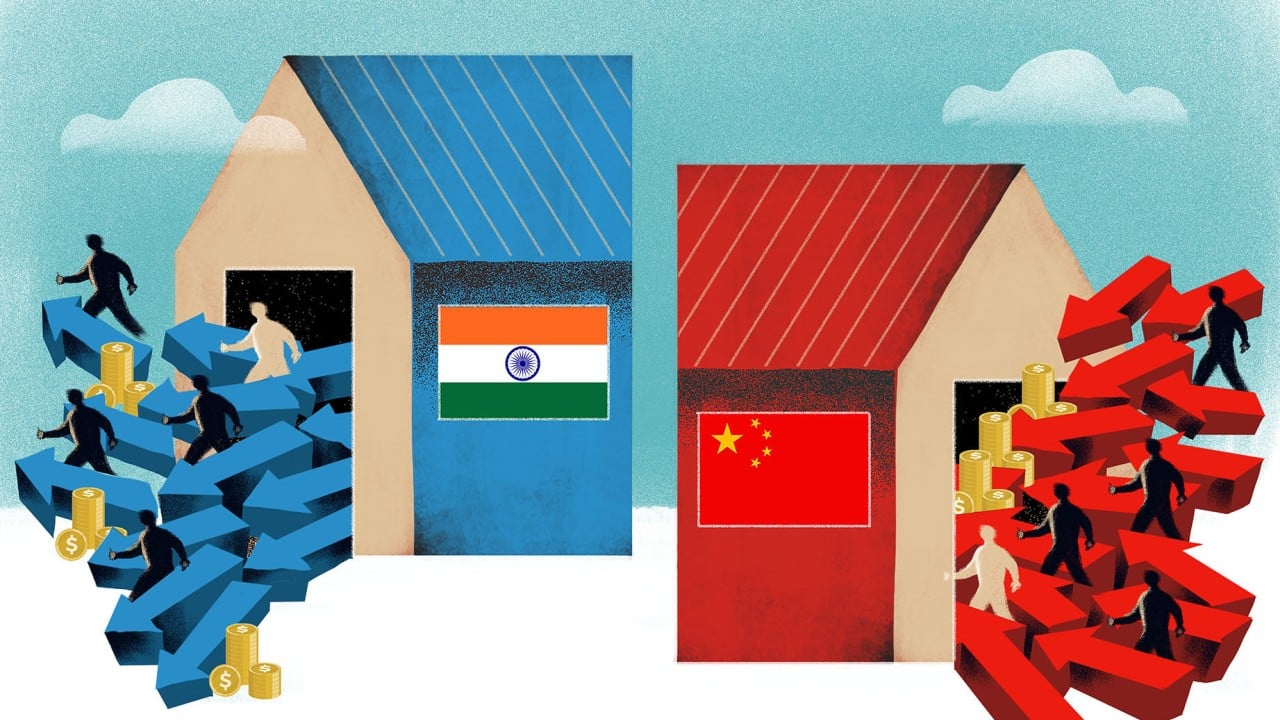
China and India boast some of the world's largest diasporas, but their approaches to harnessing these populations for economic gain are markedly different. In India, the diaspora was once viewed as a "brain drain" before the 1991 economic reforms. However, since then, the government has actively promoted the Indian diaspora as a bridge to capital, technology, and global markets.
This shift was reflected in the establishment of a dedicated ministry overseeing Indians abroad, which was later integrated into the Ministry of External Affairs.
China, on the other hand, recognized the potential of overseas education much earlier. Deng Xiaoping, who studied in France as part of a work-study program in 1920, later championed foreign education as a national policy. In 1978, he announced plans to send 3,000 Chinese students abroad annually to bolster the country's scientific community.
This strategic brain drain paid off after 2001 with China's WTO membership, attracting multinational corporations like Microsoft, Intel, and Oracle to establish research and technology hubs in China. These centres not only created well-paying jobs but also encouraged Chinese expatriates to return, effectively turning the cost of training into Western institutions.
China's government has further intensified this strategy through initiatives like the "Thousand Talents" program, which aims to attract global talent, and a focus on strategic fields such as artificial intelligence, quantum computing, biotechnology, and aerospace. As a result, China has seen a significant rise in the number of its researchers returning to work in the country, with the percentage of Chinese international students returning rising to 80% between 2013 and 2018.
The Chinese diaspora now contributes to China's intellectual and economic growth, with Beijing's Zhongguancun emerging as a formidable competitor to Silicon Valley. In contrast, India's diaspora remains heavily tied to remittances and skilled labor, with its impact on the economy being more limited. While India received $129 billion in remittances in 2024, China received $48 billion, but the former's remittances account for over 3% of its GDP, compared to China's 0.1-0.2%.
China's strategy of leveraging its diaspora for long-term capacity building and technological advancement sets it apart from India's focus on short-term gains.
Written by urgent.news from Reuters Business via SCMP's reporting — not their text. Machine-written — may contain errors; check the original before relying on it.
This story
This is one outlet's version. Read the fullest account.