Astronomers detected radio signals coming from an exoplanet for the first time. Spoiler alert: It's not aliens.
Scientists have found the first convincing direct evidence of radio signals coming out of the exoplanet Beta Pictoris b. Even if it's not aliens, it could still teach us something big about life in space.
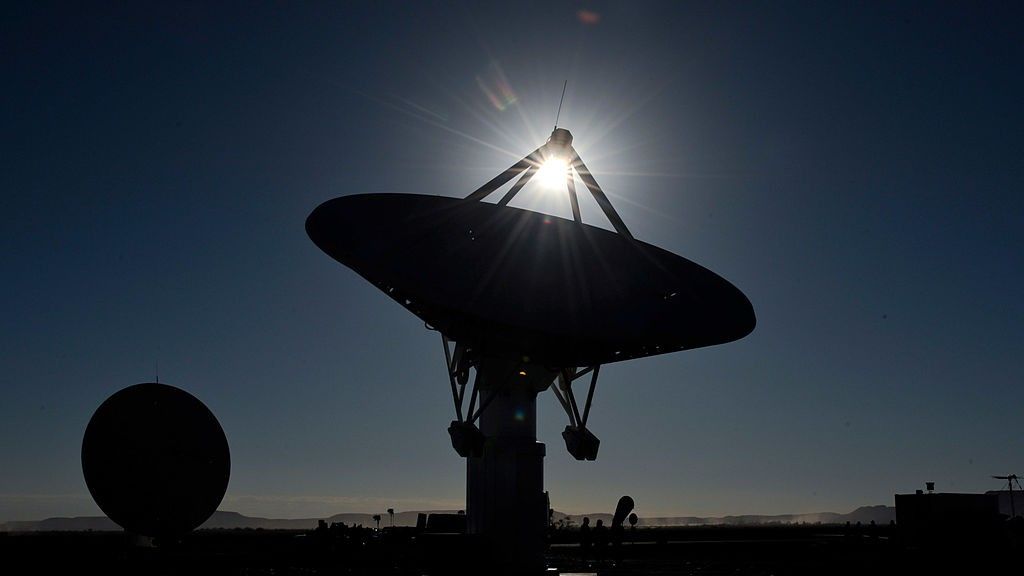
For the very first time, scientists have detected radio signals directly from an exoplanet orbiting another star, according to a recent study. While these signals are not evidence of extraterrestrial life, they offer valuable insights into the planet's characteristics and magnetic field. Researchers led by Kevin Ortiz Ceballos, a graduate student at the Harvard and Smithsonian Center for Astrophysics, used the MeerKAT radio telescope array in South Africa to observe a massive gas giant named Beta Pictoris b, located 64 light-years away.
The team discovered rapid, repeating bursts of radio signals from the planet, which they confirmed were not originating from its host star. These radio signals are believed to be caused by auroras on the planet's surface, similar to Earth's Northern Lights but much more intense. By comparing the radio images of the planet and the star with reference points, the scientists were able to pinpoint the signals' origin.
The study reveals that the planet's magnetic field strength is about 1,250 gauss, which is much stronger than Jupiter's 4.3 gauss and Earth's 0.5 gauss. Measuring such magnetic fields is crucial for understanding how planets generate their magnetospheres and for identifying potentially habitable exoplanets. While the signals do not conclusively indicate the presence of intelligent life, they mark a significant milestone in the search for technosignatures, which could suggest advanced civilizations.
Future telescopes, like the Square Kilometre Array, will enable even more precise measurements and further exploration of these intriguing celestial bodies.
Written by urgent.news from Live Science's reporting — not their text. Machine-written — may contain errors; check the original before relying on it.