Asia stocks ride tech wave higher, oil stays subdued
Asian shares surged on Wednesday, riding a wave of optimism for tech stocks driven by continued demand for AI applications. Simultaneously, oil prices remained relatively stagnant due to reports of increased Middle Eastern supply. Saudi Arabia had restarted operations at its East-West Pipeline, and there was a possibility of resuming exports from the Red Sea port of Yanbu.
Speculation also arose that Iranian President Masoud Pezeshkian might hold talks with US President Donald Trump, who claimed progress in negotiations with Iran during a recent meeting in New York. However, Trump later threatened to annihilate Iran if a deal was not reached.
Brent futures retreated by 0.1%, settling at $99.18 a barrel, while US crude oil fell by 0.4%, reaching $90.14 a barrel. Chinese President Xi Jinping arrived in Washington later in the day, with expectations of a potential trade truce extension and cooperation on AI. South Korean stocks climbed 1.2%, with Samsung and SK Hynix both surging over 2%. Taiwan's market reached near all-time highs, rising by 0.9%.
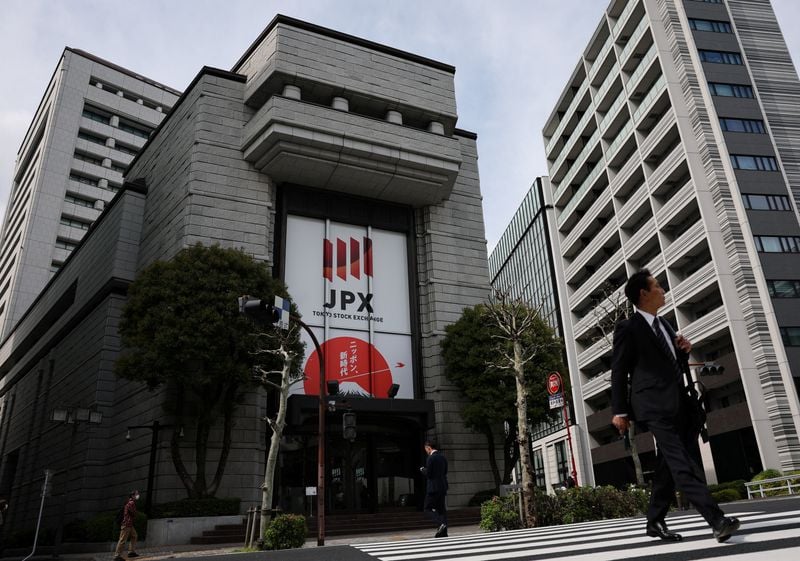
MSCI’s Asia-Pacific index outside Japan rose by 0.7%, marking its sixth consecutive day of gains. Chinese blue-chip stocks showed minimal change, while Japanese markets were closed for a holiday, with Nikkei futures trading at 66,745, nearly 2,000 points above Friday’s close. Analysts anticipate a strong market reopening in Japan the following day, with possible further declines in crude oil and steady rates and Treasury yields. The Nasdaq futures markets were projected to set new all-time highs.
Memory stocks led the rally, bolstered by robust consumer adoption of Meta’s Muse agent, which had topped US app download charts over the past two weeks. The data hardware sector benefited from the strong demand for Meta's product, while analysts are curious to observe the performance of Google Labs' new product, CC, in the consumer market.
On Wall Street, S&P 500 and Nasdaq futures remained stable. In Europe, EUROSTOXX 50 and DAX futures increased by 0.3% each, while FTSE futures gained 0.2%. The decline in oil prices contributed to a rise in Treasury futures, preventing 10-year yields from breaching the 5.0% level. Nonetheless, 2-year yields had reached their highest since mid-2024 at 4.7879% due to the perception of more Federal Reserve tightening.
Richmond Fed President Tom Barkin and Boston Fed President Susan Collins endorsed the recent interest rate hike, citing inflation concerns. Futures markets indicated a 54% probability of another rate increase in October, with 33 basis points of tightening priced in by year-end.
The U.S. dollar climbed towards multi-week highs against the euro, British pound, and Canadian dollar, maintaining a technical strength. The euro settled at $1.1440, close to a two-month low. Analysts noted that Trump's expressed intention to ban U.S. diesel exports could negatively impact European inflation, as the region relies heavily on American shipments of the fuel.
Europe is currently grappling with a natural gas shortage that could drive energy prices higher during the winter season. The dollar edged higher against the yen at 157.60, with speculators wary of potential Japanese intervention if the exchange rate surpassed 160.00.
In commodity markets, gold declined by 0.3%, trading at $4,341 per ounce, while copper approached record highs, having risen 18% throughout the year.
Written by urgent.news from Investing.com's reporting — not their text. Machine-written — may contain errors; check the original before relying on it.
This story
This is one outlet's version. Read the fullest account.
- Asia stocks ride tech wave higher, oil stays subdued brecorder.com
- Asia stocks ride tech wave higher, oil stays subdued nst.com.my