Alan Kyerematen opposes public funding of US$4bn Accra–Kumasi Expressway
While commending the Mahama administration for pursuing the project, the former Trade and Industry Minister said government should reconsider how it is financed.
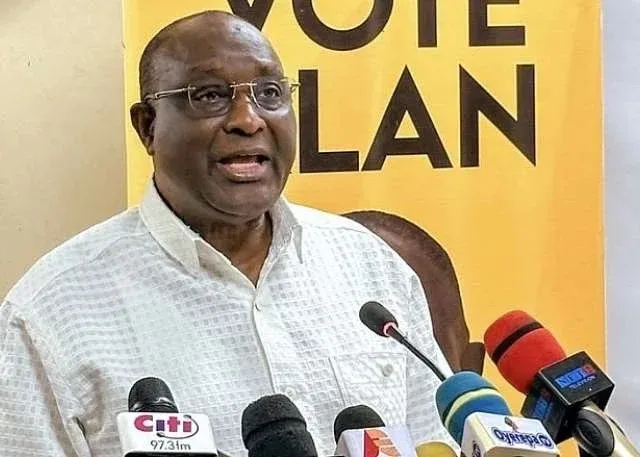
Alan Kwadwo Kyerematen, the founder and leader of the United Party, has raised concerns about the government's decision to allocate public funds towards the US$4 billion Accra–Kumasi Expressway. In a public lecture held in Accra on September 23, 2026, Kyerematen challenged the government's financing strategy for the proposed tollable road, suggesting that the private sector should play a more significant role in funding such a large-scale project.
During the lecture, titled "Transformation of the Ghanaian Economy: From Stability to Prosperity," Kyerematen commended the Mahama administration for its efforts in pursuing the Accra–Kumasi Expressway project. However, he argued that the government should reconsider how it finances the US$4 billion expressway. Kyerematen questioned why the government should be responsible for funding a road that could be tolled, emphasizing that the US$4 billion could have been allocated to other critical areas in Ghana.
The government estimates the project's cost at around US$4 billion, with plans to finance it without borrowing, relying on domestic resources. President John Dramani Mahama has stated that US$2 billion has already been set aside, with the full amount expected to be mobilized by the end of 2026. The expressway is expected to span about 198.7 kilometers, featuring a new six-lane carriageway, and is anticipated to cut travel time between Accra and Kumasi to approximately two hours, reduce transport costs, and generate thousands of jobs during construction.
Kyerematen's stance aligns with his broader Great Transformational Plan, which advocates for increased private-sector participation in major infrastructure projects. He proposes financing models like Build-Operate-Transfer and similar arrangements to lessen the direct financial burden on the government. Beyond the expressway, Kyerematen urged Ghana to shift its focus away from merely achieving macroeconomic stability, such as controlling inflation and the exchange rate, and instead prioritize deeper structural transformation.
He stressed that economic stability should be considered a foundation for investment, industrialization, job creation, and improved living standards, rather than the ultimate goal.
Kyerematen also criticized what he termed as weak coordination in Ghana's development planning process, advocating for clear national performance indicators to ensure progress. He questioned the country's lack of a functioning national airline, viewing it as a manifestation of Ghana's struggle to convert its strategic advantages into productive national assets.
Kyerematen concluded by emphasizing that Ghana's economic conversation must evolve from simply attaining stability to creating a coordinated system capable of delivering sustained growth, investment, infrastructure, and prosperity.
Written by urgent.news from 3News's reporting — not their text. Machine-written — may contain errors; check the original before relying on it.
Also reported by 1 other outlet
- Alan Kyerematen calls for more leaner government myjoyonline.com