Al Shara and Al Zaidi hold first meeting as Syria and Iraq look to turn page
Syrian President Ahmad Al Shara and Iraqi Prime Minister Ali Al Zaidi held their first meeting at the UN General Assembly in New York, as Baghdad and Damascus reset ties . The relationship between the two countries has turned in recent months from deep mistrust to pragmatic co-operation after Bashar Al Assad was ousted in late 2024. The start of the Iran war in February, rising regional tension…
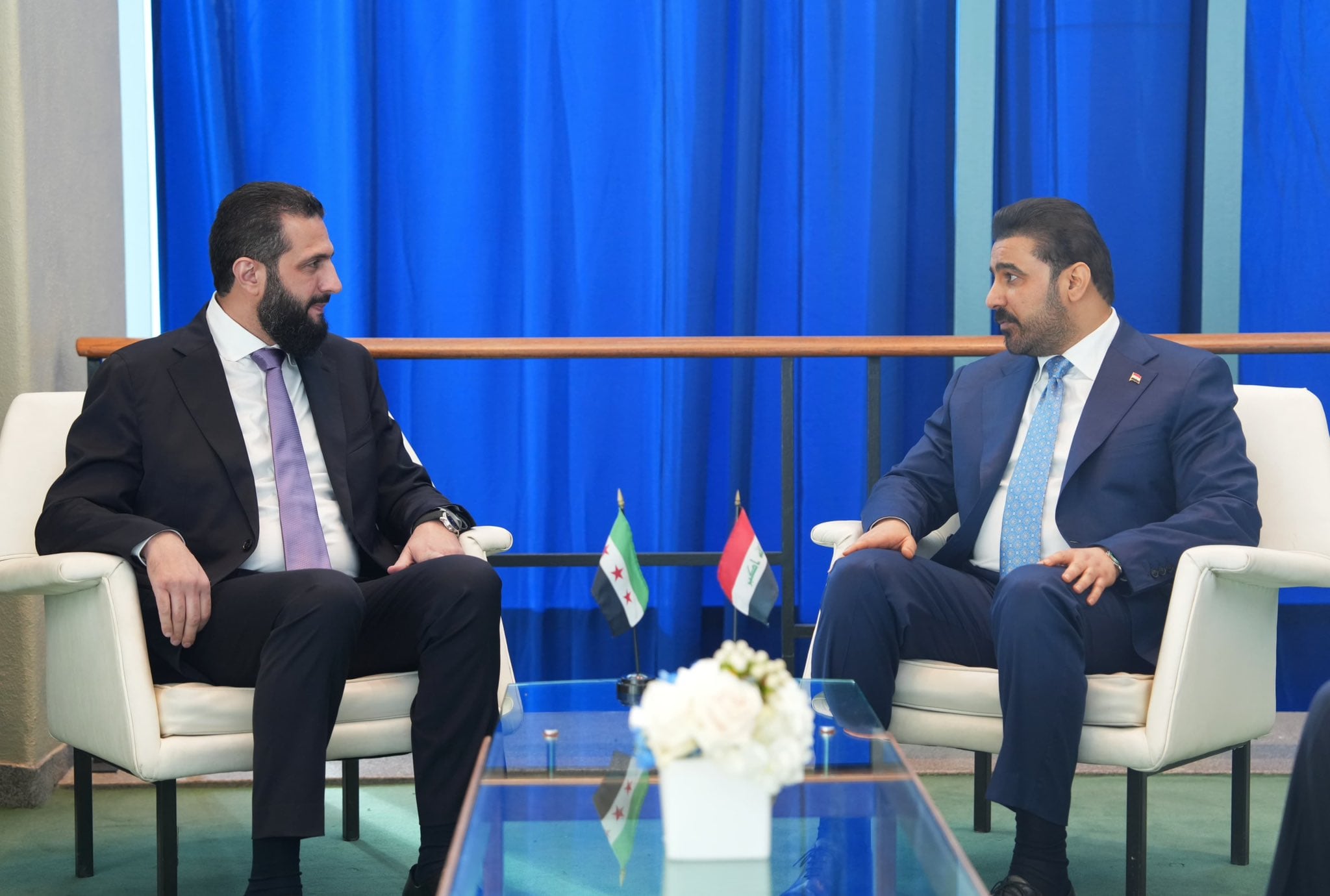
Syrian President Ahmad Al Shara and Iraqi Prime Minister Ali Al Zaidi convened their inaugural meeting at the UN General Assembly in New York, symbolizing a shift in the strained relations between the neighboring nations. The two countries have transitioned from deep mistrust to pragmatic cooperation since the ousting of Syrian President Bashar Al Assad in late 2024.
Recent geopolitical events, including the onset of the Iran war, heightened regional tensions, and US pressure, have pushed the two countries to fortify their ties.
The Syrian news agency Sana reported that the meeting aimed to enhance political and security coordination, as well as expand economic and trade cooperation. The Iraqi Prime Minister's office echoed similar sentiments, emphasizing the discussions on bilateral relations and ways to develop them in alignment with mutual interests.
The US special envoy to both Syria and Iraq, Tom Barrack, welcomed the meeting, stating that "guided by leadership and bound by a shared vision, Iraq and Syria weave together a tapestry of co-operation, stability, and shared prosperity for their peoples." Both leaders, known for their close relationship with Washington, were photographed shaking hands and embracing during the first public appearance together.
The meeting took place as Iraq, a last ally of Iran in the region, faces mounting US pressure to reduce its ties with Tehran. The US-led forces are scheduled to withdraw completely from Iraq by the end of the month, while Prime Minister Al Zaidi oversees the disarmament of militia groups and the consolidation of state control over weapons. The disarmament deadline was initially set for September 30 but has since been adjusted to June 2027.
Following the fall of the Assad regime, Baghdad harbored concerns about the new figures, many of whom had ties to Al Qaeda. However, over time, the two sides have developed a relationship primarily driven by security cooperation. Thousands of suspected ISIS members have been transferred from Syria to Iraq in recent months, and Syrian leadership remains skeptical of Iranian influence in Iraq, which previously granted Iran direct access to the Assad regime.
The border area on the Iraqi side is heavily populated by the Popular Mobilisation Forces, a combination of pro-Iranian militias. High-level meetings between Shara and Iraqi Foreign Minister Fuad Hussein, as well as Syrian Foreign Minister Assad Al Shibani and former Iraqi Prime Minister Mohammed Shia Al Sudani, have been limited thus far.
Iraq has turned to Syria as an alternative route for exporting oil since Iran halted nearly all energy shipments through the Strait of Hormuz since March. Baghdad initiated oil shipments through Syria by road in April, destined for the Baniyas port.
Written by urgent.news from The National UAE's reporting — not their text. Machine-written — may contain errors; check the original before relying on it.
This story
This is one outlet's version. Read the fullest account.
- Al Shara says Israeli aggression is undermining ‘rising’ Syria thenationalnews.com
- QFFD, IsDB hold summit on Syria’s financial sector gulf-times.com