4 million lakes in ‘Lost Lakes’ map offer clues to Arctic permafrost
The Arctic is dotted with millions of lakes that sit on persistently frozen soil called permafrost. These lakes are crucial for the region’s wildlife and local communities. However, as temperatures rise, the permafrost thaws, which causes new lakes to form or existing lakes to abruptly disappear as lake water drains away through newly created channels. […]
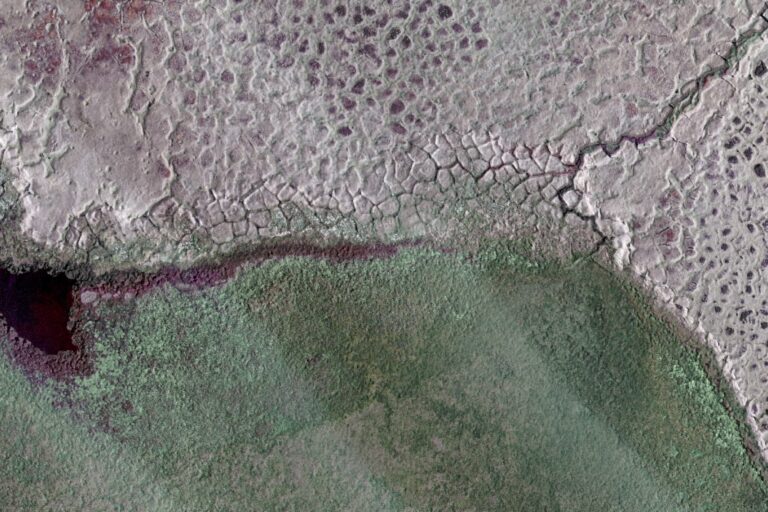
The Arctic is home to millions of lakes that sit atop permafrost – soil that remains frozen for extended periods. These lakes play a vital role in supporting local wildlife and communities. However, as global temperatures increase, Arctic permafrost is thawing, leading to the formation of new lakes or the sudden disappearance of existing ones due to draining water through newly formed channels.
Scientists have developed an interactive map called Lost Lakes, which allows users to monitor changes in approximately 4 million Arctic lakes in near real-time, as well as track alterations since 2016. By observing these lake dynamics, researchers can gain valuable insights into the state of the underlying permafrost. According to Ingmar Nitze, a remote sensing researcher at Germany’s Alfred Wegener Institute, LostLakes is designed to be accessible to both experts and non-experts.
Much of the Arctic's ground is covered by ice-rich permafrost, which has stored vast quantities of carbon in the frozen soil over thousands of years. However, as the Arctic experiences accelerated warming compared to the global average, a significant portion of the region's permafrost is experiencing thawing. Nitze explained that as permafrost thaws, some of the carbon that was previously trapped for thousands of years can be released into the atmosphere, potentially exacerbating the warming and accelerating further permafrost thaw.
Monitoring permafrost directly at a large scale is particularly challenging due to its location beneath the surface.
Written by urgent.news from Mongabay's reporting — not their text. Machine-written — may contain errors; check the original before relying on it.