3,000-year-old burial of ancient Egyptian horse found — and a nearby stone carving depicts a captured prisoner
Archaeologists unearthed a horse burial dating back more than three millennia in an ancient Egyptian fortress.
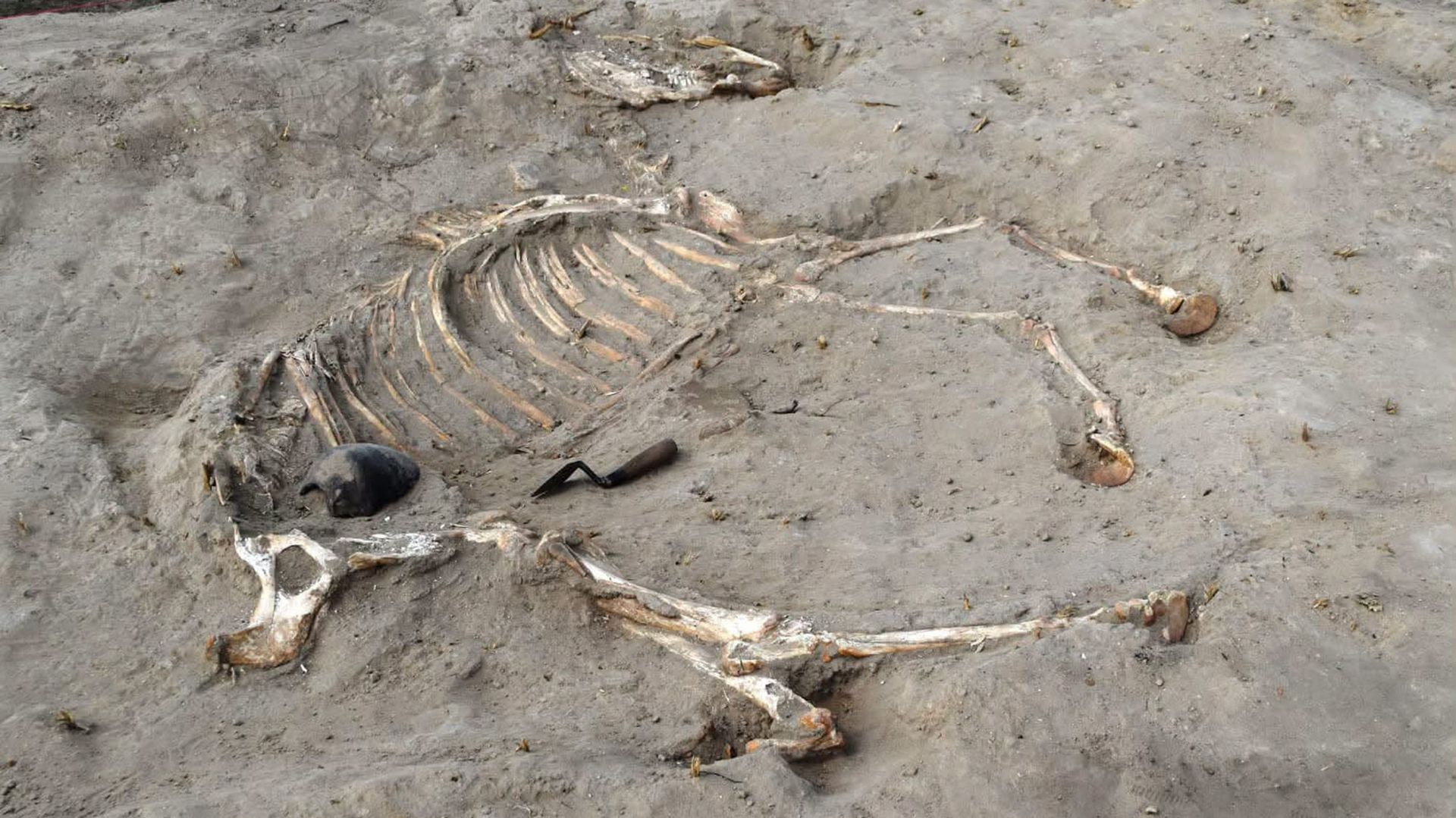
In a remarkable archaeological discovery, a 3,000-year-old burial of a horse has been unearthed at an ancient fort on the western Nile Delta in Egypt. The burial, which may have been ceremonial, took place at the site of the New Kingdom period fort in Egypt's Lake District. The horse, a young male of medium size, was likely used for military purposes such as pulling a chariot. Nearby, archaeologists found the remains of the chariot horse's harness fittings, suggesting the horse's important role in military activities.
Interestingly, the fort also contained hieroglyphic tablets depicting a captured Libyan prisoner. The prisoner was bound with his hands behind his bent body, a posture indicating his submission to the Egyptians. The prisoner's clothing revealed he was a member of the Meshwesh tribe, with whom Egypt often clashed. The burial site also featured a tablet with the names of pharaohs Ramesses II and Merneptah, who ruled from around 1279 to 1203 B.C.
Experts are excited about the unique find, as complete horse skeletons from Pharaonic Egypt are rare. Lonneke Delpeut, a researcher at the University of Vienna, noted this discovery as an amazing find, given the scarcity of horse remains from ancient Egypt. While the horse may not have been a war horse, its burial highlights the cultural significance of horses in ancient Egyptian society and their vital role in military life.
Written by urgent.news from Live Science's reporting — not their text. Machine-written — may contain errors; check the original before relying on it.