Why do so few women work in India?
India's low female labor force participation stems primarily from weak labor demand rather than social norms.
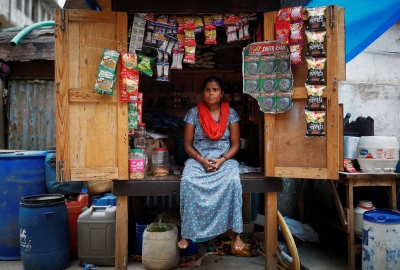
India's female labor force participation rate (LFPR) currently sits at 35%, significantly lower than neighboring countries such as Bangladesh at 42% and the Philippines at 50%. While this figure has seen a marked improvement from 21% in 2017-2018, a deeper look reveals that more than two-thirds of this increase has come from the agriculture and subsistence sectors, with many instances of disguised employment.
The reduction of the gender disparity in labor force participation is not just vital for promoting gender equality, but also for tapping into a considerable economic growth potential. India has the potential to boost its GDP by a substantial $700 billion to $1.4 trillion. However, the primary question remains as to why there are fewer women employed in India to begin with.
Most academic discourse on this topic has emphasized supply-side limitations, notably societal norms, encompassing the uneven distribution of unpaid domestic responsibilities, restrictions on mobility and education, weak legal safeguards, and practices like child marriage.
Written by urgent.news from Japan Times's reporting — not their text. Machine-written — may contain errors; check the original before relying on it.