When Saudis went to school
RIYADH — In the early years of the Saudi state, education in many parts of the country looked very different from the system that would eventually emerge.In some areas, learning was largely centered on the traditional kuttab, where children were taught the Holy Qur’an, religious studies, reading and writing.Schools were limited, trained teachers were scarce, and access to education varied from…
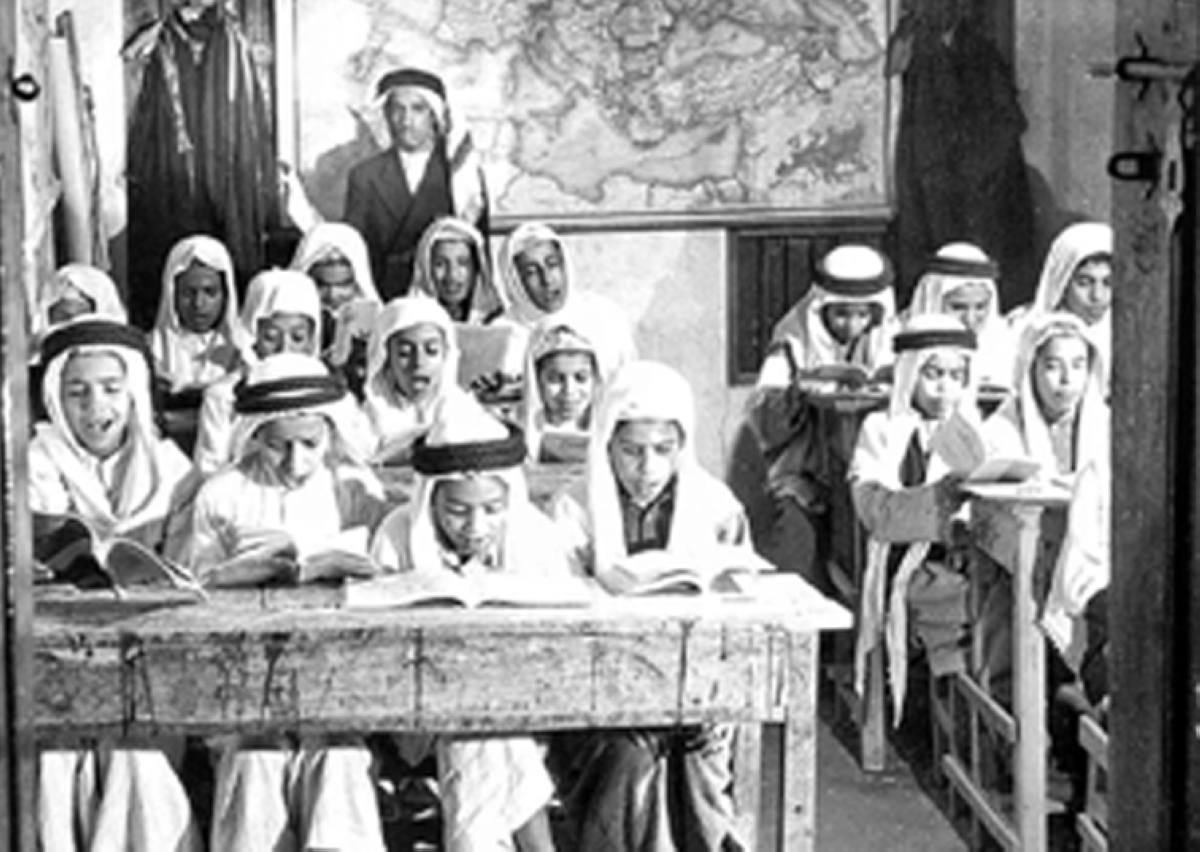
In the nascent years of the Saudi Arabian state, educational practices in many regions diverged significantly from the system that would later develop. Traditional learning centers called kuttab were the primary sources of instruction, where children were schooled in the Holy Qur'an, religious studies, reading, and writing. Education remained limited, with a scarcity of trained teachers and varying access across different communities.
King Abdulaziz bin Abdulrahman Al Saud recognized the necessity for a more systematic approach, initiating a reformative educational strategy that would extend schools beyond the major cities and lay the groundwork for nationwide educational institutions.
The King Abdulaziz Foundation for Research and Archives (Darah) documents that King Abdulaziz mandated the opening of schools across the Kingdom and dispatched teachers and religious scholars to both smaller villages and larger cities. A pivotal administrative move occurred in 1926 with the founding of the Directorate of General Education, tasked with overseeing educational affairs.
This was the first time a dedicated government body was established to direct the expansion of schooling. Following this, in 1927, the Saudi Scientific Institute was inaugurated to train teachers for primary and elementary education. The same year, 1928, saw King Abdulaziz establish the Education Council to oversee and organize the development of education.
With classroom construction alone insufficient to address the burgeoning demand, the Kingdom also required expertise not locally available at the time. Consequently, Saudi Arabia began sending students abroad for further education. Darah records that the inaugural educational mission to Arab nations was swiftly followed by subsequent scholarship missions as the requirement for diverse specializations grew.
By 1937, this endeavor culminated in the establishment of the School for Scholarship Preparation, tasked with preparing Saudi students before their departure to pursue higher education overseas.
Meanwhile, within the Kingdom, primary and secondary schools proliferated across various regions as the expansion accelerated, driven by the surge in oil exports which bolstered state revenues, enabling greater investment in education. The Directorate of General Education instituted regional offices to supervise schools and monitor their development at the local level.
Education was also being tailored to the specific needs of the country, with the Kingdom in need of professionals in judiciary, religious guidance, and the teaching of Islamic and Arabic sciences. To address this, the Dar Al-Tawhid School opened in Taif in 1945, concentrating on Islamic principles, branches of Islamic studies, and Arabic-language sciences.
Within a mere two decades, the structure of an education system had begun to take shape. An educational authority was in place, institutions were training teachers, and a council was supervising and coordinating the sector. Government schools were burgeoning, students were being dispatched abroad to acquire skills unavailable domestically, and institutions were being created to meet National needs.
This transformation was not merely an increase in the number of schools; it represented a fundamental shift from education delivered primarily through local and traditional methods to education organized under the responsibility of the state. These classrooms could expand because a comprehensive educational system was being systematically instated.
Written by urgent.news from Saudi Gazette's reporting — not their text. Machine-written — may contain errors; check the original before relying on it.