‘We’ll be the first to mine Bitcoin in space’ says Nvidia-backed startup
An Nvidia-backed startup plans to establish a Bitcoin mining operation in space before the year is out.
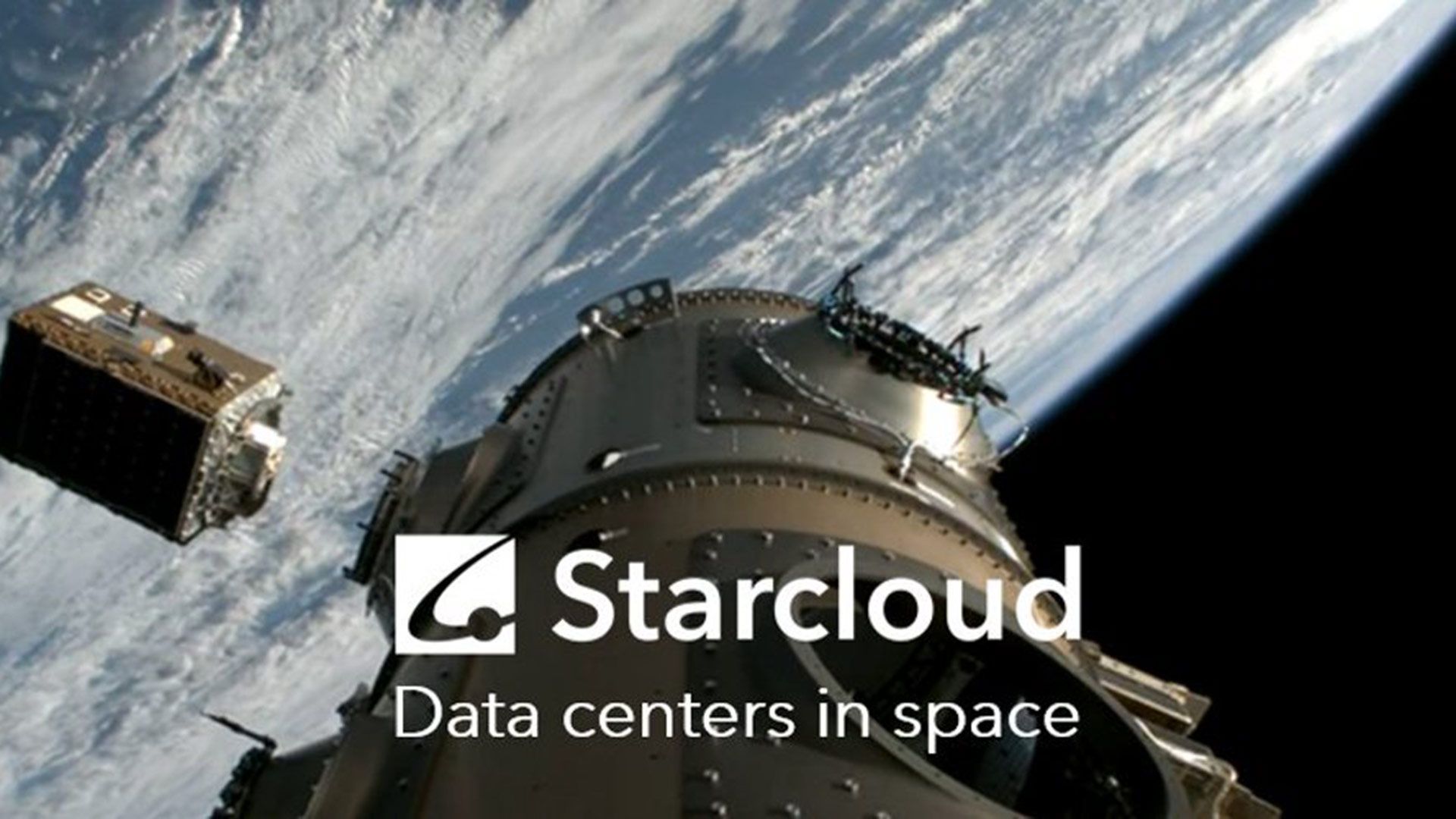
An Nvidia-backed company, Starcloud, has announced plans to establish a Bitcoin mining operation in space before the end of the year, according to CEO Philip Johnston. Starcloud intends to activate its cryptocurrency mining ASICs upon the launch of its second spacecraft later this year. "We will be the first to mine Bitcoin in space," Johnston stated in an interview with Documenting Bitcoin.
The first Bitcoin mining venture in space is set to be carried out by Starcloud, as claimed by Johnston. "We'll have some Bitcoin mining ASICs on the second spacecraft launching later this year," he added. Starcloud was established in 2024 with the primary objective of relocating data centers to space. The firm's mission statement highlights the advantages of continuous solar energy and radiative cooling in space, enabling rapid scaling to gigawatts and bypassing Earth's permitting constraints.
The company elaborates on its proposition in greater detail through a white paper on its official website. Johnston revealed that Starcloud-2, the second of four planned satellite launches, will serve as the company's initial commercial mission. Unlike the previous satellite, this one will be equipped with a GPU cluster and notably mention Bitcoin mining.
The Starcloud-2 project page does not explicitly mention Bitcoin mining or ASICs, leaving Johnston's announcement somewhat surprising. Johnston explained the financial rationale behind considering Bitcoin mining as a new venture, pointing out the significantly lower costs of ASICs compared to GPUs. He cited an example where a 1KW Nvidia B200 chip costs $30,000, whereas a 1KW ASIC is priced at just $1,000.
Johnston emphasized that addressing the energy supply situation in space, whether for GPUs or ASICs, is not directly relevant to their primary business. However, he acknowledged that the availability of uninterrupted solar power in space is a significant advantage for space-based compute. Despite the numerous benefits, commercial space-based data centers face challenges such as limited servicing capabilities and the absence of convection cooling in a vacuum.
As these pioneering deployments like Starcloud-2 unfold, the full extent of the problems and solutions will become clearer.
Written by urgent.news from Tom's Hardware's reporting — not their text. Machine-written — may contain errors; check the original before relying on it.