Vera C. Rubin Observatory detects one of the smallest and faintest satellite galaxies ever seen
Astronomers looking at Vera C. Rubin Observatory test data have discovered 'Aquarius IV', believed to be a brand new satellite galaxy of the Milky Way located 350,000 light-years away.
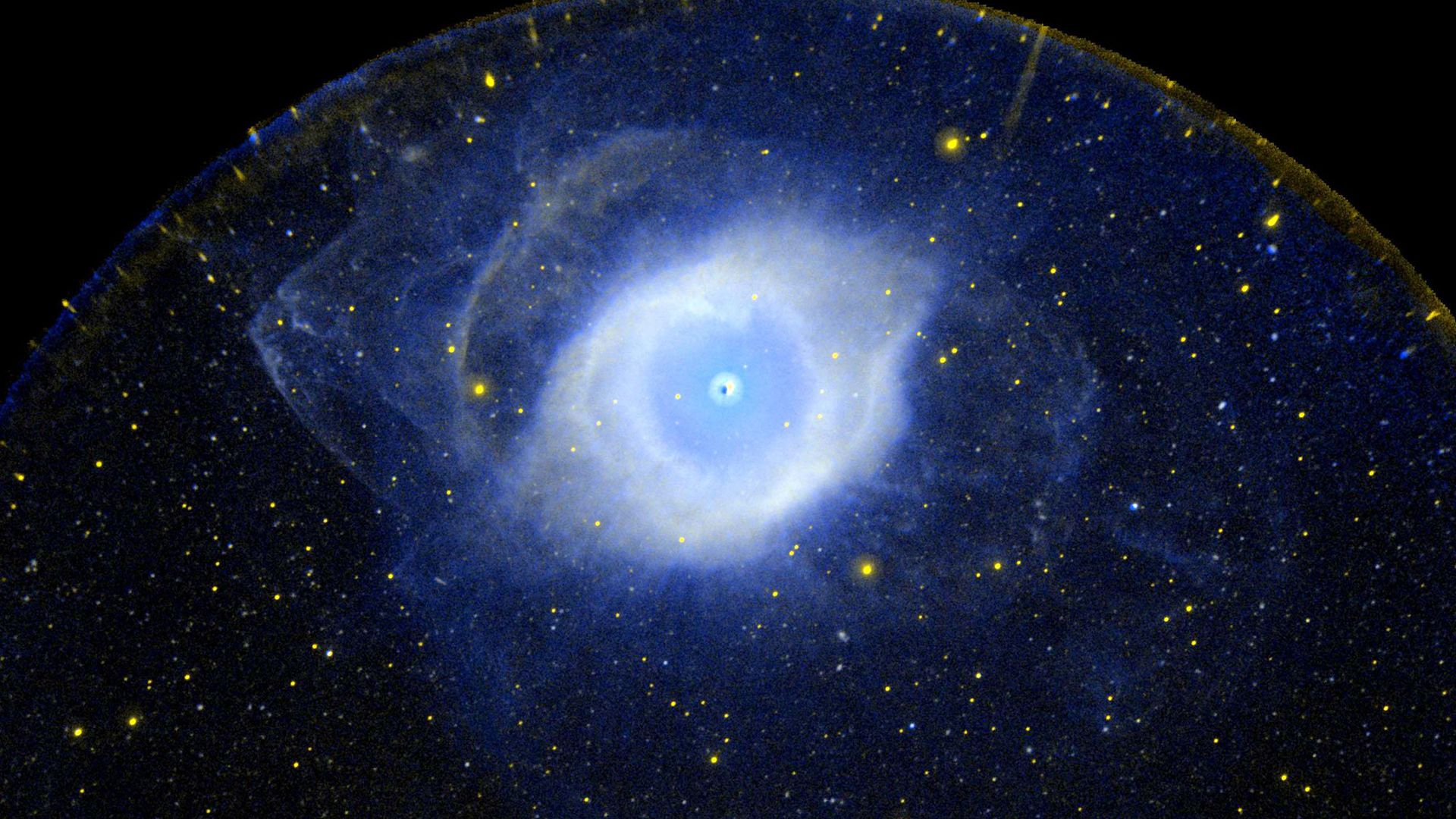
The Vera C. Rubin Observatory in Chile has detected a previously unknown satellite galaxy, named Aquarius IV, orbiting the Milky Way. According to a study that has not yet undergone peer review, Aquarius IV is one of the smallest, faintest, and most distant satellite galaxies ever observed. This ancient cluster of stars was discovered in early test data from the Rubin Observatory, showcasing the telescope's remarkable capabilities and providing insight into our cosmic neighborhood.
Ultrafaint dwarf galaxies, such as Aquarius IV, are among the tiniest and faintest galaxies in the universe, containing at most a few hundred thousand stars. These dim clusters are predominantly composed of dark matter, with only a small fraction of their mass made up of stars. While hundreds of such satellite galaxies are believed to exist, only around 60 have been discovered to date.
The Rubin Observatory, with its ability to detect objects up to 100 million times fainter than those visible to the naked eye, is well-equipped to identify these elusive galaxies.
However, the data analyzed in the new study was from an earlier test run, called Early Data Preview 2 (EDP2), which covered only about 7% of the night sky. Using computer models on this test data, the researchers identified Aquarius IV as a group of stars whose brightness and colors suggested they had evolved together. The researchers assumed these stars were around 13 billion years old, nearly as old as the universe itself.
The detection of Aquarius IV was confirmed using older images from the Dark Energy Camera on the NSF Victor M. Blanco Telescope in Chile, which revealed faint stars that had been overlooked. Although the significance limit for the discovery was six sigma, indicating a 1-in-100-billion chance of it being a random fluke, the researchers still considered the evidence strong.
The newly discovered satellite galaxy lies approximately 359,000 light-years from the Milky Way's center and has a mass about 1,500 times that of the sun. Its absolute magnitude, or intrinsic brightness, is -1.9, making it 14 million times dimmer than the Milky Way.
Written by urgent.news from Live Science's reporting — not their text. Machine-written — may contain errors; check the original before relying on it.