Unterschiede der Geschlechter: Gesicht oder Objekt? Schon Neugeborene haben Präferenzen
Sind es eher die Gene und Hormone, die das Verhalten von Mädchen und Jungs beeinflussen - oder die Umwelt? Bestimmte Unterschiede zumindest scheinen angeboren.
Gender disparities: Eyes or objects? Even newborns have preferences
For decades, scholars have debated whether gender differences stem from innate or learned factors. A recent study, however, reveals that differences in attention to specific stimuli are present even in newborns. Male infants allocate less time to observing social cues, such as faces, compared to female infants. Researchers from Cambridge University reported these findings in the journal "Biology of Sex Differences."
Traditionally, society portrays men as "rough and tough," interested in technical matters, while women are seen as caregivers who maintain family harmony. Such stereotypes often shape our perceptions of gender roles. In early childhood, girls are more likely to engage in nurturing activities, while boys may prefer physical play or construction activities.
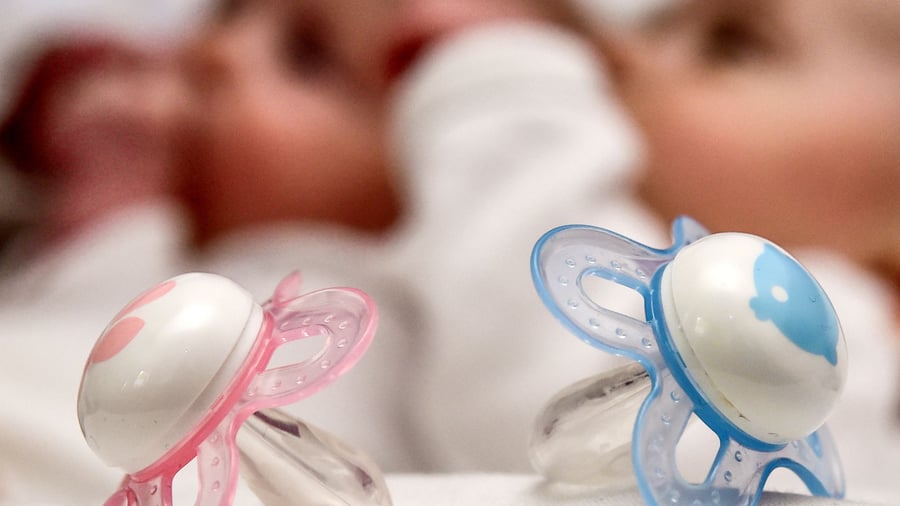
The question of whether these differences are inherent or nurtured remains unresolved, mainly due to the influence of social factors that begin from an early age. Parents, caretakers, siblings, peers, media, and institutions all contribute to shaping our perceptions of what is typical for girls or boys. Even the design of toys, like pacifiers and teething rings, reflects gender biases. Rarely do boys receive dolls, and girls are rarely given toy construction sets.
Interestingly, research shows that girls tend to start speaking earlier and develop their social skills more quickly than boys, raising the question: Is this due to biological factors or socialization? To address this, scientists investigated gender differences that are apparent immediately after birth, before societal and cultural influences shape development. A study published in 2000 by Cambridge University already noted that girls tend to look at faces more frequently than boys right after birth.
In a new study led by Yumnah Khan from Cambridge University, 130 newborns were tested an average of 33 hours after birth. They were shown a video of a human face with changing facial expressions and a series of swinging metal balls, known as a Newton's pendulum. On average, regardless of gender, the infants showed a preference for faces.
However, this preference was stronger in female infants: on average, they spent a larger proportion of time observing the social stimulus compared to male infants. Conversely, male infants spent a larger portion of their time observing the object.
The researchers suggest that biological factors like hormone levels and genetics during pregnancy may contribute to these observed gender differences. However, other factors such as developmental stages or visual characteristics of the presented stimuli could also play a role. Additionally, the study highlights that these gender differences are not universal for all male or female infants but appear as an average across groups of male and female newborns. Within each gender, there are significant variations and overlaps.
Moving forward, the team aims to investigate whether early gender-specific differences influence later differences in children's psychology, brain development, and behavior. They emphasize that while gender-specific differences at birth are important starting points, they do not fully determine how children learn and develop later in life. Instead, biological and social factors interact to contribute to the diversity of human societies.
Written by urgent.news from Handelsblatt's reporting — not their text. Machine-written — may contain errors; check the original before relying on it.