Trump’s U.N. Address Offers a Doctrine of Peace Through Force
The President cast military action and economic coercion not as alternatives to diplomacy, but as the leverage that makes it work.
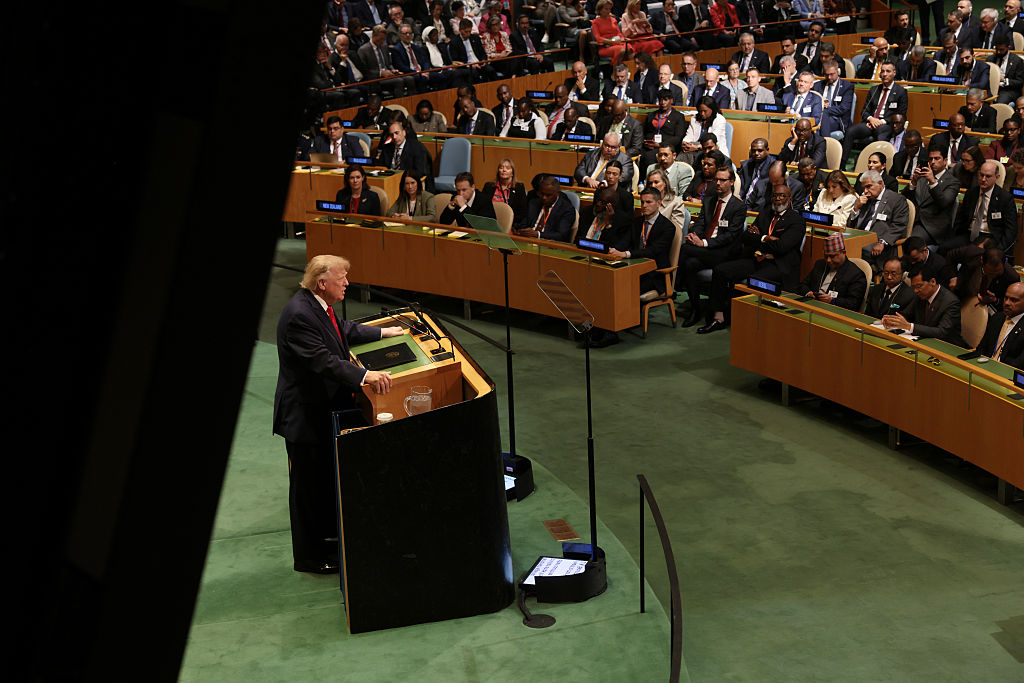
During his address to the United Nations General Assembly on September 22, 2026, President Donald Trump articulated a doctrine of "peace through strength." This approach emphasizes the use of military might and economic coercion as means to achieve peace and influence global affairs. Trump highlighted this strategy by referencing the U.S.-Israel strikes against Iran, the economic pressure on Cuba, and his campaign against drug cartels in the Caribbean.
Trump described force as the means that facilitates diplomacy, asserting that the strong dictate terms while the weak endure. He claimed that his administration believes "force is the only currency of value," positioning the U.S. as a global enforcer. For instance, Trump's approach to Iran involved initially offering economic cooperation, transitioning to military action when Tehran refused, and seeking complete economic isolation to force negotiations.
Moreover, the President expanded this doctrine to Cuba, describing it as a "failed nation" whose political transformation was imminent due to mounting pressure from the U.S. Despite protests from Cuban delegates, Trump maintained that "freedom will be coming" to the island nation. This coercive stance was also applied to drug cartels, with Trump defending drone strikes against suspected drug traffickers, claiming the actions were necessary to combat "the ISIS of the Western Hemisphere."
However, Trump's assertion that his actions make him a superior peacemaker has been disputed. Despite claiming credit for ending eight wars since his inauguration, this claim has faced widespread skepticism. While the "peace through strength" approach remains central to Trump's foreign policy, its effectiveness is increasingly called into question by ongoing conflicts and international criticism.
Written by urgent.news from Time's reporting — not their text. Machine-written — may contain errors; check the original before relying on it.