Trump is rolling back climate action. These 157 cities are going in the opposite direction
In June 2026 , the Trump administration told states that they couldn’t use billions of dollars in Inflation Reduction Act federal rebates to help homeowners switch from fossil fuel appliances to climate-friendly heat pumps . But that move didn’t affect a heat pump rebate available in Tacoma , Washington, run by the city and its local power utility. It’s one example of how, even as the federal…
In June 2026, the Trump administration barred states from using Inflation Reduction Act federal rebates to assist homeowners in replacing fossil fuel appliances with climate-friendly heat pumps. However, this federal action did not impact a heat pump rebate offered by Tacoma, Washington's city and local power utility. This instance exemplifies how local leaders, despite the Trump administration's significant retreat from climate action, can still advance climate initiatives through their own policies.
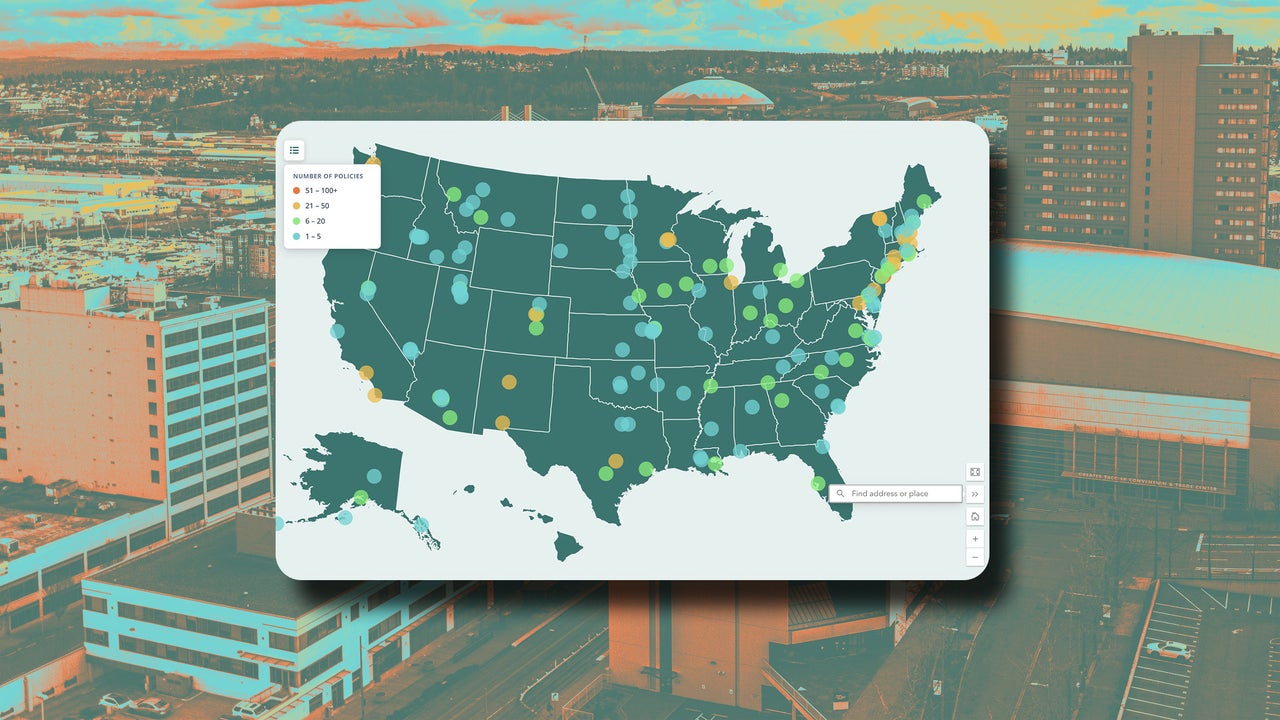
The University of Maryland's Center for Global Sustainability has unveiled a database illustrating such city-level actions. It encompasses over 1,400 policies and programs from 157 cities across the nation, ranging from building efficiency enhancements to financial incentive schemes and climate mitigations like expanding urban shade in areas plagued by extreme heat.
The tool presents a map showcasing cities with the highest number of climate policies, as well as a dataset that connects to city plans and categorizes each action by location, sector, and policy area such as transportation, electricity, or waste.
Nate Hultman, director of the Center for Global Sustainability at the University of Maryland, declared in a statement that the database offers the most comprehensive view to date of how cities nationwide are responding to the present climate emergency with policy. "What stands out is both the breadth of action and the opportunity it reveals: cities and states are pursuing clean energy and energy efficiency, and recognizing that this landscape is the first step toward accelerating action where it is most needed," he added.
Highlighted examples within the dataset include Cleveland's plan to retrofit municipal facilities with renewable energy and efficiency upgrades. The city's 2025 climate strategy aims to decrease emissions by 63.3% by 2030, a goal projected to save residents $2.3 million in energy expenses and generate over 1,200 new jobs annually.
In Phoenix, which experienced its second-hottest summer on record this year, city officials are already initiating a Shade Phoenix program to plant 27,000 new trees and install 550 additional shade structures over the next five years.
While not all policies within the database are recent, some date back a decade. However, due to their local nature, they remain safeguarded from the Trump administration's attempts to dismantle federal climate programs. Although this database primarily focuses on recent policies, it underscores that even in the absence of federal action, local governments can execute impactful climate measures.
Hultman concluded, "The data demonstrate that local leadership is real, widespread, and provides the groundwork for a better pathway."
Written by urgent.news from Fast Company's reporting — not their text. Machine-written — may contain errors; check the original before relying on it.