Treasury Trading at the Close
In past work , we showed that trading in U.S. Treasury securities is becoming increasingly concentrated on the last trading day of each month. In this post, we show that trading is also becoming more concentrated around the designated pricing, or “strike,” times for fixed-income indexes. The concentration is especially pronounced on month-end trading days. We also document a marked shift in…
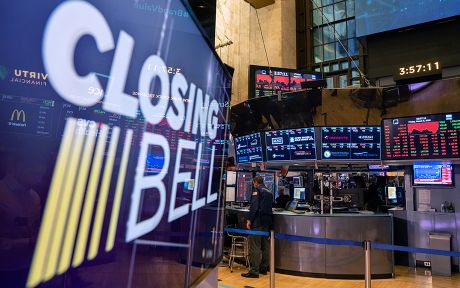
Recent research reveals that trading activity in U.S. Treasury securities is increasingly concentrated around closing times of fixed-income indexes. In a previous study, Henry Dyer, Michael J. Fleming, and Or Shachar found that Treasury security trading volume is about 58 percent higher on the last trading day of the month compared to other days.
The concentration of activity has intensified over the past decade, likely due to the growth of assets managed relative to fixed-income indexes, which are often rebalanced monthly.
Traditionally, the industry standard for index closing times was 3 p.m., coinciding with the end of open-outcry trading for Treasury futures. However, in January 2021, Bloomberg Barclays, one of the largest index providers, shifted its U.S. dollar-denominated index strike time from 3 p.m. to 4 p.m. This change coincided with a notable shift in trading patterns.
The share of daily trading volume in the ten minutes surrounding 3 p.m. decreased, while the share around 4 p.m. surged. By 2025, the share of activity at 4 p.m. had increased to 20.4 percent, reflecting the growing importance of the 4 p.m. strike time.
This change is particularly pronounced on the last trading day of each month, when indexes are rebalanced. During these days, the share of activity around 3 p.m. rose from 8.1 percent in 2016 to 12.1 percent in 2020, before plummeting as the 4 p.m. strike time gained prominence. Trading activity during the 4 p.m. strike time has since surged to 20.4 percent, demonstrating the significant impact of the index strike time change on Treasury trading patterns.
Written by urgent.news from Liberty Street Economics's reporting — not their text. Machine-written — may contain errors; check the original before relying on it.
Read the original at libertystreeteconomics.newyorkfed.org →