“The State of Working Wisconsin, 2026”
From the High Road Strategy Center, an annual report: Wisconsin job growth grinds to a halt Wisconsin had 3,042,900 jobs in July 2026, down from the record 3,051,000 jobs reached in November 2024. Since January 2025, the state has actually lost jobs while national job growth has continued, though slowly. Wisconsin’s unemployment slowly rises, while […]
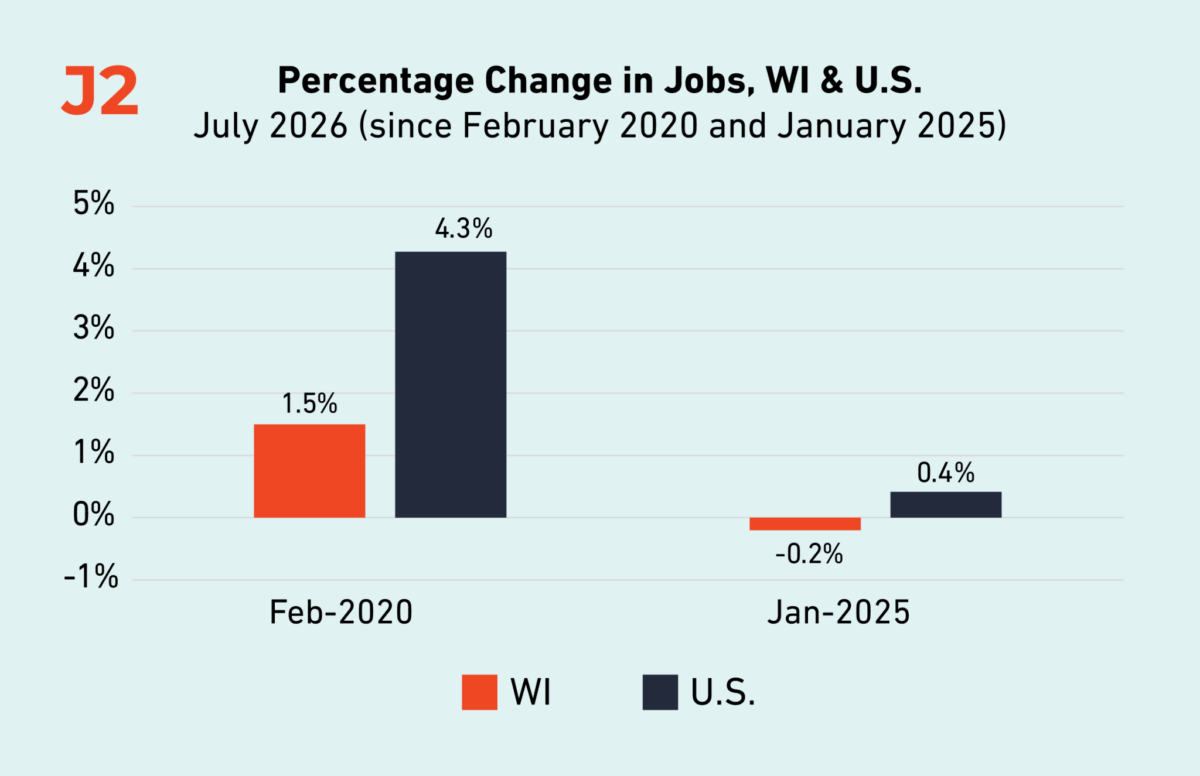
The State of Working Wisconsin, 2026 reveals a grim outlook for the state's job market and economy. According to the High Road Strategy Center's annual report, Wisconsin had 3,042,900 jobs in July 2026, a decline from the record 3,051,000 jobs reached in November 2024. This is despite national job growth, albeit slow.
Unemployment in Wisconsin has been on the rise. In the first quarter of 2026, the rate stood at 7.2%, nearly three times the 2.3% for white workers. This disparity in Black unemployment has sharply increased over the past year, placing Wisconsin among the worst states in the nation for this issue.
Despite these challenges, there is a positive note on wages. Wisconsin's median wage has reached a record high at $26.17, a significant increase over the past decade. Adjusted for inflation, it has grown from $22.10 to $26.17. The report also highlights that strong wage growth for lower-wage workers has helped reduce wage inequality. From 2019 to 2025, wages for workers at the 20th percentile increased by 16%, compared to 8% for those at the 80th percentile.
However, the report paints a bleak picture of Wisconsin's labor force. Unionization rates have fallen three times faster in Wisconsin than the national average. From 2011 to 2025, Wisconsin's unionization rate dropped from 14% to 7.5%, while the national rate declined from 13% to 11%. This trend has been steeper than in any neighboring state.
The economic situation for working families in Wisconsin is dire. One in three working families in the state faces substantial financial hardship. Federal policies, particularly the massive deportation campaign, are exacerbating this affordability crisis. The report cites recent research showing that deportations negatively impact both immigrants and non-immigrants' employment.
The entire report, filled with detailed documentation, is available at the provided link.
Written by urgent.news from Econbrowser's reporting — not their text. Machine-written — may contain errors; check the original before relying on it.