The green transition is a team effort
Governments cannot do it alone, nor can businesses, researchers or investors.
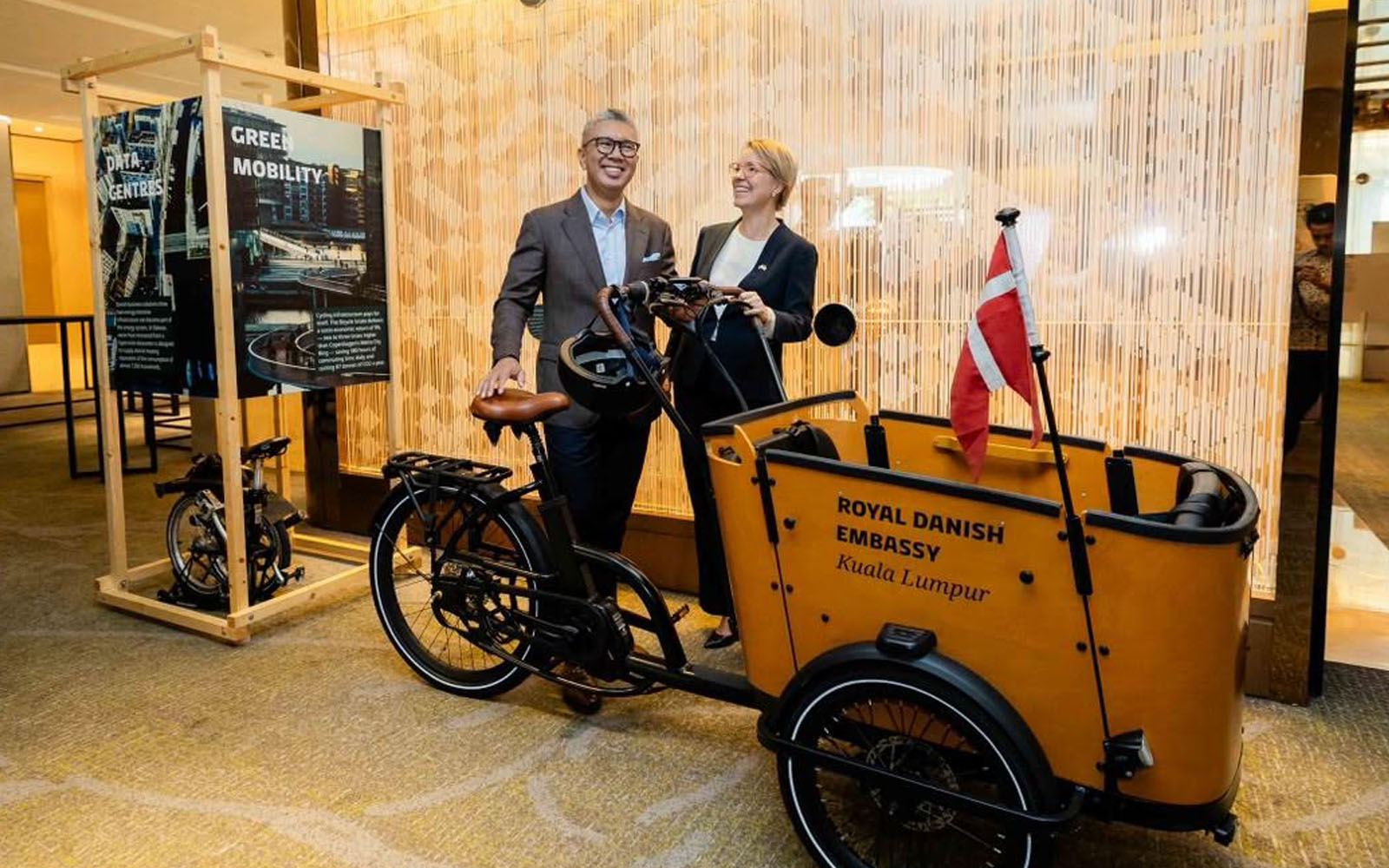
The green transition represents one of the most defining challenges of our time. While we know where we need to go, the real question lies in how to achieve it swiftly. Denmark, with its decades of experience in transforming climate ambitions into tangible solutions, has learned a crucial lesson: governments cannot accomplish this feat alone. Neither can businesses, researchers, or investors. True progress emerges when all stakeholders unite.
This principle was central to the recent Green Denmark Day in Kuala Lumpur, where around 200 decision-makers, business leaders, experts, and investors from Denmark and Malaysia convened to discuss challenges and potential solutions related to green transition, healthy urban living, and the future-proofing of food supply. The discussions covered a wide range of topics, from the energy and water demands of data centers to circular waste systems, healthier cities, preventive healthcare, food security, and the potential to transform agricultural byproducts into valuable resources.
At first glance, these subjects may seem unrelated. However, they are intricately connected. A burgeoning digital economy generates increased energy and water requirements. Urban design significantly impacts emissions, public health, and climate resilience. Agricultural production relies on water, energy, land, and healthy ecosystems. Waste from one industry can serve as energy, feedstock, or raw material for another.
This interconnectedness underscores the necessity of a whole-of-society and whole-of-government approach to the green transition. Public-private partnerships are essential. Collaboration across traditional boundaries has been a cornerstone of Denmark's green journey. Public authorities provide long-term direction and enabling frameworks, while companies develop and deploy solutions.
Researchers generate knowledge, and investors facilitate the transformation of ideas into infrastructure. Denmark and Malaysia share a promising opportunity to leverage these strengths, creating avenues for deeper projects, investments, and long-term commercial cooperation.
The Green Transition Alliance, established to bridge this gap, brings together the Danish embassy in Malaysia and six Danish companies with expertise relevant to Malaysia's green transition: Carlsberg Malaysia, Copenhagen Infrastructure Partners, Novonesis, Novo, Ramboll, and Rockwool Malaysia. Their combined expertise spans energy-efficient buildings, industrial decarbonization, preventive health, bio-solutions, food, agricultural resource efficiency, sustainable cities, infrastructure, renewable energy, and investment.
The alliance's formation was further enhanced by the event, which brought Alliance members together with Malaysian companies, policymakers, researchers, industry associations, investors, and other knowledge partners. The discussions highlighted the importance of starting collaboration with a local context rather than focusing solely on technology.
For instance, Denmark's experience in utilizing surplus heat from data centers to heat homes in cold climates offers a relevant yet distinct solution for Malaysia, where district heating demand is lower. Similarly, waste management strategies that work in Denmark, such as recycling, waste-to-energy, and circular design, can be adapted to complement each other in Malaysia's context.
Food production in Malaysia is abundant, yet many valuable side streams are underutilized, while some inputs are imported. Bio-solutions like fermentation and enzymes can enhance the value derived from local resources. However, these solutions require consistency, scalability, and competitive economics. Healthy cities are shaped by a multitude of factors, including food, buildings, streets, air quality, and urban planning.
No single entity owns these challenges; rather, they demand a collective approach. Sustainable solutions that align sustainability and competitiveness are more likely to succeed and scale.
Green solutions can lead to cost reductions, create valuable products from agricultural byproducts, and foster healthier, more attractive living environments. Furthermore, renewable energy and resilient infrastructure bolster energy security. The green transition should not only focus on what we reduce but also on what we create: new industries, capabilities, investments, jobs, and partnerships.
The Green Denmark Day underscored the importance of honesty, adaptability, and concrete action. It is essential to acknowledge what works and what does not, challenge prevailing assumptions, and tailor experiences to local realities. Above all, the day emphasized the need for actionable next steps. The Green Transition Alliance aims to facilitate the creation of these steps, emphasizing that the opportunity before Denmark and Malaysia extends beyond mere knowledge exchange—it is about building a collaborative green transition together.
Kirstine Vangkilde Berner, the Danish ambassador to Malaysia, delivered these insights, emphasizing that the views expressed do not necessarily reflect those of FMT.
Written by urgent.news from Free Malaysia Today's reporting — not their text. Machine-written — may contain errors; check the original before relying on it.
This story
This is one outlet's version. Read the fullest account.
- The green transition is a team effort freemalaysiatoday.com