The El Nino Effect: Karnataka, Maharashtra Battling Drought-Like Conditions
As the southwest monsoon comes to a close, it leaves behind a series of travails across the country, the worst of them being drought or drought-like conditions. It has shown again that averages do not matter when millions of lives are at stake and thousands of acres stand on the brink of an agricultural crisis. India’s average rainfall deficit stands at around 15-17 per cent, but the shortfalls…
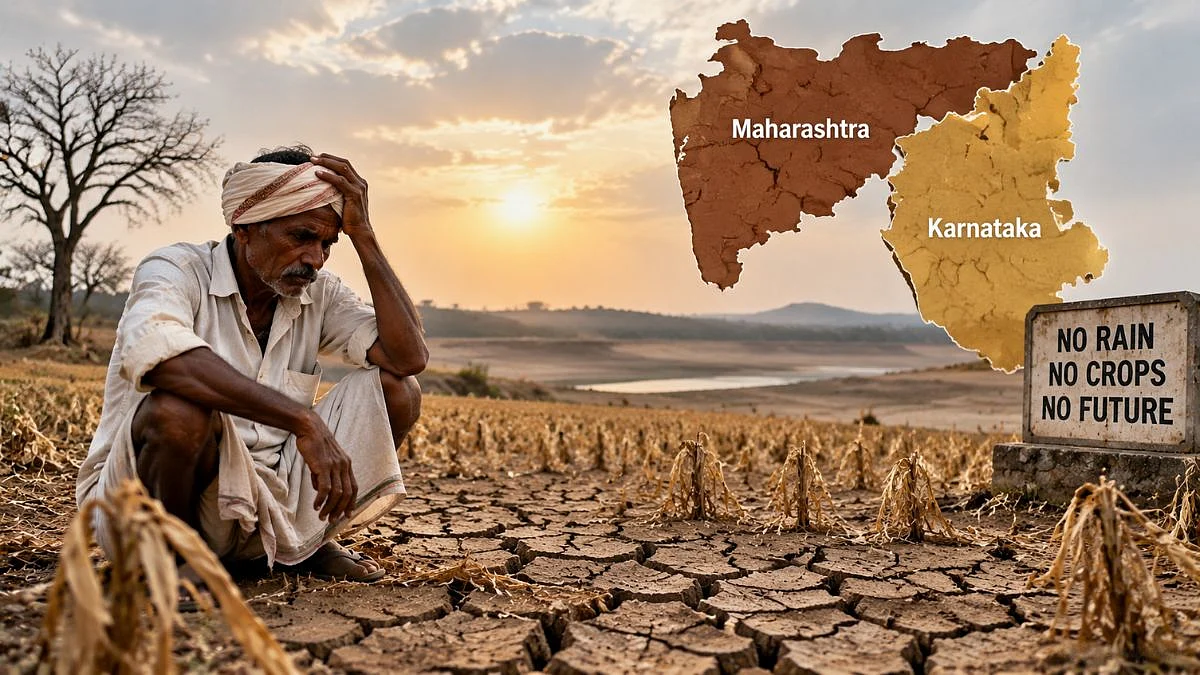
As the southwest monsoon comes to an end, India faces a series of devastating consequences, the most severe being drought-like conditions. The national average rainfall deficit stands at approximately 15-17 percent, but the reality is far more alarming. States such as Meghalaya, Manipur, and Arunachal Pradesh are experiencing rainfall deficits of 59, 41-42, and 42 percent, respectively.
Karnataka and Kerala have recorded deficits of 31 and 28 percent. In response to these dire circumstances, Karnataka's legislature is convening a special session this week. The DK Shivakumar-led government has declared 177 out of 239 talukas as drought-affected, with an estimated crop loss of Rs 18,000 crore.
In Maharashtra, the disparity is even more pronounced. With a state-wide rainfall deficit of about 17-18 percent, regions such as Marathwada and Vidarbha are grappling with extreme drought-like conditions. The rainfall deficit in Marathwada's eight districts is nearly 50 percent, while Vidarbha trails behind with a similar deficit. The situation prompted Maharashtra's Chief Minister, Devendra Fadnavis, to form a cabinet sub-committee to address drought relief and monitor the situation across the state.
The crisis is not an overnight event, but rather a gradual accumulation of deficits over several weeks. Critics question if state governments were adequately prepared for this situation. In a desperate bid, veteran politician Sharad Pawar wrote to the Maharashtra Chief Minister, demanding the declaration of drought in 31 districts.
The official declaration is crucial for the activation of various relief measures, including compensation for crop losses, insurance payouts, loan rescheduling, cattle camps, water tanker requisition, electricity bill waivers, student fee concessions, and increased employment guarantee schemes. The well-being of people hinges on the timely implementation of these measures.
While it may be tempting to politicize the drought issue, it is crucial that the governments are held accountable for their response to the situation. Although the rainfall deficiency due to El Niño was anticipated, the urgency now lies in tackling the acute water shortage, crop failure, and the increasing number of farmer suicides. Ultimately, the aim is to make the worst-affected regions drought-resilient as climate change impacts continue to intensify.
Written by urgent.news from Free Press Journal's reporting — not their text. Machine-written — may contain errors; check the original before relying on it.