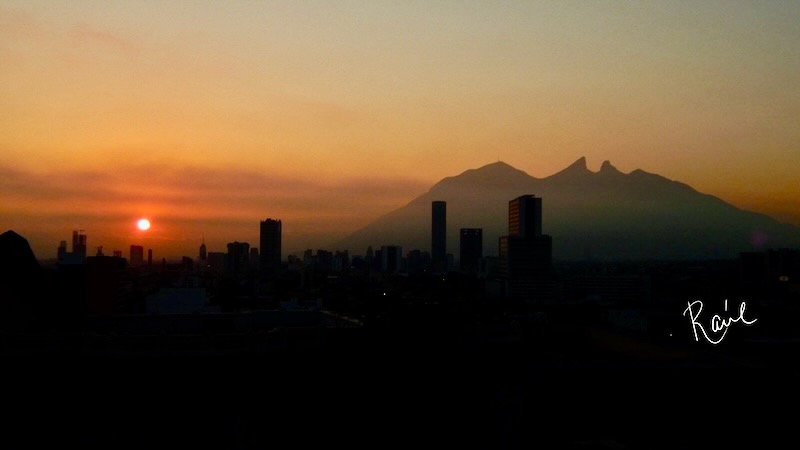
The Air we cannot see: Why Ghana must start taking its atmosphere seriously
There is something strange about the air we breathe. We cannot see it, yet it surrounds us. We cannot hold it in our hands, yet without it we would not survive for more than a few minutes. It carries heat, moisture, gases and tiny particles across cities, countries and continents. It interacts with sunlight; controls part of the Earth's energy balance and helps determine the weather we experience…

The atmosphere that we cannot see is a fundamental aspect of our existence, yet it remains largely misunderstood. As a physicist, the author emphasizes that the atmosphere is not just empty space, but a dynamic system governed by the same principles that control matter and energy in nature. The Earth's atmosphere is a thin layer of gases held in place by gravity, with nitrogen and oxygen being the primary components.
However, it is far more than a simple mixture of gases; it is a complex system that constantly moves, mixing, rising, and descending, transporting heat, moisture, gases, and tiny particles across cities, countries, and continents.
The author highlights that air pollution should not be viewed through the lens of visible smoke or immediate health concerns, but rather through the lens of atmospheric physics. The particles that make up the air are not static objects, but active players in the Earth's energy balance and weather patterns. Suspended in the atmosphere are aerosols, tiny solid and liquid particles that can have a profound impact on climate, cloud formation, and visibility.
These particles can scatter or absorb sunlight, influencing the Earth's energy balance. Some aerosols can have a cooling effect by reflecting sunlight back into space, while others, particularly absorbing particles like black carbon, can warm the atmosphere by absorbing solar radiation.
The author emphasizes that the atmosphere does not recognize political boundaries. What is released in one location can be transported to another by wind and atmospheric circulation, connecting regions in ways that human boundaries cannot. This interconnectedness becomes particularly relevant when considering air quality issues in Ghana.
The country does not have an isolated atmosphere separate from its neighbors, but is part of a larger West African atmospheric system. Dust from the Sahara and Sahel can be transported southward during the dry season, affecting air quality in Ghana without a direct local source.
The author stresses the importance of understanding the physics of the air and the challenges that come with measuring it. Accurate air-quality monitoring is crucial, yet coverage remains uneven across Africa. The 2024 World Air Quality Report estimates that Ghana's population-weighted annual average PM 2.5 concentration is more than seven times the World Health Organization's annual guideline.
However, the author cautions that these numbers must be interpreted carefully, as monitoring coverage is still insufficient across the continent. Insufficient measurement should not be mistaken for a lack of pollution, as Africa faces one of its greatest environmental challenges in this regard. Only through comprehensive measurement, atmospheric models, meteorological observations, and satellite data can we begin to understand the sources, destinations, and effects of atmospheric particles at a global scale.
Written by urgent.news from MyJoyOnline Ghana's reporting — not their text. Machine-written — may contain errors; check the original before relying on it.