Ten years after the blackouts, what changed in Ghana’s power story?
Karpowership arrived in that context in December 2015, when its floating power plant docked in Tema under a supply agreement with the Electricity Company of Ghana.
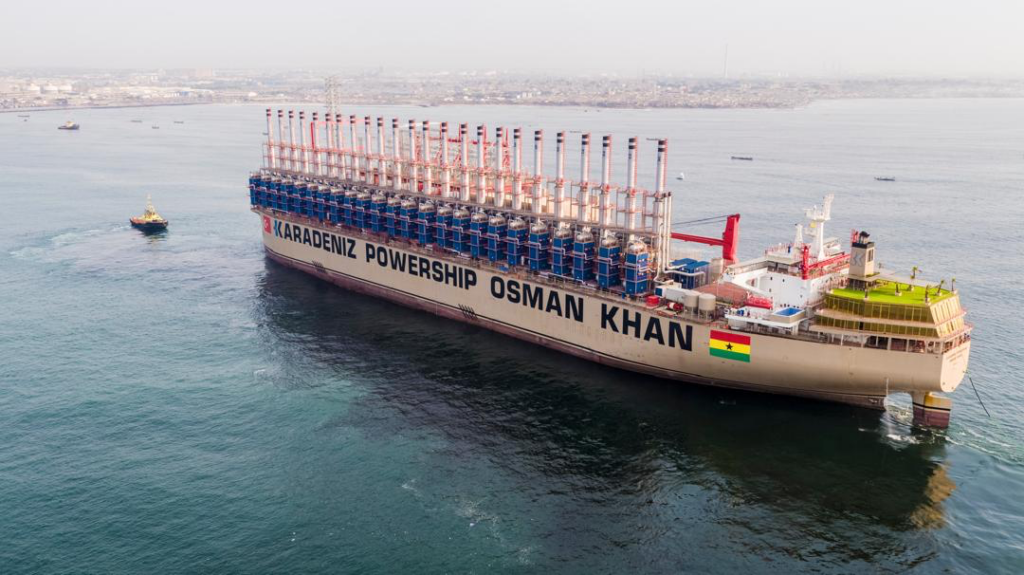
Ten years after the notorious power outages known as dumsor gripped Ghana, the country's energy landscape has undergone significant changes under the operation of Karpowership, a floating power plant provider. In 2014, a single year of these frequent blackouts cost the economy almost a billion dollars, with GDP growth slowing by an estimated two percentage points.
In response to this crisis, Karpowership arrived in December 2015, docking its floating power plant in Tema under a supply agreement with the Electricity Company of Ghana.
However, a decade later, Karpowership's impact extends far beyond the megawatts of electricity it generates. The company relocated its plant from Tema to the coastal city of Takoradi in the Western Region of Ghana in 2019, taking advantage of domestically produced natural gas. This move not only reduced the country's reliance on imported liquid fuels by an estimated $120 million annually but also created around 500 direct and indirect jobs in the Western Region.
Karpowership's presence in Ghana has also opened opportunities for local engineers to build careers in the power sector.
Beyond the economic benefits, Karpowership's operations have contributed to a more stable and reliable power supply. The consistent power output has allowed businesses to keep production lines running overnight, fish traders to store their goods without spoilage, and students to study under steady light instead of candles. These seemingly small improvements add up to the kind of stability that is essential for an economy to plan and grow.
Karppowership's community involvement in Ghana is coordinated through the One World Karadeniz Foundation, established in 2024. This foundation focuses on four areas of social investment: education & youth development, women's empowerment, community development, and environment. Globally, these initiatives have created over 100,000 local jobs and directly reached more than 300,000 people.
In Ghana, the foundation has supported schools and educational infrastructure, provided scholarships for students pursuing engineering and technical disciplines, organized community clean-up activities, and planted over 15,000 trees through environmental initiatives in host communities.
As Ghana's power sector continues to evolve, Karpowership's decade-long presence in the country stands out as a valuable contributor to its electricity needs. Its experience in managing generation deficits, transitioning to domestic gas, and investing in community programs sets it apart from many other power producers. As the country looks towards the next decade, Karpowership remains an integral part of the broader mix supporting Ghana's electricity demands.
Written by urgent.news from Joy Business's reporting — not their text. Machine-written — may contain errors; check the original before relying on it.