Tarot for a Broken World
With some of the oldest surviving tarot decks on view, the Morgan’s exhibition traces how a Renaissance card game became something far more powerful.
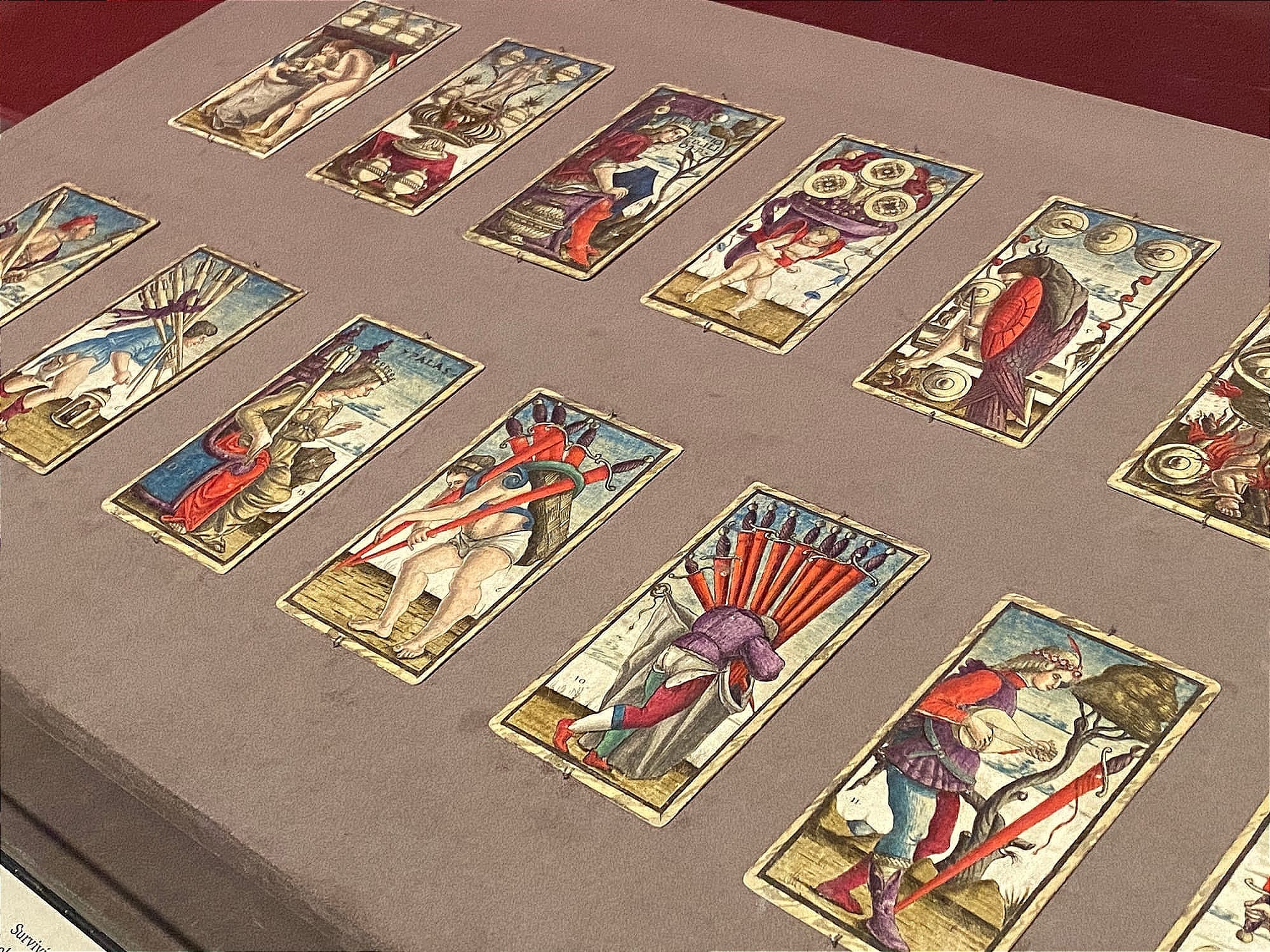
One peculiar aspect of tarot is the focus on money, represented as pentacles or coins, in 14 of the 76 cards. This deck, which many view as a tool for divination and spiritual exploration, might seem odd at first glance. However, examining the Morgan Library's Visconti-Sforza tarot collection, one of the oldest complete decks dating back to around 1450, provides insight into the deck's origins and the significance of its suits.
Likely produced for the powerful Milanese family, the gold- and silver-leaf-adorned set was designed as a game for the aristocracy. At 6.8 x 3.4 inches, the deck's design reflects the wealth and status of its intended audience. The exhibition "Tarot! Renaissance Symbols, Modern Visions" at the Morgan Library explores the deck's historical context and its enduring relevance.
Divided into "Renaissance Symbols" and "Modern Visions" sections, the show examines how tarot cards have inspired artists and practitioners over the centuries. Divination traditions, deeply rooted in culture and often tied to the material conditions of their time, have persisted for thousands of years. In contrast, tarot is relatively young, emerging only 500 years ago.
Its continued popularity, however, can be attributed to its remixability. During times of upheaval, divinatory tarot resurfaces, allowing practitioners to reinterpret the cards in light of contemporary concerns and challenges.
Written by urgent.news from Hyperallergic's reporting — not their text. Machine-written — may contain errors; check the original before relying on it.