StarCraft: Tabletop Miniatures Game Review
Long before I deployed my first army of little plastic figures on a table for war, I was mowing down the slithering Zerg and doing battle against the Queen of Blades in StarCraft. The term “Space Marines” I will now, and forever, associate with the Terran army from Blizzard’s classic RTS franchise (despite Games Workshop’s version being older and SC starting off as a 40K RTS). When Archon Studio,…
StarCraft: Tabletop Miniatures Game Review
Before engaging in my first tabletop war game with plastic figures, I had immersed myself in StarCraft, Blizzard's classic real-time strategy (RTS) franchise. The "Space Marines" from the game became synonymous with the Terran army, even though the tabletop adaptation was inspired by the Warhammer 40K universe. When Archon Studio, a respected board game developer, announced a StarCraft-themed tabletop miniature war game, I eagerly cleared my hobby table to play.
Each StarCraft match spans five rounds, with players attempting to complete objectives. During the game setup, players choose from two options for both the game type (objectives) and deployment zones, which dictate where armies and objectives are placed. Choices are then drafted, with one player selecting the game type and the other determining the deployment zones. This system adds variety to each match and ensures both sides face non-ideal scenarios.
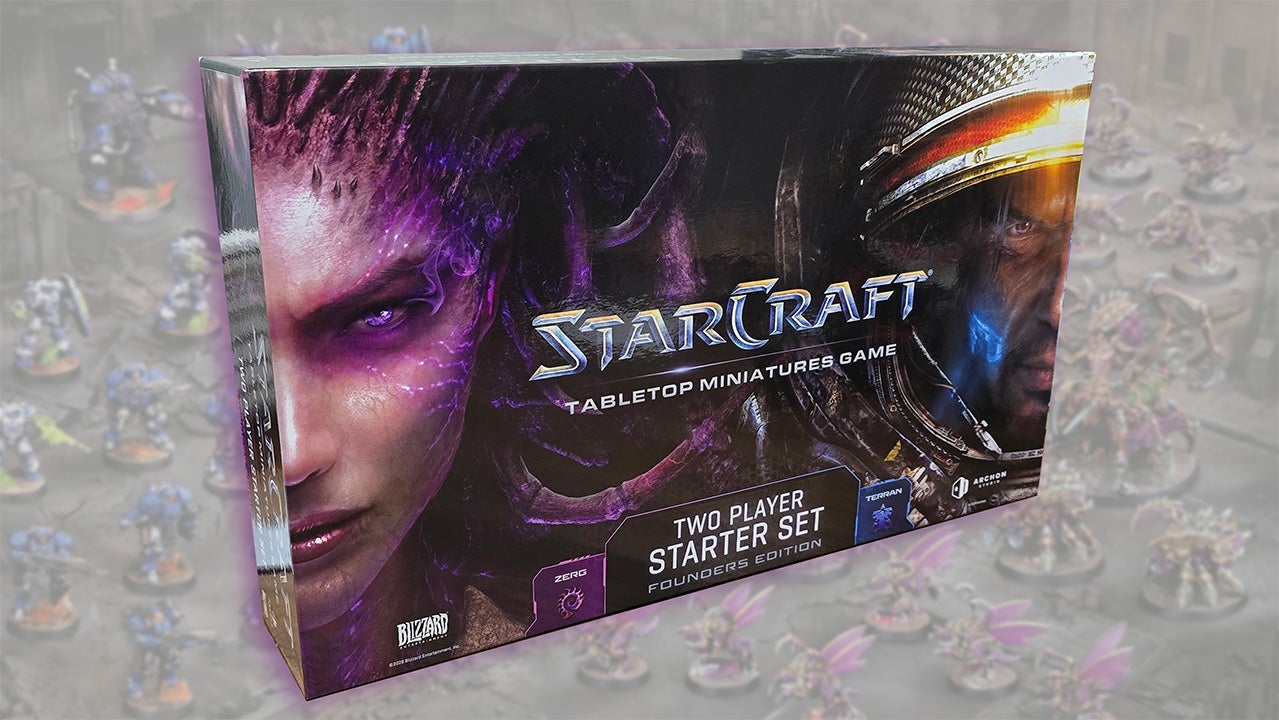
When purchasing the game, the official Blizzard store is the recommended source for miniatures and the rulebook. However, the two-player starter set can be found on Amazon or other third-party retailers, often at a higher price. Each player brings cards to define their army's composition, including faction cards that establish troop slots and unique benefits, and tactical cards representing buildings or perks from the RTS games.
The game's minis come in unique colors and feature detailed plastic with semi-transparent accents, making them visually appealing. The starter set includes Terrans in muted blue, Zergs in pinkish-purple, and Protoss in bright yellow, with distinctive textures and effects. The models' intricate detailing and accent parts make them stand out on the table, even with a simple primer and wash.
StarCraft's turn system, where units begin in reserve and deploy in limited amounts each round, keeps the game engaging and minimizes downtime. The supply limit, determined by the selected mission, ensures the game remains manageable and allows players to adjust their strategies mid-game. This approach, compared to other tabletop war games, keeps players actively participating in the game for shorter periods, making StarCraft a more captivating choice.
Written by urgent.news from IGN's reporting — not their text. Machine-written — may contain errors; check the original before relying on it.