Spain’s First Astronaut, Pedro Duque, Named IEEE Honorary Member
Many youngsters fascinated by exploring outer space dream of becoming an astronaut, but few do. One who had the right stuff is Pedro Duque , who was Spain’s first astronaut. The aeronautics engineer flew aboard the space shuttle Discovery and the International Space Station . After retiring as an astronaut, he headed Spain’s Ministry of Science, Innovation, and Universities . Today he is the…
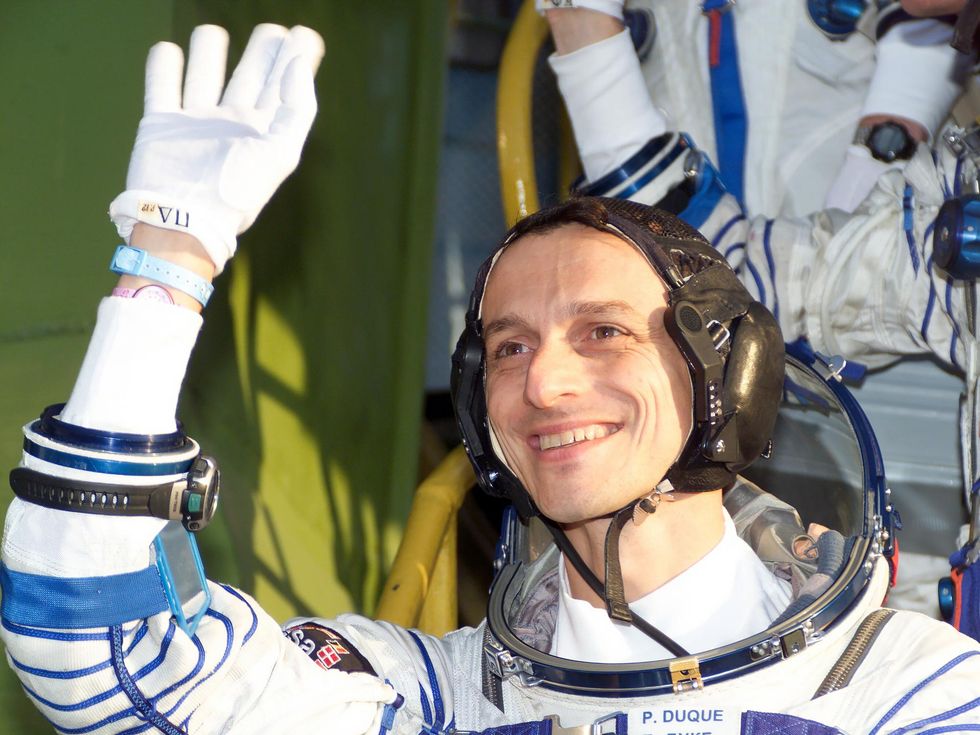
Pedro Duque made history as Spain's first astronaut, having flown aboard the space shuttle Discovery and the International Space Station. After retiring from his astronaut career, he held leadership roles in Spain's Ministry of Science, Innovation, and Universities and currently serves as the chairman of HispaSat, a prominent Spanish satellite company.
Despite spending nearly three decades since his first mission, Duque remains Spain's most renowned astronaut, with three public schools named after him and a multitude of awards to his credit.
In recognition of his contributions to space exploration, collaborative science and technology programs, and inspirational leadership, the IEEE Board of Directors honored Duque with an honorary membership this year. Though unable to attend the ceremony in New York City, Duque expressed his gratitude in recorded acceptance remarks during the event. In his video, he praised the IEEE - the world's largest and most influential engineering society - for fostering technological innovation and excellence for humanity's benefit.
Duque's fascination with space exploration began at a young age, inspired by the Apollo 11 moon landing when he was just six years old. Even though Spain lacked a space program during his time, his father, a former air traffic controller, instilled in him a deep interest in aeronautics. Although his dream of becoming an astronaut seemed unattainable in Spain due to the lack of funding and support for scientific research under Francisco Franco's dictatorship, Duque's passion persevered.
Duque's engineering background and experience in aeronautics prepared him for an impressive career as an astronaut. After earning an aeronautical engineering degree from the Polytechnic University of Madrid in 1986, he joined GMV, a space and technology company, where he worked on orbit determination, software development, and managing space agency missions. In 1992, ESA recruited candidates for its astronaut program, and Duque applied, eventually joining the Astronaut Corps after a rigorous selection process.
Throughout his career, Duque held numerous key roles, including serving as the prime crew interface coordinator for the ESA–Russian EuroMir space station and as a mission specialist on space shuttle Discovery's STS-95 mission. He also participated in the Soyuz TMA-3 Cervantes mission to the International Space Station. As a flight engineer, Duque managed station systems, maintained daily operations, and assisted with scientific experiments, all while cherishing the camaraderie with his fellow astronauts and ground crew.
One such memory includes a conversation with John H. Glenn, the first American to orbit the Earth, about the astronaut selection criteria during their shared flight on Discovery.
Duque's rigorous training and dedication to his profession were undoubtedly rewarding, as the experience proved to be a valuable learning opportunity, fulfilling his desire to explore and learn more about the cosmos and humanity's potential to conquer new frontiers.
Written by urgent.news from IEEE Spectrum's reporting — not their text. Machine-written — may contain errors; check the original before relying on it.