Scientists Say the Human Brain Might Be Made of Two Distinct Nervous Systems That Got Squished Together
Two separate types of progenitor cells give rise to the front and back of the organ, according to a new study. The findings can help researchers study human diseases that affect the hindbrain, since its nerve cells have previously been difficult—if not impossible—to make in the lab
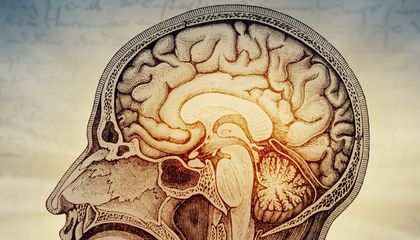
Scientists propose that the human brain might consist of two separate nervous systems that have fused together over time. According to new research published in Nature Neuroscience on September 18, the forebrain and hindbrain, which form at different stages of embryonic development, originally functioned as distinct neural systems.
Kyle Loh, a developmental biologist at Stanford University and co-author of the study, explains that evolution took these two systems and placed them side by side in the skull. While the forebrain processes higher-level cognitive functions, the hindbrain, also known as the brainstem, regulates basic automatic functions like hunger, sleep, and heart rate, as well as controlling facial, tongue, and throat muscles.
The brainstem is crucial and implicated in various genetic disorders such as spinal muscular atrophy and amyotrophic lateral sclerosis (Lou Gehrig's disease). Scientists have previously struggled to create hindbrain nerve cells using human pluripotent stem cells, but the new study reveals that the two cell types are inherently independent and package their DNA differently.
The discovery could help researchers better understand and treat brainstem-related conditions. While some experts remain skeptical about the claim that the brain originated as two separate systems, the study is a significant step toward unraveling the complexities of the human brain.
Written by urgent.news from Smithsonian's reporting — not their text. Machine-written — may contain errors; check the original before relying on it.