Record-low Rhine levels choke barge traffic, stress ground transport
Germany and other countries in central Europe are dealing with high freight transportation costs and supply chain delays because extremely low water levels on the Rhine River, and other tributaries, are curtailing barge traffic. The post Record-low Rhine levels choke barge traffic, stress ground transport appeared first on FreightWaves .
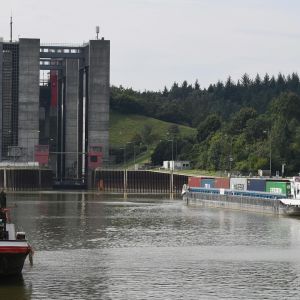
Water levels on the Rhine River have plummeted to 16 centimeters beneath the low-water threshold, jeopardizing barge transportation across a vital supply chain pathway for central Europe. The river's current navigable depth stands at approximately 4.25 feet, according to Germany's Federal Waterways and Shipping Administration. This dramatic drop in water levels has led to a near-total halt in voyages through Switzerland and southern Germany.
The inability to transport large volumes of containers and bulk goods between major North Sea ports and inland centers is causing significant operational challenges and financial pressures for businesses and their logistics partners. The situation appears to be worsening with limited rain forecasted.
Mark Chadwick, president of the Global Shippers Association, highlighted the unprecedented nature of the issue, stating that the impact is massive and just beginning. He warned that the effects on trucking in Europe will be profound, affecting pricing, access to capacity, and causing delays across multiple modes of transportation, including air and ocean.
Businesses are complaining that water levels are below 3.3 feet, preventing most barges from operating in the upper and middle Rhine. Past low-water events in Europe typically occur in late summer or fall, leaving experts uncertain about what to predict with rivers drying up so early.
The Rhine links Rotterdam's port (14.2 million standard container units of annual throughput) and Antwerp's port (13.6 million units) with cities across Europe's interior. Only small vessels or those carrying only 20% of their capacity can transit the upper and middle Rhine. The Elbe and Danube rivers also suffer from low water levels due to severe drought and heat.
Due to the Ukraine war, many barges have shifted to the Danube Delta, which also has low water levels. This limited option is causing congestion and delays for shippers.
The reduced barge availability and capacity constraints on rail and road transport networks are forcing cargo owners to rely on longer transit times via rail or road, leading to less flexibility in making last-minute booking changes. Truck drivers are scarce, and under these conditions, cargo owners face higher transportation and container repositioning costs, demurrage and detention storage fees, and mounting backlogs at ocean and inland terminals.
Some importers are exploring alternative transport solutions, such as using German ports in Hamburg, Bremerhaven, and Wilhelmshaven, or ports in Slovenia, Italy, and Spain. DHL recommends evaluating transportation decisions from an end-to-end supply chain perspective, securing truck and rail capacity early, and having flexibility to adapt to changing conditions.
Written by urgent.news from FreightWaves's reporting — not their text. Machine-written — may contain errors; check the original before relying on it.