Protests for Germany’s car industry as job losses loom
A combination of Chinese competition and US tariffs is causing problems in Germany.
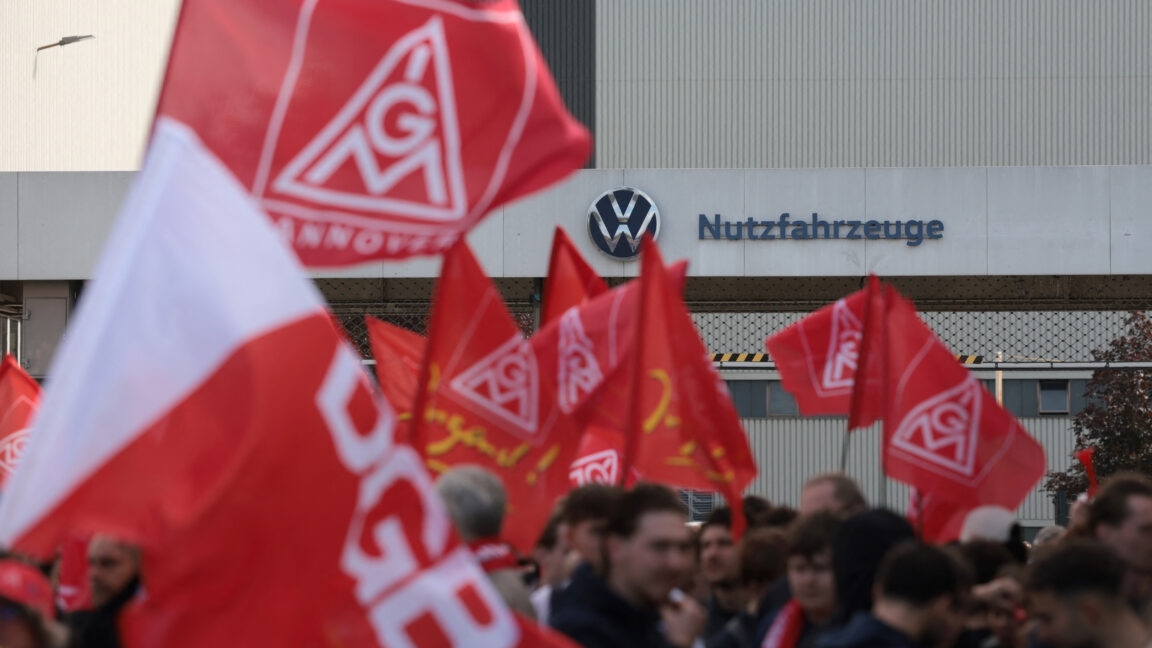
Germany's automotive industry is grappling with a grim outlook as job losses loom on the horizon. Once a crown jewel of the German economy, car makers are now facing a multitude of challenges simultaneously. Declining demand at home, intensified competition from abroad, and the burden of new tariffs have taken a toll on these companies. Moreover, structural issues such as an aging workforce and a sluggish recovery from the COVID-19 pandemic have further exacerbated the situation.
Total automotive sales in Europe have dwindled from a peak of nearly 18 million in 2019 to approximately 13 million in 2025. A portion of this smaller market is increasingly being captured by emerging players from China, which also grapples with its own challenges, including an oversupply of automotive production capacity.
While the US market has traditionally been the most profitable destination for German car exports, the imposition of new import tariffs has changed the landscape. These tariffs currently stand at a substantial 25 percent and could potentially fluctuate in the future. This has led to the closure of four German factories by the Volkswagen Group, a prospect that would have been inconceivable just a few years ago.
Recent developments suggest that the situation for VW Group has not improved since the announcement of factory closures earlier this summer. The challenges facing Germany's automotive industry are multifaceted and daunting, with factory closures now appearing not only possible but likely.
Written by urgent.news from Ars Technica's reporting — not their text. Machine-written — may contain errors; check the original before relying on it.