Oldtimer: Schnell, schön, Superveloce – Diese Italo-Sportwagen sollte man kennen
Limitierte Hypercars legendärer Italo-Marken liegen im Trend: Bei Highspeed-Festivals wie Goodwood stehen sie im Fokus und erzielen Rekordwerte bei Auktionen. Ein Rückblick.
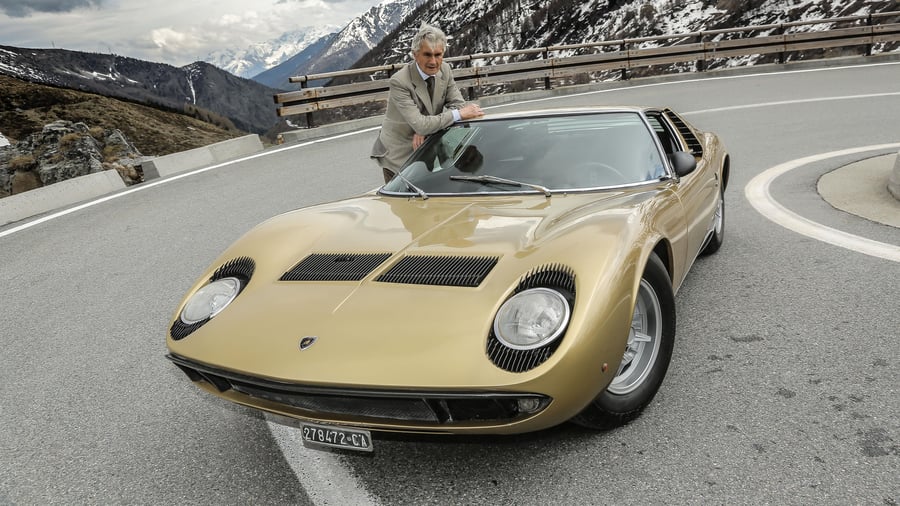
In 1966, the competition to build the fastest and most radical Italian super sports car began. Ferrari, Lamborghini, Maserati, Iso-Rivolta and De Tomaso all responded to the challenge. The designers and engineers of the time put their creativity to the test, presenting a parade of stunning supercars that continue to influence today.
From the Miura to the Mangusta, Iso Grifo or Ferrari 275 GTB, these super vehicles evoke awe and speed. The Lamborghini Miura P400, unveiled in spring 1966, was Enzo Ferrari's rival with its aggressive and elegant design by Marcello Gandini, featuring a cross-mounted V12 engine that was destined to become the Lamborghini killer.
As the first series sports car, the Miura aimed to break the 300 km/h barrier, cementing its place in the memories of youth. Soon, Ferrari presented the evolved 275 GTB/4 in autumn 1966, featuring a refined Pininfarina design and the first four-valve Ferrari engine with 221 kW/300 PS power. The Ferrari 275 GTB/4 soon caught the eye of Hollywood star Steve McQueen, who drove this Berlinetta from Maranello faster than the new Miura and over 270 km/h, earning it a place in post-production history.
However, the real breakthrough came with the 1968 introduction of the Ferrari Daytona, which won the Daytona 24-hour race in Florida and became synonymous with the Italian sportscar legend. Even as other American supercar icons like the Corvette aged, the Ferrari Daytona remained desirable, even with its Corvette V8 disguised. Meanwhile, Maserati, the veteran luxury Italian marque founded in 1914, opted for powerful V8 engines and extravagant designs, setting itself apart from the competition in the Emilia Romagna region.
The 1966 Maserati Mexico, a four-seat fastback with lounge comfort, showcased Vignale's design and Michelotti's avant-garde styling. Giugiaro, the renowned designer, also created the Maserati Ghibli in 1967, a four-seater with a long hood and a bold fastback that inspired numerous subsequent models, including the Audi 100 Coupé S, Bitter CD, and Monteverdi High Speed 375 S. As Maserati's sales dwindled in 1968, Citroën took over and introduced the Bora, the first mid-engine Maserati, in Giugiaro's design.
Citroën's decline in 1975 led to Gepi and Alejandro de Tomaso stepping in to revive Maserati. De Tomaso, who had previously shocked the market with his De Tomaso Mangusta, a Ford GT40-powered V8 engine disguised in a V12 body, offered another Giugiaro-designed masterpiece: the De Tomaso Mangusta. Robust American V8 engines powered these Italian masterpieces, proving that style and performance could go hand in hand.
Written by urgent.news from Handelsblatt's reporting — not their text. Machine-written — may contain errors; check the original before relying on it.