NVIDIA Isaac ROS 5.0 Advances Agentic, Open Source Robotics Development
To build and deploy sophisticated robotics applications that can perceive, reason and act in dynamic environments, developers need new physical AI models and tools. The ROS open framework is a project from Open Robotics that helps humans build robots. NVIDIA Isaac ROS 5.0 — a collection of GPU-accelerated packages built on ROS, released today at […]
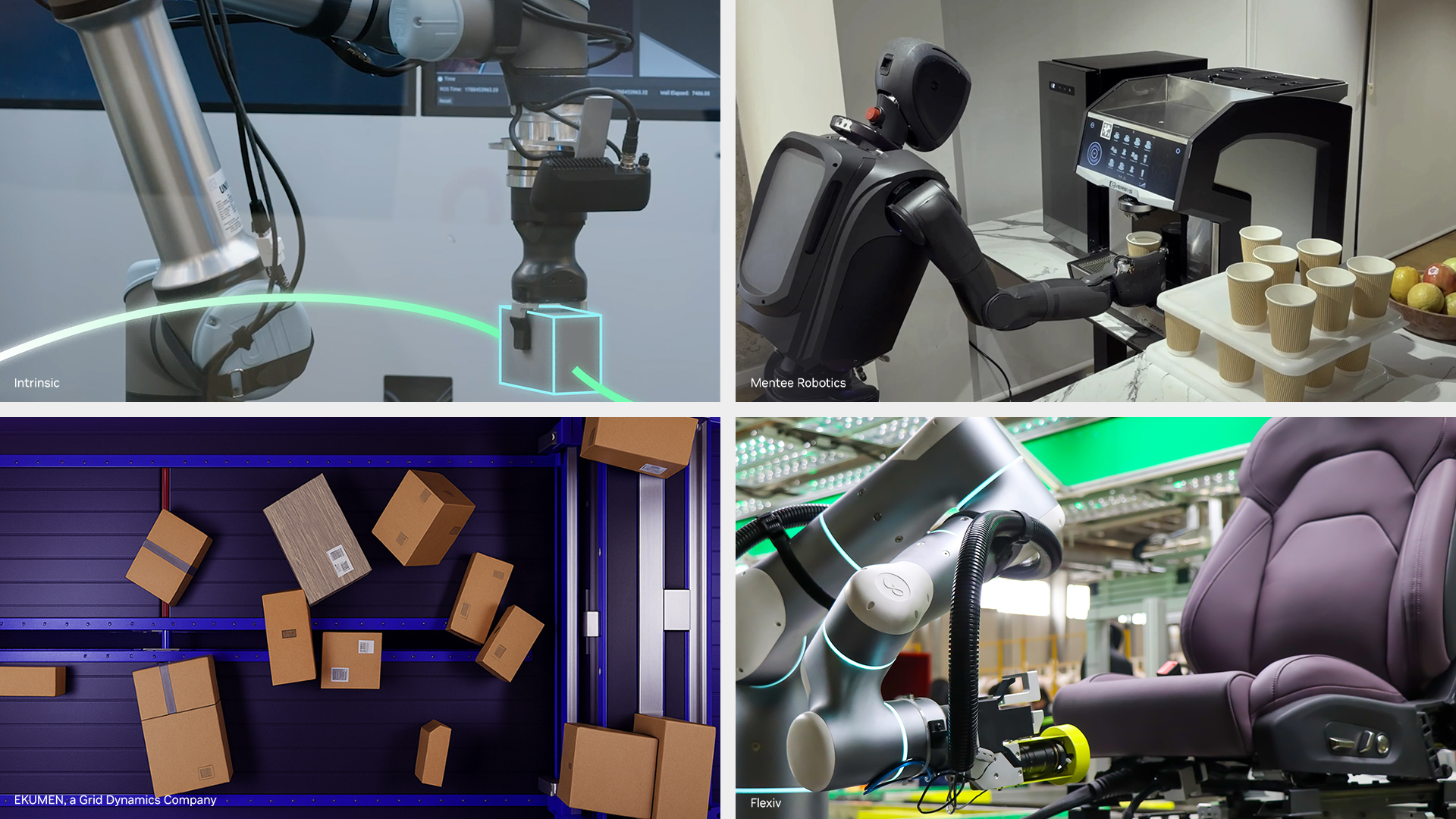
NVIDIA has unveiled Isaac ROS 5.0, a significant advancement in agentic, open-source robotics development. Released at the ROSCon conference in Toronto, Canada, this update to the NVIDIA Isaac ROS platform provides developers with GPU-accelerated packages built on ROS, facilitating faster and more efficient robotics application building, customization, and deployment.
ROS, an open-source framework from Open Robotics, serves as the foundation for modern robotics development, offering a collection of tools, libraries, and standards. NVIDIA Isaac ROS brings NVIDIA's accelerated computing capabilities, physical AI models, and production-ready libraries to the nearly 1.3 million ROS users, leveraging familiar open-source tools for high-performance robotics applications.
The latest version, 5.0, introduces support for ROS Lyrical and Ubuntu 24.04, allowing developers to adopt the latest ROS platform while continuing to accelerate demanding robotics workloads with NVIDIA's accelerated computing. NVIDIA collaborated with the Open Source Robotics Alliance to provide a standard data-handling interface for ROS Lyrical, ensuring efficient robotics software across various computing hardware, including GPUs.
Notable additions include new NVIDIA Isaac skills for setup and manipulation, offering reusable workflows that developers and AI agents can employ to complete robotics development tasks. Additionally, a new FoundationStereo fine-tuning skill enables AI agents to adapt stereo perception models to specific sensor configurations, while FoundationPose provides an agent-ready inference library for faster object pose estimation and tracking.
Furthermore, pick and place, a common robotics workflow, is now available as a standalone, agent-ready skill, offering greater flexibility for robot developers. These enhancements accelerate the open-source robotics ecosystem, with projects such as AgenticROS, RealSense's AI-native 3D stereo depth cameras, and Intrinsic's Open Machine Tending Solution integrating NVIDIA Isaac ROS with NVIDIA technologies to enhance robotics applications.
Written by urgent.news from NVIDIA Blog's reporting — not their text. Machine-written — may contain errors; check the original before relying on it.