NST Leader: If teachers are still overworked, find out why
THE National Union of the Teaching Profession (NUTP) has once again weighed in on the issue of overworked teachers. Its president, Aminuddin Awang, has suggested that the Education Ministry establish a special committee to conduct a comprehensive review of teachers’ workload.
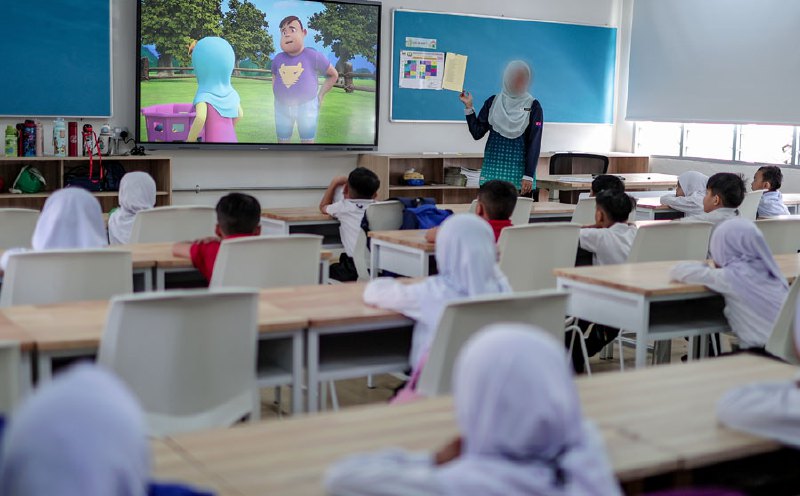
The National Union of the Teaching Profession (NUTP) has once again expressed concern over the issue of overworked teachers. Its president, Aminuddin Awang, has proposed that the Education Ministry establish a special committee to carry out a thorough review of the workload faced by educators, especially those in rural regions. The union believes that a direct assessment of the actual challenges teachers confront is required to ensure accurate diagnosis and appropriate remedial actions.
Additionally, the digital divide in rural schools, which makes online education more challenging, is believed to contribute to the heavy workload.
While the NUTP's suggestion may hold some validity, it is also important to acknowledge that the ministry has already taken steps to alleviate teachers' administrative burdens. These measures include eliminating low-impact programs and events, simplifying documentation and lesson planning, reducing meetings and reviews, and providing additional support through teaching assistants and other personnel. The ministry has also promoted the 80:20 approach, prioritizing teaching and learning activities over non-teaching duties.
However, if teachers still perceive themselves as overburdened by tasks unrelated to student education, it may be more beneficial to focus on ensuring the effective implementation of existing reforms at all levels, rather than creating another bureaucratic layer. The issue might be more about ensuring the proper execution of current policies, rather than introducing additional initiatives at the ministry level.
It is also possible that existing policies, implemented at various levels of the education system, continue to assign non-teaching responsibilities despite efforts made by federal authorities to reduce teachers' workloads.
The solution may involve conducting regular workload audits to uncover weaknesses in the implementation of existing policies, thus allowing for the introduction of new or streamlined administrative tasks to replace outdated ones. Ultimately, reducing teachers' workload is not just about easing their lives; it is about preserving teaching time, which could potentially improve learning outcomes for students.
The crucial question remains: if the ministry has already introduced measures to reduce teachers' workloads, why do teachers still feel overburdened? Are there implementation gaps somewhere along the line that need to be addressed? To identify the root causes of the problem, the ministry should consider engaging the NUTP to collaborate in finding ways to enhance the implementation of policies designed to address this issue.
Written by urgent.news from New Straits Times's reporting — not their text. Machine-written — may contain errors; check the original before relying on it.