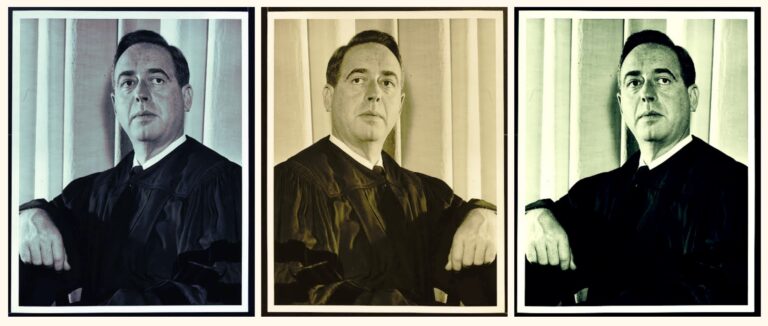
Meet Hyman Judah Schachtel, the Anti-Zionist Rabbi of Houston
“Never a dull moment during the bygone year!!” wrote Leopold Meyer, president of Congregation Beth Israel of Houston, Texas, in May 1944. In and among the usual chatter in his annual report (“Mr. and Mrs. Isaac S. Brochstein and Mr.
In the summer of 1943, the Congregation Beth Israel in Houston, Texas found itself embroiled in a heated controversy that brought the newspaper pages of Time magazine and The New York Times. This clash of beliefs and values transpired during a time when the congregation was already well-known and celebrated as one of the oldest and largest temples in Texas and the South.
At the heart of the dispute lay a set of seven "Basic Principles" approved by the congregation's Board of Trustees on September 7, 1943. These principles, known as the Jurenberg Laws, seemed to echo the sentiments of Adolf Hitler, the Ku Klux Klan, and the Spanish Inquisition. They included declarations of religious equality between men and women, the rejection of certain religious observances deemed unnecessary and foreign to progressive Judaism, and a commitment to helping fellow Jews and mankind in need.
The principles also asserted that the congregation stood "unequivocally for the separation of Church and State" and that Israel and the Jewish State were not desired.
These principles sparked outrage among many American Jews, who held differing cultural, political, and religious backgrounds and who, due to the growing persecution of Jews, were more likely to be Zionists. The congregation's members, who had arrived in Texas in the 1900s, were far more likely to speak Yiddish and support Zionist ideals than their predecessors. By 1943, the world was in the throes of war, and the situation was more urgent than ever.
The controversy had caught the congregation off guard, with many members unprepared for such a heated debate. The principles were drafted by members of the Board of Trustees and were seen as boilerplate in American Reform synagogues. However, the second principle, which declared that "We are Jews by virtue of our acceptance of Judaism...We stand unequivocally for the separation of Church and State," was the one that ignited the firestorm of controversy.
The ensuing debate caused a schism that reverberated for a generation, and the congregation was left with the challenge of finding a way to unite and move forward. Amidst the turmoil, the congregation remained dedicated to its role as a flagship of American Judaism and one of the most enduring institutions in the city's landscape.
Written by urgent.news from Literary Hub's reporting — not their text. Machine-written — may contain errors; check the original before relying on it.