MapReduce: The Abstraction Layer That Still Shapes How AI Workloads Scale
How MapReduce shaped modern AI infrastructure, from distributed computing and fault tolerance to data movement, scheduling, and scaling LLM workloads
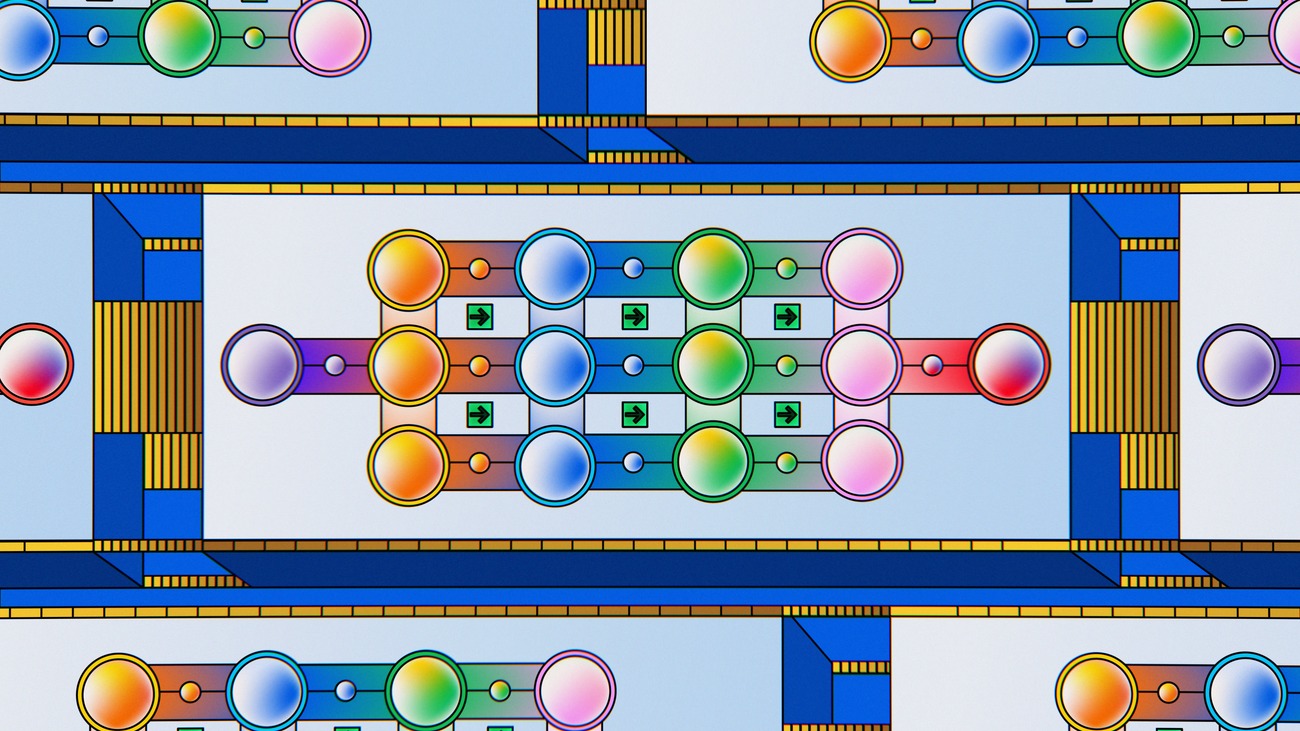
In 2004, software engineers Jeffrey Dean and Sanjay Ghemawat published a paper titled "MapReduce: Simplified Data Processing on Large Clusters" at OSDI conference. The paper introduced a programming model and runtime framework that simplified distributed computation by breaking it down into two user-defined functions: Map and Reduce. The system took care of partitioning, scheduling, fault tolerance, and inter-machine communication.
Prior to MapReduce, building a distributed computation required developers to manually handle task splitting, retries, data movement, and load balancing for operations that were essentially simple transformations. The complexity of coordinating the computation often surpassed the complexity of the computation itself. MapReduce reversed this trend by allowing developers to focus on writing a Map function that transformed input key/value pairs into intermediate pairs, and a Reduce function that aggregated values with the same key. The framework handled the rest.
The key insight behind MapReduce was the abstraction of system mechanics from developer logic, a concept that remains a strong example of systems design. Modern AI engineering also benefits from this separation of concerns. For instance, chunking as a scheduling decision in AI workloads mirrors the way MapReduce divided large inputs into smaller units for independent scheduling across machines. The unit of work becomes an architectural decision rather than a mere data-format decision.
Another parallel can be drawn between independent work units in MapReduce and batch embedding or preprocessing workloads in AI. Distributed training frameworks, while more tightly coupled, still share the same need to decompose computation into manageable units while leaving coordination to the runtime. The shuffle process in MapReduce reveals the cost of data movement, similar to distributed training where all-gather, reduce-scatter, gradient synchronization, and tensor transfers can consume significant time.
Speculative redundancy is another concept from MapReduce that is relevant to modern AI systems. By launching duplicate executions of slow tasks near the end of a job and using the first one to finish, the system reduces tail latency. This technique, known as speculative execution or request hedging, is widely used in distributed systems today.
Lastly, the concept of durable state and replaceable computation in MapReduce echoes the design principles in AI infrastructure. Training systems store checkpoints externally, inference workers can be replaced, and orchestration systems reschedule failed jobs.
In conclusion, MapReduce's broader lesson is the importance of abstraction boundaries as a design tool. By establishing a clear line between expressing a computation and reliably executing it at scale, the framework enables engineers to focus on domain logic without having to implement distributed scheduling and fault tolerance themselves. This boundary is evident throughout modern AI engineering, where developers define what they want without getting bogged down in how it's executed.
Rewritten by urgent.news; may contain errors — check the original.
Source: hackernoon.com