How will Mumbai-Ahmedabad bullet train change tracks at high speed? NHSRCL explains
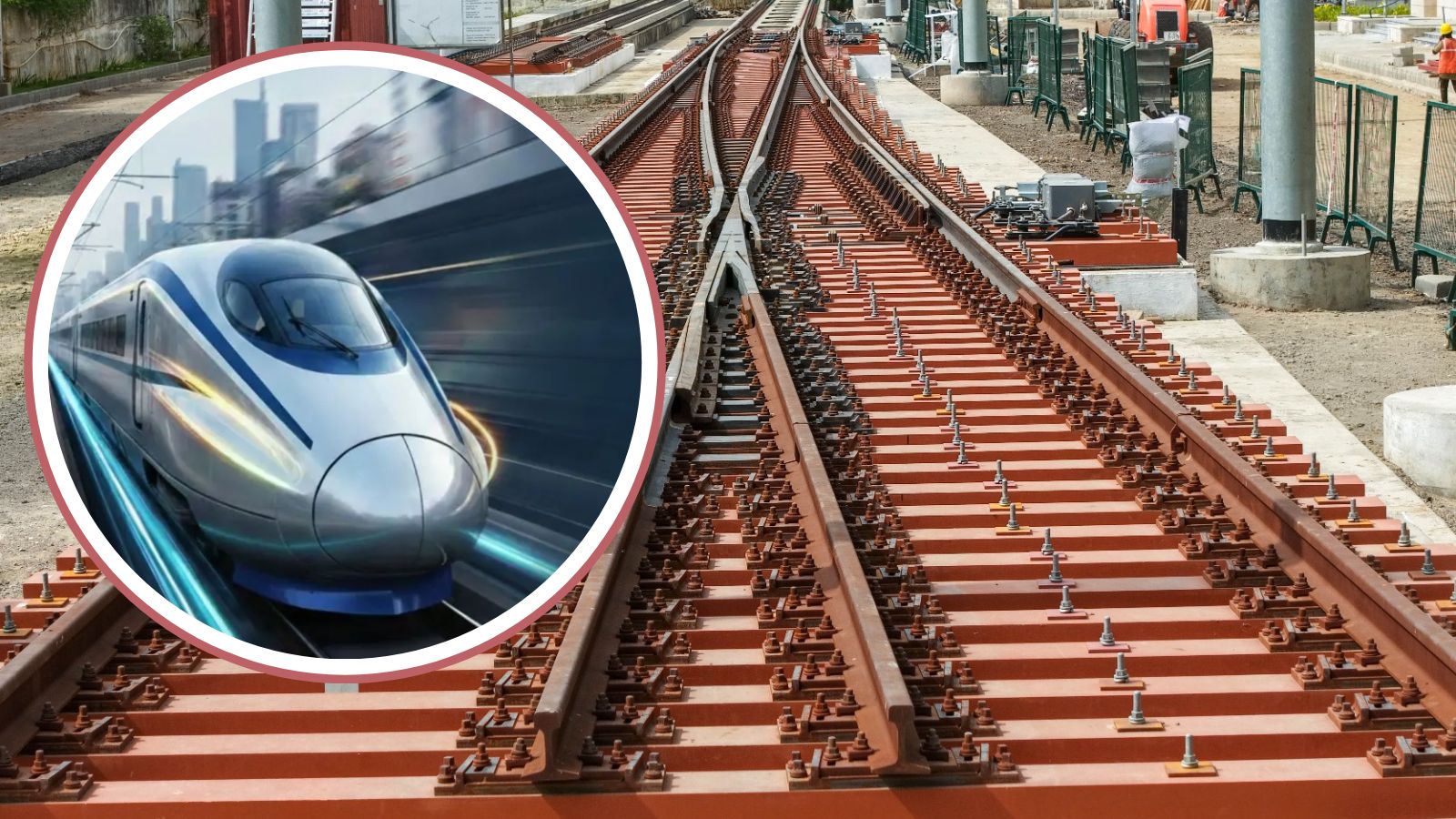
Mumbai-Ahmedabad bullet train track change: As India's Ministry of Railways plans to launch the high-speed Mumbai-Ahmedabad rail corridor next year, advanced technologies are being deployed to guarantee safe and seamless 320 km/h train operations. One such technology is the introduction of special movable crossings - also known as swing-nose crossings - that will enable trains to switch between tracks without harming passenger safety or comfort.
Unlike traditional fixed crossings, movable crossings shift alongside the switch rails, creating a seamless rail surface for trains to travel over. This design minimizes the impact, vibration, and wear caused by conventional fixed crossings at extreme speeds.
For passengers, this means a smoother and more comfortable ride, while also reducing wear on both the track and train components. The Mumbai-Ahmedabad High-Speed Rail (MAHSR) project is pioneering the use of turnouts equipped with movable crossings, marking a significant departure from fixed-crossing turnouts found on conventional railway lines.
Two-point machines will control the switch rails and movable crossings on the high-speed turnouts. One point machine handles the switch rails, while the other manages the movable crossing. Before a train can pass through the turnout, both components must be correctly positioned and securely locked, with the signalling system checking their alignment multiple times before granting permission.
Written by urgent.news from The Indian Express - India's reporting — not their text. Machine-written — may contain errors; check the original before relying on it.
This story
This is one outlet's version. Read the fullest account.