How Abu Dhabi is building the foundations of an AI economy
For decades, Abu Dhabi's economic story was inseparable from oil. Today, another story is taking shape — one that could determine how the emirate participates in the next generation of the global economy. Artificial intelligence has become an increasingly visible part of Abu Dhabi's diversification drive, backed by sovereign capital, computing infrastructure, research institutions and an…
For years, Abu Dhabi's economy had been tightly linked to oil production. Now, a different economic narrative is emerging as artificial intelligence (AI) becomes an integral part of the emirate's efforts to diversify its economy. Backed by government investment, cutting-edge computing infrastructure, research institutions, and a burgeoning tech ecosystem, Abu Dhabi is actively cultivating an AI economy.
The shift from oil dependency is not just about the amount of capital being invested, but also about where Abu Dhabi wants to position itself within the global technology value chain. The rapid growth of Abu Dhabi's non-oil economy, which reached 7.6% year-on-year in the third quarter of 2025 and accounts for roughly 54% of the emirate's GDP, underscores the growing importance of the digital economy. The UAE has set a goal to increase the digital economy's contribution to GDP from 9.7% in 2022 to 19.4% within a decade.
MGX, an Abu Dhabi-backed investment firm, recently launched its first fund with a capitalization of $49 billion, focusing on semiconductors, AI infrastructure, and technology platforms. Furthermore, a planned 5-gigawatt AI Campus in Abu Dhabi, which includes Stargate UAE, aims to bolster the emirate's role in the global race to develop the necessary computing power for increasingly powerful AI systems.
The government itself is becoming a significant technology consumer. Abu Dhabi has allocated Dh13 billion to its Government Digital Strategy for 2025-2027, with the ambitious objective of becoming the world's first fully AI-native government. However, capital, computational resources, and governmental commitment alone are not sufficient to foster a thriving technology economy.
The real challenge lies in determining whether this ecosystem can generate companies capable of developing their own technologies, deploying them in complex real-world scenarios, and competing on the global stage.
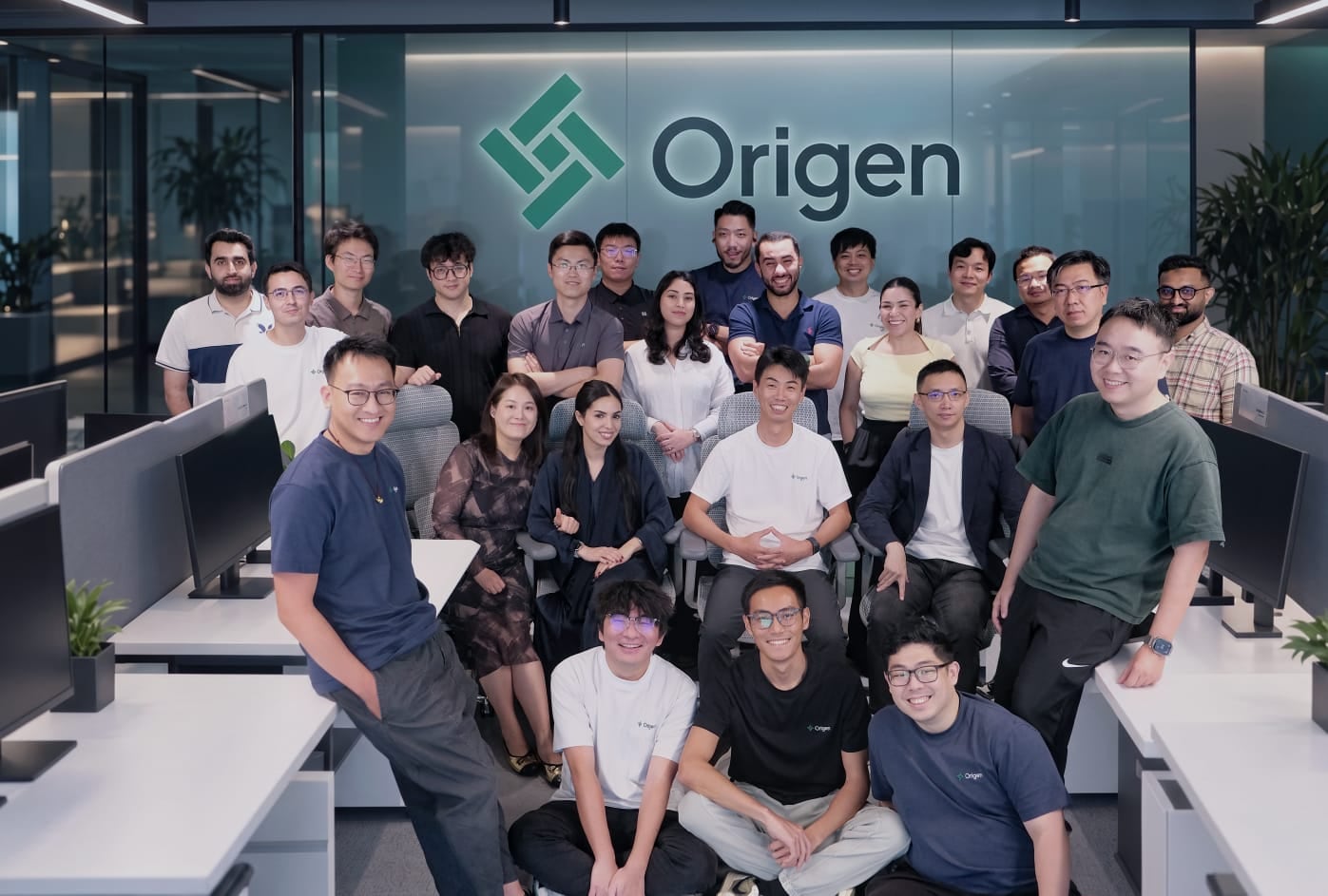
Origen, an Abu Dhabi-based technology company, provides a glimpse into the future of this burgeoning AI economy. In February, Origen secured a $50 million strategic investment from BlueFive Capital to expedite product development and AI deployment. Origen specializes in AI systems for cities, intelligent infrastructure, and industrial environments, with a focus on AI systems that can perceive, reason about, and interact with the physical world.
Their platform, SpatialWare, functions as an AI-native spatial intelligence layer, integrating Building Information Modeling (BIM) and CAD models, point clouds, sensor feeds, and operational data into a continuously updated representation of the physical world. By leveraging spatial reasoning, agentic AI, and physics-based models, Origen aims to integrate AI into operational infrastructure rather than treating it as a standalone software tool.
Origen's most ambitious endeavor is Nabd, an AI-powered digital governance framework being developed in collaboration with Abu Dhabi's Department of Municipalities and Transport. Origen acts as the system architect for Nabd, integrating more than 70 data sources across more than 15 connected systems, which cover buildings, roads, utilities, underground infrastructure, and other urban assets.
The project necessitates the development of a federated architecture that connects existing government systems without replacing them, along with an AI orchestration layer that enables information from previously fragmented platforms to work together seamlessly.
Origen's selection for this significant project reflects its technical prowess and the emirate's broader ability to transition from acquiring cutting-edge technology to building globally competitive technology of its own. However, establishing an internationally competitive technology economy remains a considerable challenge. While Origen has secured significant capital and government backing, it must demonstrate the ability to develop deep technical expertise, create intellectual property, and form globally competitive companies.
The success of projects like Nabd will ultimately determine the global competitiveness of Abu Dhabi's AI economy.
Written by urgent.news from The National UAE's reporting — not their text. Machine-written — may contain errors; check the original before relying on it.