How a Bangladeshi garment-maker is fighting the Middle East energy crunch
SAVAR: A gas and power crisis has hit production at most Bangladeshi garment makers, but at 4A Yarn Dyeing, a supplier to Walmart, Gap and Next, workers stitch hoodies and attach brand logos uninterrupted, at least for now. Since 2019, 4A has generated its own power, including through solar panels, making it an exception in Bangladesh’s garment industry, the world’s second-biggest exporter after…
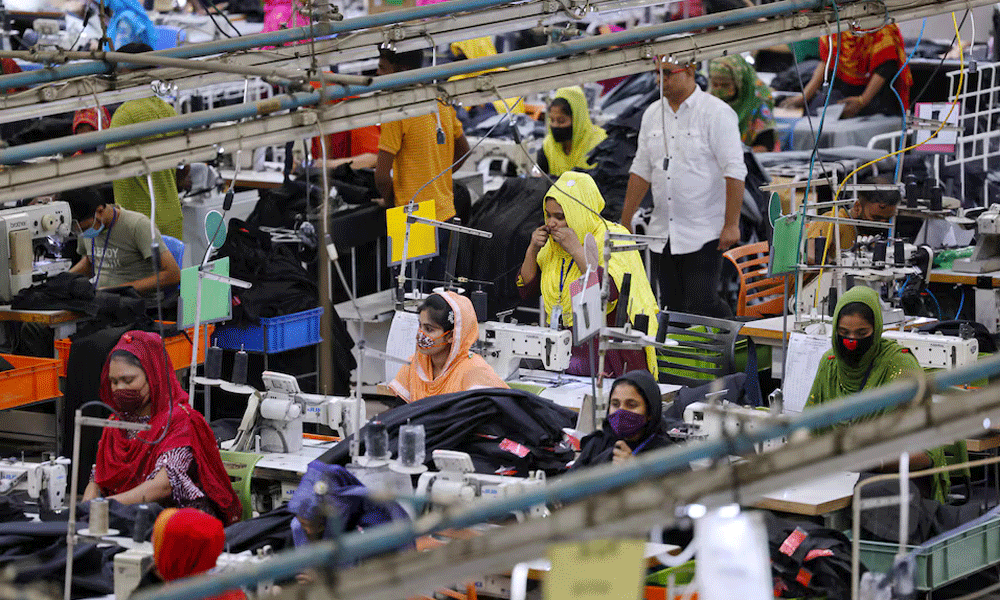
Savar, a garment manufacturing hub in Bangladesh, is defying the global energy crisis affecting its industry. While most Bangladeshi garment makers struggle with production due to gas and power shortages, 4A Yarn Dyeing, a supplier to major brands like Walmart, Gap, and Next, continues operations without interruption.
4A is unique in Bangladesh's garment industry, as it has been generating its own power since 2019, including through solar panels. This makes it an exception in a sector heavily reliant on natural gas, furnace oil, and diesel for electricity generation. A recent survey of 134 knitwear factories revealed that 55% had seen buyers cancel or cut orders because of energy shortages, while 78% had partially halted production.
However, 4A's factory, employing nearly 7,500 workers, has managed to avoid these disruptions. The company meets around 40% of its electricity needs through solar power, with the rest from its own gas and diesel generation. Its co-owner, Abdullah Hil Nakib, emphasized their reliance on multiple energy sources, stating, "We never stayed at a single-source energy dependency. We had backups for everything."
The pressure on factories intensified recently when Bangladesh raised fuel prices by up to 17.4%, a move aimed at addressing soaring global prices and higher shipping costs due to the Middle East conflict. This decision has increased production costs by 2% to 3%, adding up to a 5 million taka ($40,950) monthly fuel bill for 4A. The company plans to install an industrial-scale battery system to continue operations for several hours if power sources fail.
The energy crisis is causing significant challenges for Bangladesh's garment sector, which contributes over 80% of export earnings, employs around 4 million workers, and accounts for about 10% of the country's GDP. Some manufacturers have had to ship goods by air or offer discounts to meet delivery deadlines due to energy-related disruptions. Garment exporter Shahidullah Azim noted that the fuel price hike will further squeeze their already thin margins, making it increasingly difficult to remain competitive.
Experts warn that while companies can absorb higher fuel costs, gas shortages and power cuts pose more significant risks compared to competitors like Vietnam and India. The resilience of Bangladesh's garment industry will depend on its ability to manage these energy challenges effectively.
Written by urgent.news from Business Recorder's reporting — not their text. Machine-written — may contain errors; check the original before relying on it.
This story
This is one outlet's version. Read the fullest account.