Hidroituango Gets Green Light to Raise Water Level to 420 Meters
Colombia’s response to El Niño gained a new tool after the National Environmental Licensing Authority (ANLA) authorized EPM to raise Hidroituango’s operating level from 408 to 420 meters, allowing the hydroelectric plant to store more water when conditions permit. The approval comes as Medellin prepares to resume water rationing on Sept. 22, with scheduled nighttime […]
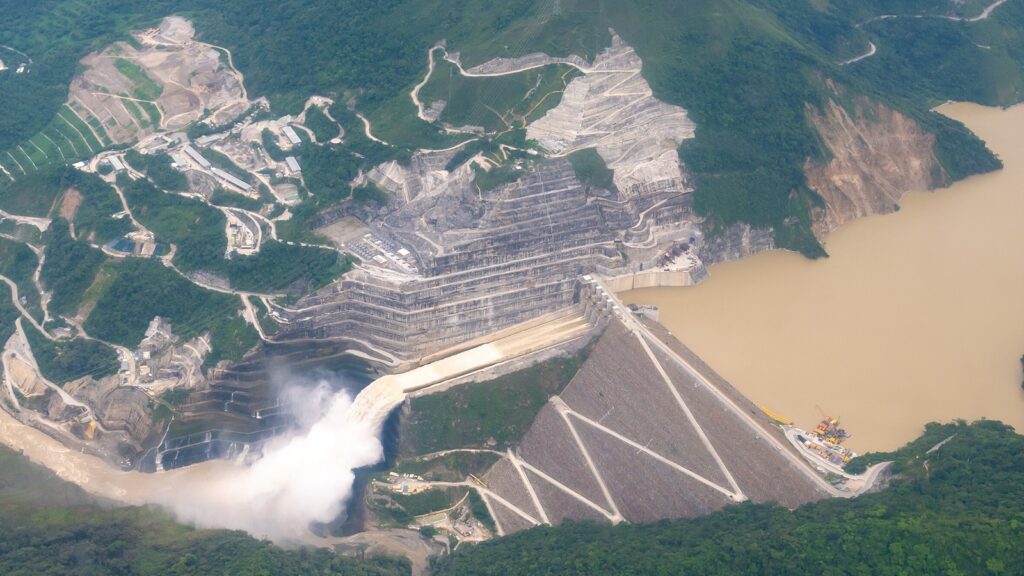
Colombia’s National Environmental Licensing Authority (ANLA) has given EPM the green light to raise Hidroituango’s operating water level from 408 to 420 meters, a move that coincides with Medellin’s preparation to resume water rationing. Hidroituango, a hydroelectric plant situated in Antioquia, Colombia, is pictured in 2022. As the reservoir capacity of Piedras Blancas, one of the city’s main water sources, has dropped from 91.8% to 76.8% in just a week, EPM CEO Humberto Iglesias stated that the higher water level will allow the plant to store more water when conditions permit.
However, the Cauca River’s current flow of 187 cubic meters per second is far below the 450 cubic meters per second typically seen during an El Niño event, meaning much of the water passing through Hidroituango is already being used for electricity generation. Consequently, EPM has reduced operations to just one or two of the plant’s four turbines, which has led to a 7% rise in Colombia’s electricity consumption over the past month.
The company will continue to monitor water consumption, savings, and flows on a weekly basis, rather than setting a fixed end date for the rationing. Medellin’s rationing is set to begin on Sept. 22, with nighttime cuts from 8 p.m. to 4 a.m., and will rotate among neighborhoods rather than affect the entire city at once. Residents must check EPM’s official channels for specific cut times, as they may change based on water flows and consumption.
EPM has urged residents to conserve both water and electricity, warning that stronger measures could be introduced if conditions continue to worsen. The water and energy challenges highlight the broader impact of El Niño’s dry conditions on Colombia's water resources and electricity supply.
Written by urgent.news from Colombia One's reporting — not their text. Machine-written — may contain errors; check the original before relying on it.