From a handful of clerks to the institutions of a state
RIYADH — The beginnings were remarkably small.In the early years of King Abdulaziz bin Abdulrahman Al Saud’s rule, the administrative nucleus around the King consisted of only a limited number of clerks and assistants.They wrote correspondence, read petitions submitted to the King and followed matters involving the treasury, hospitality and protocol.From that compact operation would gradually…
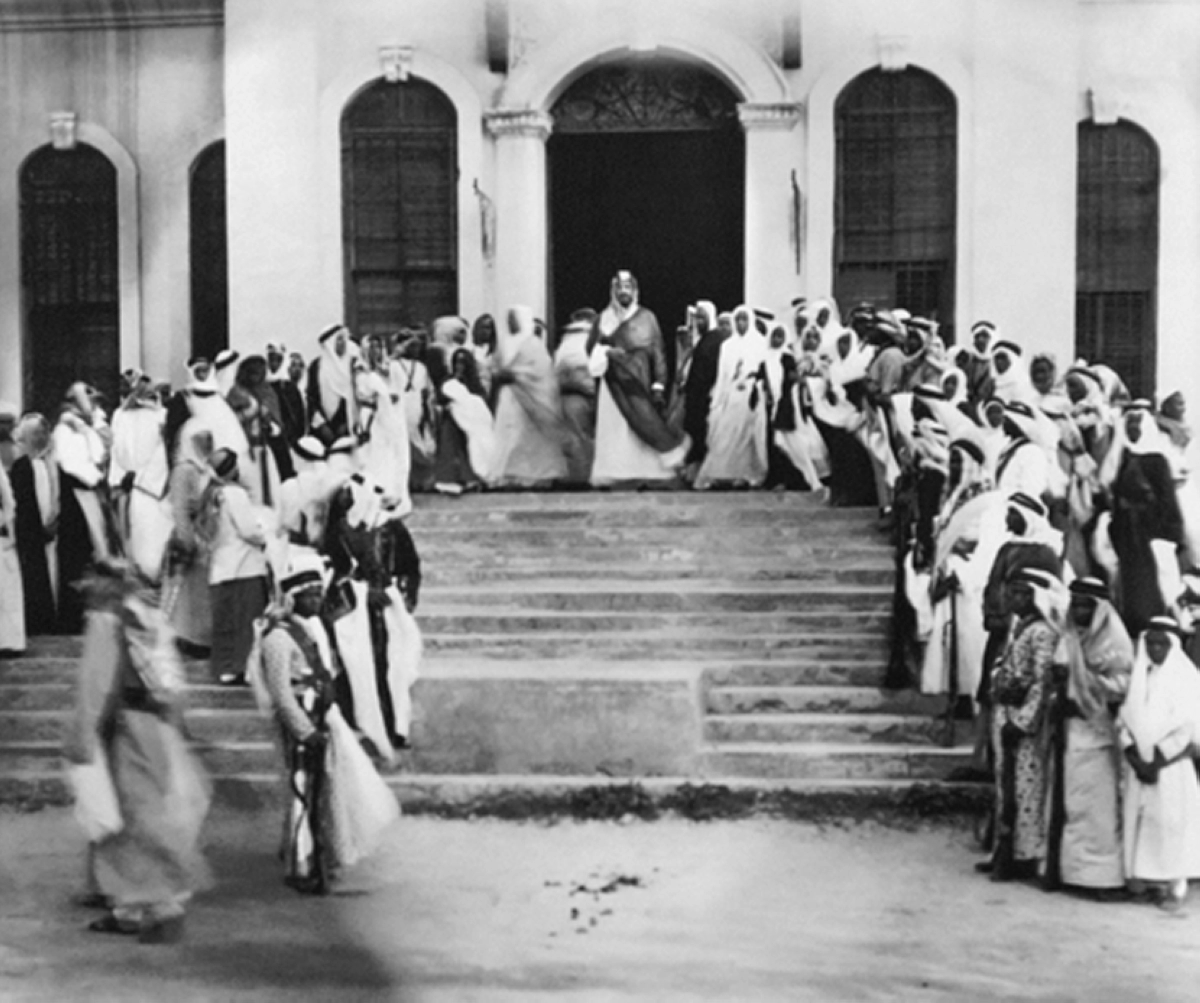
Riyadh — The nascent stages of King Abdulaziz bin Abdulrahman Al Saud's reign witnessed an administrative setup comprising a limited cadre of clerks and assistants. Their roles encompassed correspondence, processing petitions and managing treasury, hospitality and protocol matters. This modest operation laid the foundation for a significant facet of Saudi governance—the Royal Court.
The narrative provides insight into an aspect of Saudi history that is often overlooked. The establishment of the nation went hand in hand with the creation of the machinery to govern it. According to the King Abdulaziz Foundation for Research and Archives, the Royal Court initially emerged as a limited administrative unit that grew progressively as the state's responsibilities expanded.
By 1913, the court's work had become more specialized, with distinct functions for public and private treasuries, royal affairs, hospitality and protocol. Beginning with a small team handling multiple duties, the court evolved into a more structured administrative setup. This transformation accelerated as government affairs grew in volume and complexity.
The state's expansion led to an increased need for correspondence, case consideration, directive follow-up and effective communication between the monarch and government bodies. Consequently, administrative tasks began to be assigned to entities with more defined functions. The Royal Court took on duties directly linked to the monarch and handled transactions submitted to him.
Prominent individuals, such as Ibrahim bin Mohammed bin Muammar, who was part of the King's advisory circle, took charge of correspondence and political and diplomatic affairs during the period when the state's administrative institutions were being organized. One of the notable figures entrusted with the presidency of the Royal Court in 1926 was Ibrahim bin Mohammed bin Muammar.
The transformation extended beyond the court. As ministries and government departments proliferated, another administrative challenge emerged: coordinating their work within a unified institutional framework. This expansion eventually culminated in the formation of the Council of Ministers, responsible for coordinating government bodies, deliberating regulations and general decisions, and managing the administration of state affairs.
The progression illustrates how the Saudi government evolved in response to the country's evolving needs. Initially, a small circle managed correspondence and petitions. Later, specialization gave rise to institutions. The growth of these institutions necessitated coordination at the government level. The Royal Court persisted through the reigns of successive Saudi kings as an institution closely tied to the monarch, with its departments and responsibilities evolving alongside the broader governmental machinery.
Its later history witnessed another institutional change in 2011, when a royal order issued by King Abdullah merged the Court of the Presidency of the Council of Ministers into the Royal Court. Today's institutions owe their existence to a story of gradual administrative development. At its inception, there were only a handful of men, waiting to write correspondence and read petitions—along with the burgeoning administrative demands of a state taking shape.
Written by urgent.news from Saudi Gazette's reporting — not their text. Machine-written — may contain errors; check the original before relying on it.