Explainer: How sea level rise poses an ‘existential threat’ to humans, heritage and nature
For millions of people around the world, rising sea levels are already reshaping economies, livelihoods and cultures. The world’s oceans… The post Explainer: How sea level rise poses an ‘existential threat’ to humans, heritage and nature appeared first on Carbon Brief .
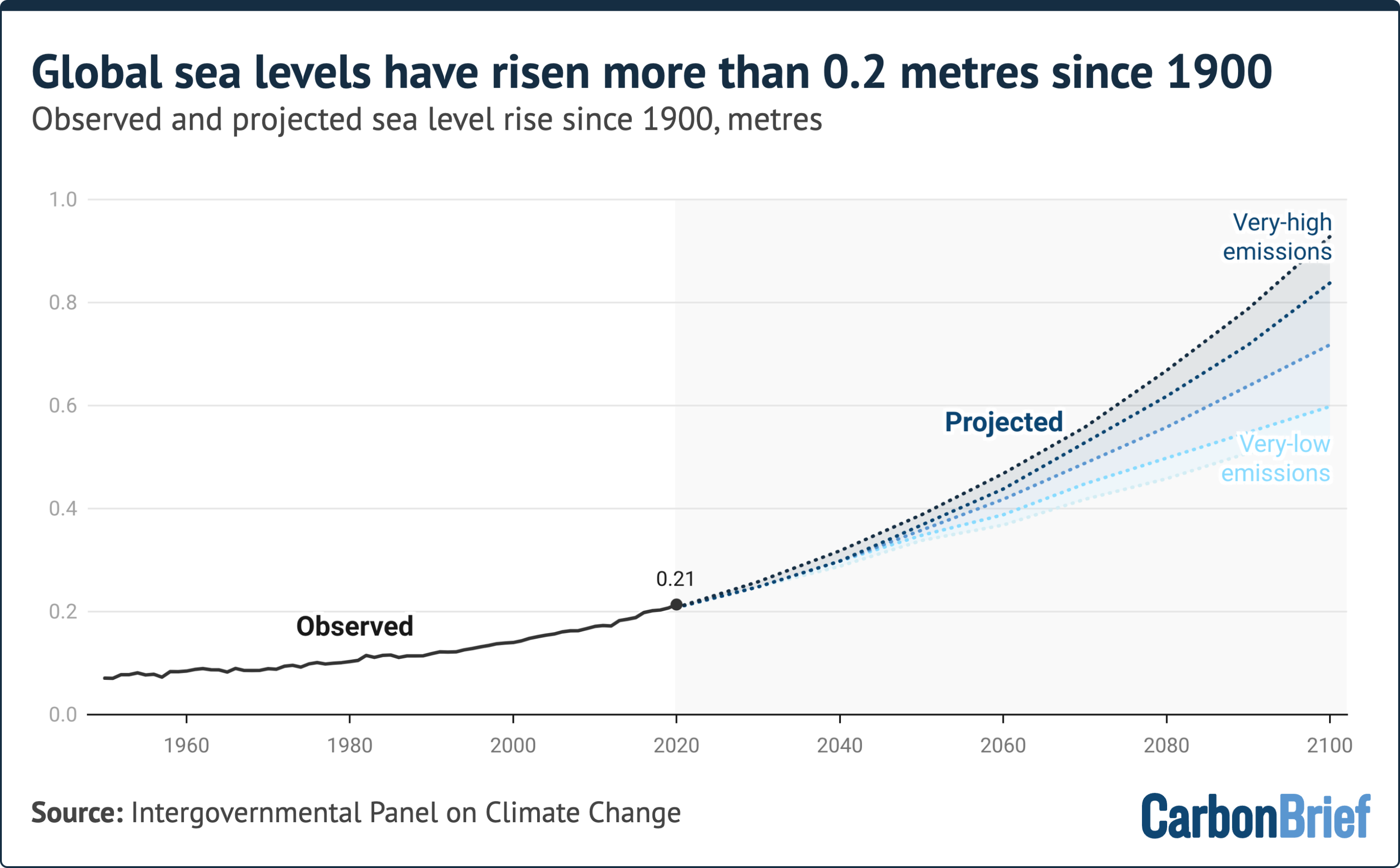
Rising sea levels are reshaping lives and landscapes for millions across the globe. Since at least 1970, humans have been the primary driver of this global phenomenon, according to scientific consensus. This year at the UN general assembly, world leaders will pledge to address this existential threat to societies, heritage, and nature. The declaration underscores that sea level rise is not a future specter, but a current reality affecting many communities.
Over the past century and a half, oceans have climbed 20 centimeters in height. This rise is attributed to a combination of factors: melting ice caps and glaciers, thermal expansion of seawater as it warms, and alterations in land-water storage. The pace of this increase has quickened in recent decades, with the ocean gaining an additional 10.6 centimeters between 1993 and 2018.
Local variations exist due to factors like seismic and volcanic activity, groundwater extraction, and shifts in Earth's surface from melting ice. Should we continue on a moderate emissions trajectory, global sea levels could rise an extra 56 centimeters by the end of the century relative to the 1995-2014 baseline.
The impacts of this ongoing sea level rise are far-reaching. A UN report estimates that 770 million people, comprising 10% of the world's population, are at acute risk. These individuals reside in areas less than five meters above the high-tide line, including major cities like Mumbai and Kolkata in India, Shenzhen and Guangzhou in China, and New York City in the United States.
Coastal ecosystems and small island developing states face grave threats. Coral reefs, vital to marine biodiversity, are especially vulnerable. Heritage sites, many of which are coastal or island-based, are also at risk. As sea levels continue to creep higher, the need for urgent and decisive action to mitigate and adapt to these changes becomes increasingly apparent.
Written by urgent.news from Carbon Brief's reporting — not their text. Machine-written — may contain errors; check the original before relying on it.