Dakar: ECOWAS Court currently at critical crossroads — President
By; Barbara Kumah President of the Community Court of Justice of the Economic Community of West Africa (ECOWAS) Justice Ricardo Gonçalves, says the court presently stands at a crucial crossroads amid the challenges of enforcing its judgments, human rights protection, innovation, governance and regional integration. Gonçalves, said this in a welcome address, at the 2026 […]
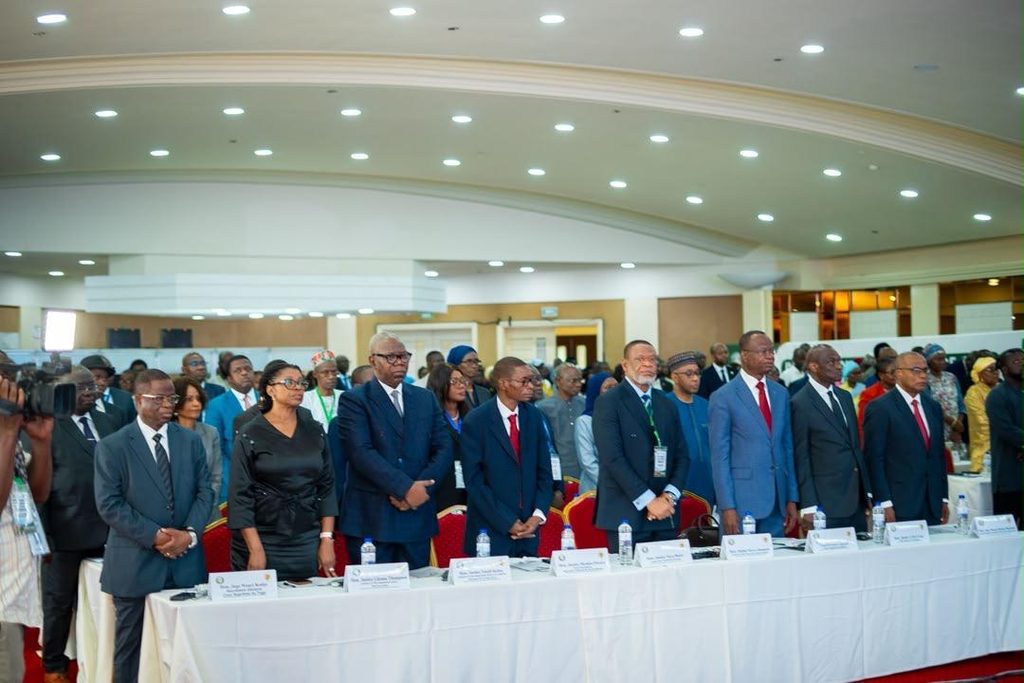
President of the Community Court of Justice of the Economic Community of West Africa (ECOWAS), Justice Ricardo Gonçalves, reveals that the court currently stands at a crucial juncture amidst the difficulties of enforcing its judgments, safeguarding human rights, embracing innovation, improving governance, and promoting regional integration. Gonçalves shared this insight during the opening remarks of the 2026 Annual International Conference of the Community Court of Justice, ECOWAS, held in Dakar, Senegal on September 21.
The Community Court, established 25 years ago, serves as ECOWAS' leading judicial organ for interpreting and applying law in the subregion. The week-long conference, themed "The Community Court of Justice — ECOWAS at the Crossroads: Justice, Innovation, Protection of Human Rights and the Future of Regional Integration in West Africa," aims to delve into the court's past achievements, address current challenges, and devise solutions to bolster its role in human rights protection, innovation, good governance, and regional integration in West Africa.
Gonçalves emphasized that the court remains a crucial partner in achieving the broader strategic goals and aspirations of West African citizens as outlined in the ECOWAS Vision 2050. He implored participants to "discuss candidly, listen humbly, and decide boldly" as the court should contribute more effectively to human rights protection, innovation, good governance, and regional integration in the future.
He urged the attendees to present clear, innovative, and practical proposals that can strengthen the court's institutional framework, enhance access to justice, improve judicial effectiveness, and deepen the court's contribution to the regional integration agenda. The conference aims to reflect on the court's accomplishments over the past 25 years, analyze its challenges, particularly in judgment enforcement, and identify pathways to fulfilling its mandate.
The court has been actively pursuing institutional transformation to boost its effectiveness, accessibility, and responsiveness. Key milestones include the planned establishment of the court's Appeal Division, the approval of the Court's Complementary Act to harmonize protocols and strengthen its legal framework, and the adoption of the Court's Arbitration Rules to facilitate peaceful and efficient dispute resolution.
ECOWAS Commission President, Gen. Birame Diop, highlighted the gap between the court's decisions and their execution as a significant challenge to its credibility. Diop, through Gaye Sowe, ECOWAS Director of Legal Affairs, emphasized that all stakeholders, including Member States, community institutions, human rights institutions, civil society, and the media, must work together to ensure the enforcement of the court's judgments in people's lives.
Senegal's Supreme Court President, Justice Mouhamadou Mbaye, stressed that when institutions like the ECOWAS Court are weak, human rights become a sanctuary for the protection of shared values and the community. He underscored the importance of turning our minds to matters relating to pathways for enhancing the organization and functioning of the court, ensuring its organization and functioning strengthen the integration process.
Senegalese Minister of Justice, Moussa Sarr, reaffirmed his country's commitment to a robust, accessible, and effective regional justice system, judicial cooperation, and human rights protection. Sarr highlighted that the court is at the heart of ECOWAS institutional architecture, playing a vital role in promoting democracy, the rule of law, and building a confident, just West African region.
Written by urgent.news from GBC Ghana's reporting — not their text. Machine-written — may contain errors; check the original before relying on it.