Brazil creates four Amazon reserves as plans to pave rainforest highway advance
The Brazilian government has created four new sustainable development reserves in the Amazon as part of an effort to mitigate environmental damage from the controversial plan to fully pave the BR-319 highway. The road will pass through one of the most intact parts of the rainforest, which conservationists warn will lead to increased deforestation. President […]
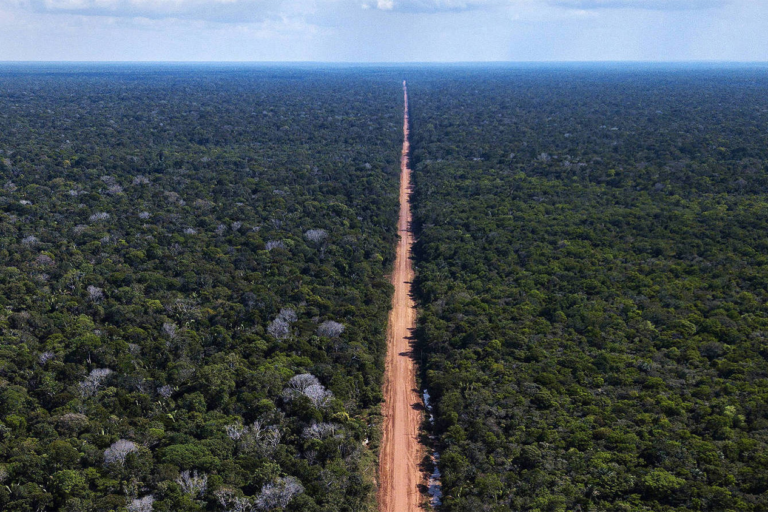
The Brazilian government has established four new sustainable development reserves in the Amazon to address environmental concerns stemming from the controversial plan to pave the BR-319 highway. The highway, which spans 339 kilometers between Manaus and Porto Velho, is a significant route through one of the most pristine sections of the rainforest, a fact that conservationists warn could lead to increased deforestation.
President Luiz Inácio Lula da Silva signed decrees on September 8 that would protect over 668,000 hectares of Amazon rainforest under a sustainable-use model. This model permits existing residents to stay on the land and extract forest products, ensuring their livelihood while mitigating environmental damage.
João Paulo Capobianco, the minister of environment and climate change, stated that the federal government is striving to create a solution that allows the highway to be paved while maintaining environmental protection and promoting sustainable economic development in the region. The four reserves will be overseen by Brazil’s Chico Mendes Institute for Biodiversity Conservation, a federal agency operating under the environment ministry.
Additionally, buffer zones have been established around three of the four largest reserves, adding another 109,718 hectares of protected land, although mining could still be permitted in those zones. The BR-319 highway, originally constructed during Brazil’s military dictatorship in the 1970s and later abandoned, currently faces impassable sections during the rainy season. Despite this, many still attempt to navigate the highway.
Written by urgent.news from Mongabay's reporting — not their text. Machine-written — may contain errors; check the original before relying on it.