As Trump and Xi talk, China surges ahead with its AI ambitions
The BBC visits Inner Mongolia, where Beijing's AI infrastructure is progressing at "China speed", says one worker.
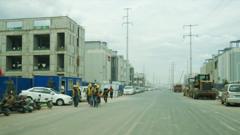
In the rural landscapes of Inner Mongolia, farmers are tending to their fields next to massive, rectangular structures that are vital to China's AI ambitions. Ulanqab, known as the nation's potato capital, has transformed into a construction hub for numerous data centres. During a recent meeting between Donald Trump and Chinese President Xi Jinping, the discussion centered around AI safety and other matters.
The workers, clad in yellow helmets, are constructing the facilities with precision, while cranes move with efficiency to erect rooftops and men balance on ladders to plaster brickwork. A worker jokingly remarks about China's "infrastructure mania," while an electrical engineer explains that there will be multiple phases of construction ahead.
Artificial intelligence is central to China's competition with the United States, with the goal of embedding AI in 90% of industries and society by 2030. The country is not only constructing the necessary infrastructure but also developing a skilled workforce. Many young engineers and researchers are attracted to China due to tensions with the US, particularly due to restrictions on immigration.
China's expanding AI capabilities have led to the United States opposing any pause in its development. AI firm Anthropic's CEO, Dario Amodei, called for maintaining a US-led ban on advanced chips and equipment sales to China, warning that a Chinese-led AI could pose grave dangers to the US and the world. This stance contrasts with Beijing's alternative model, which encourages open-source AI development.
China's approach is seen as advantageous due to its ability to innovate quickly and overcome challenges related to limited access to advanced chips.
While Beijing advocates for more regulation and a global framework for AI, the upcoming summit at the White House presents an opportunity for collaboration on AI safety. The US and China are both building hundreds of data centres in various regions, taking advantage of cheaper land and cooler weather for renewable energy sources like wind and solar.
However, concerns remain about the use of coal power and the impact on local communities, including job losses and land dispossession. Despite these challenges, there are optimistic individuals who believe China is now a global leader, particularly due to the widespread adoption of AI technologies.
Written by urgent.news from BBC News's reporting — not their text. Machine-written — may contain errors; check the original before relying on it.